Showing posts with label Cinnamon. Show all posts

Friday, March 7, 2014

BAILEYS CINNAMON ROLLS - CINNAMON ROLLS GLACÉS AU BAILEYS

OF DORMANT CREATIVITY
I for one, completely believe in the notion of creativity being a thing that ebbs and flows, a tank that can fill up and run empty. If you are tapped out, putting your butt in the chair is a waste of time.Yep, I said it. Sometimes writing every day, no matter what, is not the best thing to do. In fact, I think it can be counterproductive. Attempting to force yourself, just putting down words for the sake of putting down words, even if it’s crap and will be edited later, can not only be a waste of time, but have a negative impact. When the mindset isn’t there, you’re better off doing things that will help refill that well of creativity.
- J.N. Duncan
Sometimes when your genius has been hijacked by artist’s block, your brain is drained, your passion for creating has deserted you and you are desperately struggling to find inspiration, taking a break and letting things go is highly recommended. In such circumstances, forcing your burned-out self to be productive leads to a dead end and will only worsen your case as proficiency is volatile like fire and as imprevisible as a wild horse. It cannot be tamed, controlled or commanded.

Creativity is not a bottomless pit and our resources are not endless. Hence, from time to time, we have to step away from it all in order to get our juices back and replenish our batteries; trying to start a car that has run out of gas is senseless and your efforts will be to no avail as long as you haven’t refuelled your vehicle. This is the reason why doing something completely unrelated areates our minds, offers us a different perspective, stimulates our imagination and helps us refill our creative tank.

One reason that people have artist’s block is that they do not respect the law of dormancy in nature. Trees don’t produce fruit all year long, constantly. They have a point where they go dormant. And when you are in a dormant period creatively, if you can arrange your life to do the technical tasks that don’t take creativity, you are essentially preparing for the spring when it will all blossom again.
- Marshall Vandruff
You are NOT a failure, so there’s no need to panic, beat yourself up over your lack of brilliantness, let your current state depress you and feel guilty about procrastinating. Each of us has been there more than once and it’s perfectly normal to go though periods of fruitlessness now and again.

Chalet Facade
Brain overload?

In nature, there is a seasonality to everything and the same applies to you; one day, your enthusiasm is at its peak and the next it is dead. Consequently, it is primordial to banish stress as well as negative thought patterns since they are extremely nocive and destructive. Instead of ruminating and focusing on your inability to accomplish your tasks, you’d better relax, breath in and out, savour each moment of your time-out, treat yourself lovingly and accept that you are functioning at a slower pace. Letting your creativity go dormant for a while can only have a positive effect on your intellect and ameliorate your morose mood.

Of course, aside from unwinding and escaping your stiffly studio/workroom, caring for your health is important too as emotional, spiritual and physical unwellness can be a hindrance to fecund ingenuity. Thus never neglect your heart, soul and body and don’t forget that all three also need to be nurtured and “fed”, otherwise they’ll continue cramping your creativity.

So, eat wholesome food and prepare energy boosting meals, exercise daily (work-out at the gym or go out for walks) and try to regain your interior balance/peace by sleeping enough, meditating, being optimistic, elevating your self-esteem, eleminating your crippling fears, steering clear from toxic people, surrounding yourself only with individuals who respect and appreciate/love you and solving your existential crisis(es). 

Autumn In Veyrier
Coming out of the tunnel...

Personally, I find that introspective and frivolous activities (contemplation, outdoor sports, reading, listening to music, visiting museums, travelling, socializing, partying, etc…) are the perfect remedy for my blockage as they stabilize me and break my routine, but there is no doubt that researching on the subject of your project, enrolling in workshops or finding a muse can also improve your situation drastically…

This is my two cents worth of advice, and you can take it or leave it. The thoughts and tips I have shared here with you are based on my latest experience with artist’s block, a crippling “illness” from which it is often difficult to recover as speedily as one desires.

Anyway, be reassured, I haven’t thrown the towel yet. The healing process has been activated and I’m fighting my demons with force and determination!

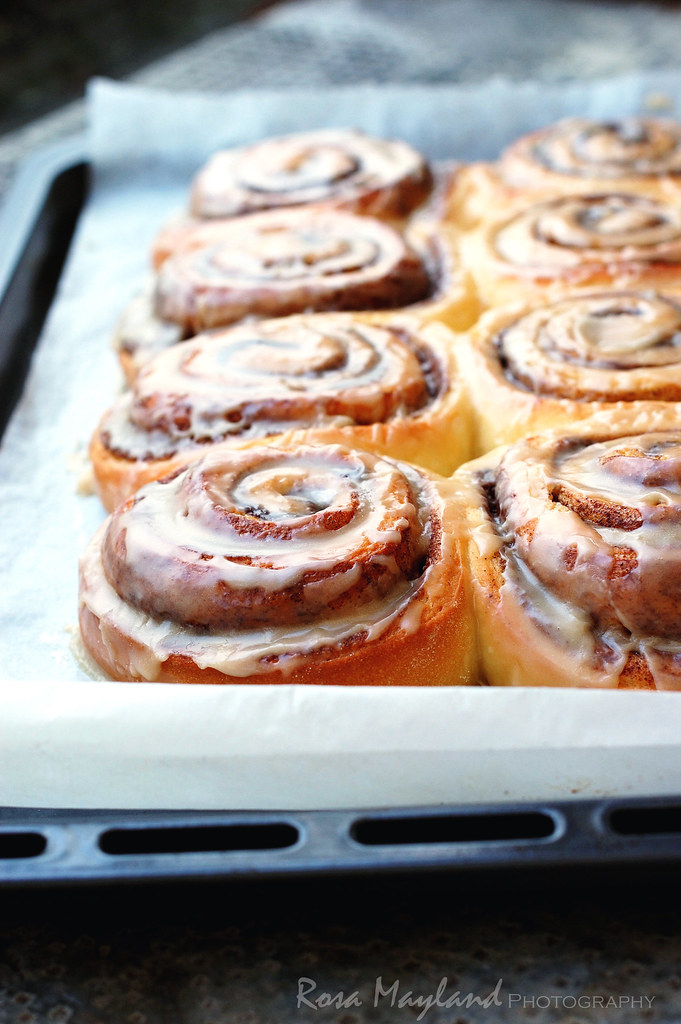
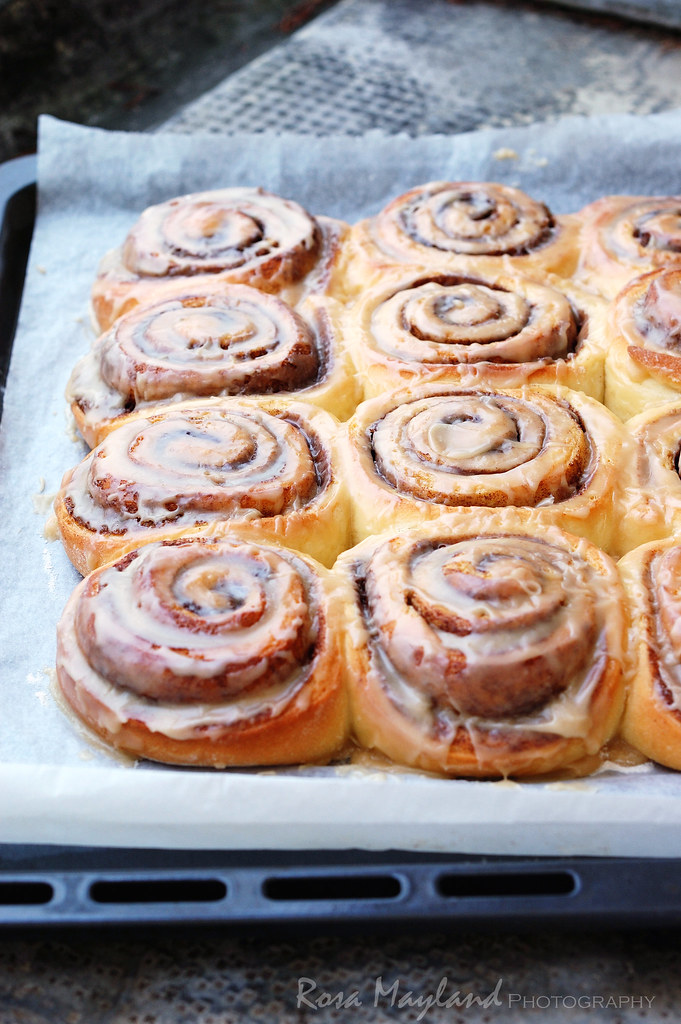
Meanwhile, here’s a recipe for the absolute best “Cinnamon Rolls” I have ever eaten. I hope you’ll enjoy these extremely soft, exquisitely lush and divinely boozy doughy treats as much as I did.

Cinnamon Rolls
Cinnamon Rolls With Baileys Icing
Recipe taken from Peter Reinhart's "The Bread Baker's Apprentice: Mastering The Art Of Extraordinary Bread" and adapted by myself.

Yields 8 to 12 servings.

Ingredients For The Dough:
6 1/2 Tbs (98g) Granulated/castor sugar
1 Tsp Fine sea salt
5 1/2 Tbs (83g) Unsalted butter, at room temperature
1 Large egg, slightly beaten
1 Tsp Pure vanilla extract
3 1/2 Cups (480g) All-purpose flour
2 Tsp Instant yeast
1 1/8-1 1/4 Cups (270-300g) Whole milk, at room temperature

Ingredients For The Filling: 
1/2 Cup Cinnamon sugar (6 1/2 tbs/98g light brown sugar plus 2 tsp ground cinnamon)

Ingredients For The Icing:
2 Cups (240g) Confectioner's sugar, sifted
4 Tbs (60g) Unsalted or salted butter, at room temperature
3-6 Tbs Baileys
1 Tsp Vanilla extract

Method:

1. In an electric mixer (paddle attachment) and on medium-high speed, cream together the sugar, salt and butter. Whip in the egg and vanilla extract until smooth. Then add the flour, yeast and milk. Mix on low speed until the dough forms a ball. Switch to the dough hook and increase the speed to medium, mixing for approximately 10 minutes, until the dough is silky and supple, tacky but not sticky (you may have to add a little flour or water while mixing to achieve this texture).

2. Lightly oil a large bowl and transfer the dough to the bowl, rolling it around to coat it with oil. Cover the bowl with plastic wrap. Let rise at room temperature for approximately 2 hours, or until the dough has doubled in size.

3. Mist your working surface with spray oil and transfer the dough to the working surface.


Cinnamon Rolls
4. Roll out the dough with a rolling pin, lightly dusting the top with flour to keep it from sticking to the pin. Roll it into a rectangle about 1.6cm (2/3 inch) thick and 35cm (14 inches) wide by 30cm (12 inches) long (don´t roll out the dough too thin, otherwise the finished rolls will be tough and chewy rather than soft and plump).

5. Sprinkle the cinnamon sugar over the surface of the dough and beginning at the 35cm (14 inches) end, roll the dough up into a cigar-shaped log, creating a cinnamon-sugar spiral as you roll. With the seam side down, cut the dough into 8 to 12 pieces, each about 3.8cm (3/4 inches) thick.

6. Line one sheet pan with baking parchment and place the rolls approximately 1.5cm (1/2 inch) apart so that they aren´t touching, but are close enough to one another.

7. Let the rolls proof at room temperature for 75 to 90 minutes, or until the pieces have grown into one another and have nearly doubled in size (you may also retard the proofing by putting the cinnamon rolls in the refrigerator for up to 2 days, pulling the pan out of the refrigerator 3 to 4 hours before baking, thus allowing the dough to proof).

8. Preheat the oven to 180° C (350° F) and
position a baking rack in the middle of the oven.

9. Bake the cinnamon rolls for 20 to 30 minutes, or until golden brown.

10. Cool the rolls in the pan for about 10 minutes. Meanwhile mix the butter, confectioner's sugar and vanilla extract together, then add the Baileys 1 tablespoon at a time until the glaze reaches the desired consistency. Streak the icing across the tops, while the rolls are warm but not too hot. Remove the rolls from the pans and place them on a cooling rack (wait for at least 20 minutes before serving).

Remarks:
If Baileys is not your cup of tea, you can substitute it with any other alcohol and if you dislike vanilla extract, you can also replace it with the flavoring of your choice (lemon extract, orange extract, coffee powder, etc...). And in case you prefer plain icing, then
make the glaze without any flavorings (use milk instead of Baileys).


Serving suggestions:
Serve with milk, tea or coffee.
Cinnamon Rolls Glacés Au Baileys
Recette tirée de "The Bread Baker's Apprentice: Mastering The Art Of Extraordinary Bread" par Peter Reinhart et adaptée par moi-même.

Pour 8 à 12 portions.

Ingrédients Pour La Pâte: 
98g de Sucre cristal 
1 CC de Sel de mer fin 
83g de Beurre non-salé, à température ambiante
1 Gros œuf, légèrement battu 
1 CC d'Extrait de vanille pure
480g de Farine blanche 
2 CC de Levure en sèche instantanée
270-300g ml de Lait entier, à la température ambiante
Ingrédients Pour La Garniture: 
1/2 Tasse de Sucre à la cannelle (98g de sucre brun clair/cassonnade + 2 CC de cannelle en poudre) 
Ingrédients Pour Le Glaçage:
240g de Sucre en poudre, tamisé
4 CS de Beurre non-salé ou salé, à température ambiante
3-6 CS de Baileys 
1 CC d'Extrait de vanille pure

Méthode:
1.
Dans un robot de cusine (batteur plat) et à vitesse moyennement élevée, battre le sucre, le sel et le beurre
en crème. Ajouter l'oeuf ainsi que l'extrait de vanille et battre jusqu'à consistance lisse. Puis ajouter la farine, la levure et le lait. Mélanger le tout à vitesse basse, jusqu'à ce que la pâte forme une boule. Remplacer le batteur plat par un crochet pétrisseur et pétrir la pâte à vitesse moyenne, pendant environ 10 minutes, ou jusqu'à ce que la pâte soit souple, soyeuse, humide, mais pas collante (afin d'obtenir cette texture, ajouter un peu de farine - si trop sèche - ou d'eau - si trop mouillée). 

2. Huiler légèrement un grand bol et y transférer la pâte (bien l'enduire d'huile en la faisant tourner dans le bol). Couvrir le bol d'un film plastique et laisser lever à température ambiante pendant environ 2 heures, ou jusqu'à ce que la pâte ait doublé de volume. 

3 . Brumiser votre surface de travail avec de l'huile et y déposer la pâte.

4. Etaler la pâte en un rectangle d'environ 1,6 cm d'épaisseur et de 35cm x 30cm, tout en saupoudrant légèrement le dessus de celle-ci avec de la farine pour l'empêcher de coller au rouleau (ne pas étaler la pâte trop finement autrement les petits pains seront durs et secs au lieu d'être moelleux et humides). 

5. Saupoudrer le sucre à la cannelle sur la surface de la pâte et enrouler la pâte en commençant par replier le bord le plus long pour obtenir un long rouleau. Couper la pâte en 8 à 12 morceaux chacun d'environ 3,8 cm d'épaisseur. 

6. Tapisser une plaque à pâtisserie avec du papier sulfurisé et placer les petits pains sur la plaque en laissant un espace d'environ 1,5 cm entre eux, de sorte à ce qu'ils ne se touchent pas mais qu'ils soient tout de même assez proches les uns des autres. 

7. Laisser vos cinnamon rolls lever à température ambiante pendant 75 à 90 minutes, ou jusqu'à ce qu'ils aient presque doublé de volume (vous pouvez également retarder le processus en les mettant au réfrigérateur - pendant 2 jours au maximum/retirer la plaque du réfrigérateur 3 à 4 heures avant la cuisson afin de permettre aux cinnamon rolls de lever). 

8. Placer une grille au milieu du four et préchauffer le four à 180° C (350 ° F). 

9. Faire cuire les cinnamon rolls pendant 20 à 30 minutes, ou jusqu'à ce qu'ils soient légèrement dorés.

10. Les laisser refroidir dans la plaque pendant environ 10 minutes. pendant ce temps, mélanger ensemble le sucre en poudre, le beurre et l'extrait de vanille, puis ajouter le Baileys une CS à la fois, jusqu'à obtention de la consistance désirée. Etaler le glaçage sur les petits pains encore chauds (mais pas trop). Retirer les cinnamon rolls de la plaque et les mettre sur une grille de refroidissement (attendre au moins 20 minutes avant de les manger).

Remarques:
Si le Baileys n'est pas votre tasse de thé, vous pouvez le remplacer par tout autre alcool de votre choix (liqueur de café, whisky, liqueur d'orange, etc...). Il en va de même avec l'extrait de vanille (extrait de citron, extrait d'orange, café en poudre, etc .. ). Et au cas où vous préféreriez les glaçages simples, utiliser du lait à la place du Baileys et de la vanille.

Idées de présentation:
Servir avec un verre de lait, du thé ou du café.

Cinnamon Rolls

Friday, November 30, 2012

MUJADDARA BURGHUL (LENTIL AND BULGUR PILAF) - PILAF AUX LENTILLES ET AU BOULGOUR & AN EDIBLE MOSAIC BOOK REVIEW

Once you get a spice in your home, you have it forever. Women never throw out spices. The Egyptians were buried with their spices. I know which one I'm taking with me when I go.
- Erma Bombeck

There is something incredibly sumptuous about the food of the Middle East. It is steeped in history and mystery, teasing the palate with exotic and tantalizing flavors. Delicate and spicy, aromatic and fragrant, scented and syrupy-these are some of the words that come to mind. The tastes are rich and pleasing, the images romantic, airy and ancient. Rose petals and orange blossom, tamarind and dates, figs and apricots, mulberries and melons, saffron and orchid root, almonds and pistachios, olives, coriander and cumin-a myriad of flavors and dishes that are intricately entwined in the fascinating history of this vast and exciting region.
- Ghillie Basan, The Middle Eastern Kitchen: a Book of Essential Ingredients with over 150 Authentic Recipes
Spices and herbs are, and have always been an integral part of my cuisine. I intensely treasure them and cannot imagine living without those precious and irreplaceable condiments which not only enhance, complement and balance the flavors of a dish, but also benefit our health (they can be used as natural preventive medecine). A marvelous source of gratification and well-being!

It is one of the main reasons why I am irrevocably attracted to the glorious gastronomy of the countries situated at the crossroads of the Mediterranean basin and the Arabian hinterland. If you want to make my eyes twinkle, my mouth salivate and receive my total attention, then I recommend you to pronounce those three simple words: "Middle Eastern Food" and I'll come running like a worshipful dog on amphetamine.


In my opinion, there is nothing quite as varied, refined, intriguing, dazzling, exhilarating, dreamlike and worthy of "The Thousand and One Nights" than the gourmet fares served at Lebanese (my favorite), Iranian, Palestinian, Syrian, Israeli, Jordanian, Omani, Kuwaiti, Iraqi, Quatari, Saudi Arabian, Yemeni or Emirati tables.

 
8165853872_6e49cbb149_z
So, you can imagine my excitement when the talented Faith Gorsky of "An Edible Mosaic" (her headquarters are in upstate New York) kindly proposed to send me her cookbook "An Edible Mosaic - Middle Eastern Fare With Extraordinary Flair". There was no way I was going to decline her generous offer and pass the opportunity of reviewing this wonderful publication entirely written and illustrated a web friend and colleague whom I respect and have been following for the last three years (I first came across her site in 2009, if my memory does not fail me...).

Having been born and raised in America, nothing predestined this blogger to become a specialist on the subject of Middle Eastern food. As a matter of fact, before she tied the knot with her Syrian husband in the Middle East and lived there for the first six months of her matrimony, she barely had any knowledge of the specialities prepared by the people populating this part of the Arab world. Everything changed the day Faith married her life companion; she discovered and embraced a whole new culture.

 
During her stay in Damascus (the capital of Syria), she had the opportunity to explore and experience firsthand the magic of the cuisine of this region of the globe and even more so when her mother-in-law, who happens to be a master cook, took her under her wing and gave her a thorough course in Middle Eastern cooking that resulted in the creation of "An Edible Mosaic".

Over the past six years, this passionate young lady has visited the Middle East four different times, each trip contributing to deepening her love as well as expanding her enthusiasm for the culinary traditions and civilization of this fascinating land of contrasts. As a result, Faith's travels helped enrich her increasingly successful blog and build a devoted readership, thus ultimately leading her to writing the book I have the honor of introducing to you this Friday.


The Ultimate Communal Meal "Generally, one could say that Near and Middle Eastern and North African cooking and nutrition are healthy. As in other Mediterranean gastronomies, meat is rare and vegetables often used. The religious purity rules also have consequences for the kitchen, which is important for the health of the people.
- Peter Heine, Food Culture in the Near East, Middle East, and North Africa 
With its ten chapters (Basic Recipes, Breads and Pies, Salads, Vegetables and Rice Side Dishes, Appetizers and Light Meals, Beans and Lentils, Chicken and Seafood, Beef and Lamb, Desserts & Drinks), four useful sections (Cooking Tips and Techniques, Basic Cooking Tools, Buying the Right Middle Eastern Ingredients and Middle Eastern Grocery Stores) and many (over a hundred) easily reproducible, inspiring, meticulously detailed, carnivore as well as vegetarian/vegan-friendly, authentic and elegant recipes, "An Edible Mosaic - Middle Eastern Fare With Extraordinary Flair" will rejoice both beginner and experienced cooks. Each entry, side dish, main or dessert presented within the 144 pages of Faith's manual will make your mouth water and nudge you into the kitchen to prepare scrumptious delicacies that are vibrant, remarkably toothsome and nutritionally harmonious. 

Since I am somewhat knowledgeable about Middle Eastern cuisine and already possess a certain number of bestsellers on the topic, I had my doubts on whether or not this cookbook would help me broaden my gastronomic horizon. Well, I am pleased to inform you that I was not deceived at all by it.

"An Edible Mosaic - Middle Eastern Fare With Extraordinary Flair" is far from being boring or uninteresting. Actually, it is an extremely enjoyable read as it is chock-a-block full with delectable ideas for healthy, irresistible and lip-smackingly good dishes (some of which I have never even tried or concocted and plan on testing soon) ranging from "Thyme Spiced Flat Pies", "Tabbouleh", "Fried Eggplants With Garlic And Parsley Dressing", "Fried Cauliflower With Sesame Parsley Sauce", "Saffron Rice With Golden Raisins And Pine Nuts", "Spiced Cheese Balls", "Creamy Chickpea And Yogurt Casserole", "Fish Pilaf With Caramelized Onion", "Chicken Kebabs", "Roasted Green Wheat With Chicken", "Fried Kibbeh", "Scrambled Eggs With Meat And onions", "Upside Down Rice Casserole", "Sweet Cheese Pastry (Knafeh)", "Coconut Semolina Cake (Harissa)", "Creamy Hot Sahlab Drink" to "White Coffee". Plenty enough meals to keep you busy for several months!


As you can imagine, choosing a recipe to showcase on "Rosa's Yummy Yums" wasn't an easy task (especially if you are a tergiversator named Rosa). It took me a while before I could make up my mind. Anyway, after a week of intense delibaration, I selected a hearty meat-free dish called "Mujaddara Burghul" ("Lentil And Bulgur Pilaf" in English) which is traditionally savored with cramelized onions and accompanied by plain yogurt, tomato, cucumber and/or onions slices (mine was served with some cooked beetroot since it is soon winter here in Switzerland and I disapprove of buying out of season vegetables).

The outcome was highly satisfying and the legume, cereal and spice addicts that we are were totally seduced by this main course's unique combination of bulgur, lentils and seasonings. Each element composing this magnificent one-pot mingled together perfectly, thus causing an exclamation of delight and a sigh of bliss after every forkful.


An economical, filling, fit, comforting and exquisite pilaf. One of life's simple pleasures!

 
Mujaddara Burghul (Bulgur And Lentil Pilaf)
Recipe by Faith Gorsky of
"An Edible Mosaic".


Serves 6.

Ingredients:

1 1/3 Cups (275g) Dried brown lentils
6 Cups (1.5 liters) Water
2 Tbs Olive oil
2 Tbs Butter
2 Large Onions, quartered and thinly sliced
1 Bay leaf
2 Pods cardamom, cracked open
2 Cloves
2 Tsps Ground cumin

1/2 Tsp Ground cinnamon
1 1/2 Tsp Fine Sea salt

1/4 Tsp Freshly ground black pepper
1 Cup (185g) Coarse-ground bulgur wheat
1 1/2 Cups (300ml) Boiling water

Thick plain yogurt (optional, for serving)

Method:
1. Sort through the lentils to remove any small stones or pieces of dirt, and then rinse with cold water in a colander.

2. Bring the rinsed lentils and the water to a boil in a lidded medium saucepan. Cover the saucepan, turn the heat down to a simmer, and cook until the lentils are tender but not mushy, about 20 to 30 minutes, stirring occasionally and adding more water as necessary so that they’re always immersed; strain and set aside.
3. While the lentils cook, heat the oil and the butter in a large skillet over moderately-high heat; add the onion and sauté until completely softened but not yet browned, about 10 minutes, stirring occasionally.

4. Transfer half the onion to a small bowl and set aside. Continue cooking the remaining onion until deep caramel in color, about 5 to 10 minutes, stirring occasionally and adding a splash of water as necessary if the onion starts to get too dark. Set aside.
5. Put half a kettle of water on to boil. Transfer the sautéed onion (not the caramelized onion) to a medium saucepan. Add the bay leaf, cardamom, clove, cumin, cinnamon, salt, and pepper and cook 1 minute.
6. Add the bulgur and cook 1 minute more, stirring constantly.
7. Give the bulgur a stir, then cover the saucepan, turn the heat down to very low, and cook until tender, about 10 minutes (do not open the lid during this time).
8. Turn the heat off and let the bulgur sit 10 minutes, then fluff with a fork and gently stir in the lentils. Taste and add additional salt, pepper and olive oil if desired.
7. Transfer to a serving dish and top with the caramelized onion.


Remarks:
Instead of making this dish with dried brown lentils, you can prepare it with the same amount of green lentils or 2 cans of brown lentils, rinsed and drained.
For an easy variation of this dish, use white or brown rice instead of bulgur wheat.

Serving suggestions:
Serve with plain yogurt (to spoon on top) and accompany by sliced tomatoes, cucumber and/or onions.

Mujaddara Burghul (Pilaf Au Bulgur Et  Aux Lentilles)
Recette par Faith Gorsky de
"An Edible Mosaic".


Pour 6 personnes.

Ingrédients:
275g de Lentilles brunes séchées
1,5L d'Eau
2 CS d'Huile d'olive
2 CS de Beurre
2 Gros oignons, coupés en quartiers et tranchés finement
1 Feuille de laurier
2 Gousses de Cardamome, écrasée
2 Clous de girofle, entiers
2 CC de Cumin en poudre
1/2 CC de Cannelle en poudre
1 1/2 CC de Sel de mer fin
1/4 CC de Poivre noir fraîchement moulu

185g de Boulgour concassé en gros grains
300ml d'Eau
Yaourt nature épais (en option, pour servir)

Méthode:
1. Trier les lentilles pour enlever les petites pierres ou les impuretés, puis rincer à l'eau froide dans une passoire.
2. Dans une casserole, porter les lentilles rincées et l'eau à ébullition. Couvrir la casserole, et baisser le feu. Laisser mijoter/cuire jusqu'à ce que les lentilles soient tendres mais pas molles (
remuer de temps en temps et ajouter plus d'eau si nécessaire afin qu'elles soient toujours immergées), environ 20 à 30 minutes. Egoutter et mettre de côté.
3. Dans une grande poêle, faire chauffer l'huile et le beurre à feu vif, ajouter l'oignon et faire revenir pendant
environ 10 minutes (remuer de temps en temps), jusqu'à ce qu'il soit mou et translucide mais pas encore doré.

 
Bulgur & Lentil Pilaf 2 4 bis
4. Transférer la moitié de l'oignon dans un petit bol et mettre de côté. Poursuivre la cuisson de l'oignon restant pendant environ 5 à 10 minutes (remuer de temps en temps et ajouter un peu d'eau si l'oignon commence à devenir trop sombre), jusqu'à ce qu'il ait caramélisé. Mettre de côté.
5. Dans une casserole de taille moyenne, faire bouillir les 300ml d'eau. Ajouter, l'oignon cuit (pas l'oignon caramélisé), la feuille de laurier, la gousse e cardamome, les clous de girofle, le cumin, la cannelle, le sel et le poivre. Faire cuire pendant 1 minute.
6. Ajouter le boulgour et faire cuire encore 1 minute suplémentaire, en remuant constamment.
7. Couvrir la casserole, baisser le feu à très doux et laisser cuire pendant envirion 10 minutes, jusqu'à ce qu'il soit tendre (ne pas ouvrir le couvercle).

8. Baisser le feu et laisser le boulgour reposer pendant 10 minutes, puis l'égrainer avec une fourchette et incorporer délicatement les lentilles. Goûter, puis saler et poivrer selon votre goût et ajouter un trait d'huile d'olive si désiré.
7. Transférer dans un plat de service et garnir avec les oignons caramélisés.

Remarques:

Au lieu de faire ce plat avec des lentilles brunes séchées, préparez-le avec des lentilles vertes ou 2 boîtes de conserves de lentilles brunes, rincés et égouttés.
Pour varier un peu, le boulgour peut être remplacé par du riz blanc ou brun.

Suggestions d'accompagnement:

Servir avec le yaourt (versé sur le dessus du plat) et accompagner de tranches de tomates, de concombre et/ou des rondelles d'oignons.


Bulgur & Lentil Pilaf 5 8 bis 

Friday, November 2, 2012

PLUM TART WITH SCONE PASTRY & MASCARPONE - TARTE AUX PRUNES À LA PÂTE À SCONES ET AU MASCARPONE

Plum Tart 5 3 bis
It's wonderful to be back. Back among the mountains that remind us of our vulnerability, our ultimate lack of control over the world we live in. Mountains that demand humility, and yield so much peace in return.
- Alex Lowe
Autumn is my favorite season and it is also the perfect moment to take a vacation in the dazzling Swiss Alps, and more particularly in the Berner Oberland. It has to be said that nothing can quite beat the unique splendor and romantic ambiance of canton Bern's highlands when the trees have turned an intense shade of crimson and the fading sunlight bathes everything in gloriously fiery hues.

As a child, this is where I used to spend my October school holidays. Back then, I was already fascinated by this astonishing region and nowadays I am still profoundly attracted to its incredibly spellbinding magnificence. Hence, I incessantly keep returning there no matter the length of my stay - for one short day or for a week, it doesn't matter as long as I get my countryside "fix".


It is absolutely impossible not to fall madly in love with the Bernese Oberland. With its rugged snow-capped peaks, drop dead gorgeous waterfalls, stunning glaciers, soft and lush green dales, high-altitude emerald lakes, idillyc chalet villages and crisp clear air, this unbelievably beautiful and enthralling rural area of central Switzerland is a nature sanctuary which I like to compare to the Garden of Eden. And a paradise it is indeed as its spectacularly transcending landscapes, staggering panoramas as well as limitless trails through deep pine tree forests, rolling hills, rocky mountainsides and delightful meadows make it a hiking eldorado for both advanced and beginner trekkers. Whether you are a person who needs constant action and movement or somebody who is happy loafing around, there is no better place to enjoy your leisurely time.


Like most touristic havens, the Bernese Highlands are very popular during the summer and winter months. Personally, I prefer to go in this neck of the woods when fall is fully in bloom and the golden sceneries are so amazing that you lose the power of speech and tears of wonder/joy appear in your eyes. It is also a lot wiser to visit this lofty province at this period of the year, because rental prices are at their lowest and it is less crowded - you'll scarcely meet another soul (backpackers or skiers); the only living beings you'll come across will be the locals (mostly farmers) and their animals (cows, goats, cats, dogs, etc...).

In the past, my parents and I resided in a basic, yet comfy appartment with 70's retro furniture, an antique fire stove, a veranda and creeking/shaking pine floors which was part of an imposing and ancient (a few hundred years old) traditional farmhouse in which the owners lived. It was located outside the minuscule "town" of Zweisimmen (check out my posts on the subject) and was a bit isolated. The back of the building faced a thick and somewhat gloomy wood and the front overlooked the majestic Spillegerten (link to picture: 2nd photo from the top) and sublime Simmental valley. Apart from the muffled sound of the MOB train whistle in the distance, the bored moo of the cows and the soothing ring of their bells, silence prevailed. A sensational and extraordinarily relaxing experience!


For my very first getaway with P. since 1998 (!!!), I wanted to break the routine and rent an apartment which would offer similarly mind-blowing settings and an equally impressive scenic view, but which would be in another municipality. Our choice went to a small, simple, snug and welcoming two room duplex (self-catering) situated in the picturesque "suburbs" of Lenk (the district's population is 2450 and ruminants outnumber people), in Zelg, a tiny, bucolic and calm hamlet at the foot of the striking Mt. Wildstrubel and not far away from (only 500m) the tumbling Simmenfälle (waterfalls).


Climb the mountains and get their good tidings. Nature's peace will flow into you as sunshine flows into trees. The winds will blow their own freshness into you, and the storms their energy, while cares will drop away from you like the leaves of Autumn.
- John Muir

 
Aside from being a dreamlike accomodation with a view to knock your socks off, another plus point of "Haus Salvisberg" is its handy proximity to cable car stations (Metschbahn & Betelbergbahn) as well as to numerous exquisite footpaths, (both easy and moderatly difficult) leading to moon-like summits, verdant montane grasslands, rustic alpine huts and magic cascades. Valuable assets that cannot be underlooked and which will enchant admirers of untouched wildness and passionate walkers alike.

As a matter of fact, from this ideal location, many fantastic excursions on well-marked and maintained tracks can be done. Since that is what P. and I came for, we indulged in a little sport by going out every single day and trekking from morning to evening through the harshest terrains as well as smoothest pastures. The vistas were so grandiose and entertaining that we could have wandered for hours on ends without being bored. There's so much overwhelming beauty in this corner of the world that we forgot how tired our limbs were and how numb, heavy and achy they felt - at the end of each journey we were knackered, but we were gleefully content and our heads were full of ravishing memories...

After having spent one week cooking uncomplicated meals, not baking at all and hardly being challenged culinary-wise, I was glad to rebound with my kitchen and put my brand new oven to work again. In order to celebrate our coming home, I prepared a semi guilt-free tart* with the last plums (one of my favorite dessert fruits) of the season and my trademark low-fat pastry.
This home classic and personal invention is easy to put together, but it is nonetheless almighty exquisite and deliciously homey. A heavenly treat which is best savored with a glass of quality Porto or a cup of tea and while nostalgically remembering past travel adventures.


* It contains about 95g butter less than the ones confectioned with shortcrust dough.


Plum Tart With Scone Pastry & Mascarpone
Recipe by Rosa Mayland, November 2012.

Serves 4-6.


Ingredients For The "Scone Pastry":

338g Plain flour
2 Tsp Baking powder
1 Tsp Fine sea salt
75g Unsalted butter
38g Castor sugar
Milk, enough to form a firm dough
Ingredients For The "Filling":
250g Mascarpone, softened
120g Light brown sugar
740g Plums, halved and stoned
Cinnamon, to taste

Method For The "Scone Pastry":

1. Heat the oven to 190°C (375°F) and grease a 28cm (11 inches) tart pan. 
2. Mix together the flour, baking powder and salt, then rub in the butter.
3. Stir in the sugar.
4. Add the milk  and incorporate well (with the help of a knife) by cutting and turning the dough until it forms a clean ball.

5. Roll out the pastry and line the base of your tart pan.
6. Trim the edges and prick the base of the tart with a fork.

Method For The "Filling":
7. Spread the mascarpone over the base of the tart and sprinkle 50g light brown sugar over the cheese.
8. Place the plums, cut side up, in neat concentric circles in the tart shell. Cowd the fruits, but do not overlap.
9. Sprinkle the cinnamon and leftover sugar over the fruits.
10. Bake for about 40 to 50 minutes, until the fruits are soft and the crust is golden brown.
11. Cool on a wire rack.
12. Serve.


Remarks:

You can replace half of the plain flour by whole wheat flour and the castor sugar by light brown sugar.
For this recipe I used quetsch plums (the best plums, in my opinion), but any other type of plum (fresh or frozen) or fruit (pluots, mirabelles, apples, pears, peaches, etc...) will do.

Serving suggestions:

Serve for tea time or dessert, with a glass of Porto or a cup of tea.
Drizzle a little runny honey over the top of the tart if  you find that it is not sweet enough for your taste.

Plum Tart 6 3 bis

Tarte Aux Prunes Et Au Mascarpone
Recette par Rosa Mayland, Novembre 2012.

Pour 4 à 6 personnes.

Ingrédients Pour La "Pâte A Scones":
338g de Farine
38g de Sucre cristallisé
2 CC de Poudre à lever/pâte
1 CC de Sel de mer fin
75 g de Beurre non salé
Assez de lait pour former une boule de pâte

Ingrédients Pour La "Garniture":
250g de Mascarpone, ramolli
120g de Cassonade

740g de Prunes, coupées en deux et dénoyautées
Cannelle en poudre, selon goût

Méthode Pour La "Pâte A Scone":
1. Préchauffer le four à 190 ° C et graisser un moule à tarte de 28cm de diamètre.
2. Mélanger ensemble la farine, la poudre à lever et le sel, puis
ajouter le beurre et frotter la farine et le beurre entre les doigts afin d'obtenir un mélange qui ait une texture sabloneuse.

3. Incorporer le sucre.
4. Verser le lait, graduellement, tout en mélangeant bien (ne plus ajouter de lait quand la pâte aura atteint la bonne consistance/ni trop mouillée, ni trop collante) et former une boule.
5. Etaler la pâte et garnir votre moule à tarte avec.
6. Couper les bords qui dépassent et piquer le fond de la tarte avec une fourchette.

Plum Tart Lenk Betelberg 1 6 bis
Méthode Pour La "Garniture":
7. Etaler le mascarpone sur la base de la tarte et saupoudrer avec 50g de cassonade.
8. Garnir avec les prunes (côté coupé vers le haut et placée en cercles concentriques bien serrés).
9. Saupoudrer avec la cannelle et le sucre restant.
10. Cuire pendant environ 40 à 50 minutes, jusqu'à ce que les fruits soient tendres et que la pâte soit bien dorée.
11. Laisser refroidir sur une grille.
12. Servir.

Remarques:
Vous pouvez remplacer la moitié de la farine par de la farine complète et le sucre cristallisé par du sucre brun clair.
Pour cette recette j'ai utilisé des quetsches, mais n'importe quelles prunes (fraîches ou congelées) feront l'affaire. Bien entendu, d'autres fruits peuvent être utilisés (pluots, mirabelles, pommes, poires, pêches, etc...).

Suggestions d'accompagnement:
Servir à l'heure du thé ou pour le dessert, avec un verre de Porto ou une tasse de thé.
Si vous trouvez que la tarte n'est pas assez sucrée à votre goût,
arosez-la d'un filet de miel liquide.


Plum Tart 3 6 bis