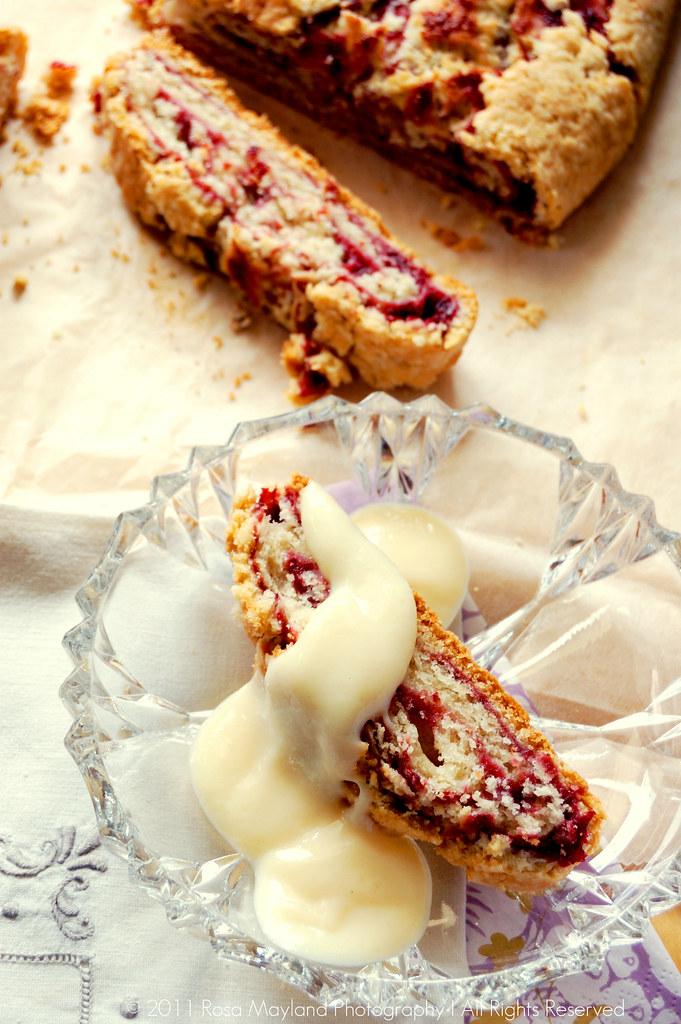
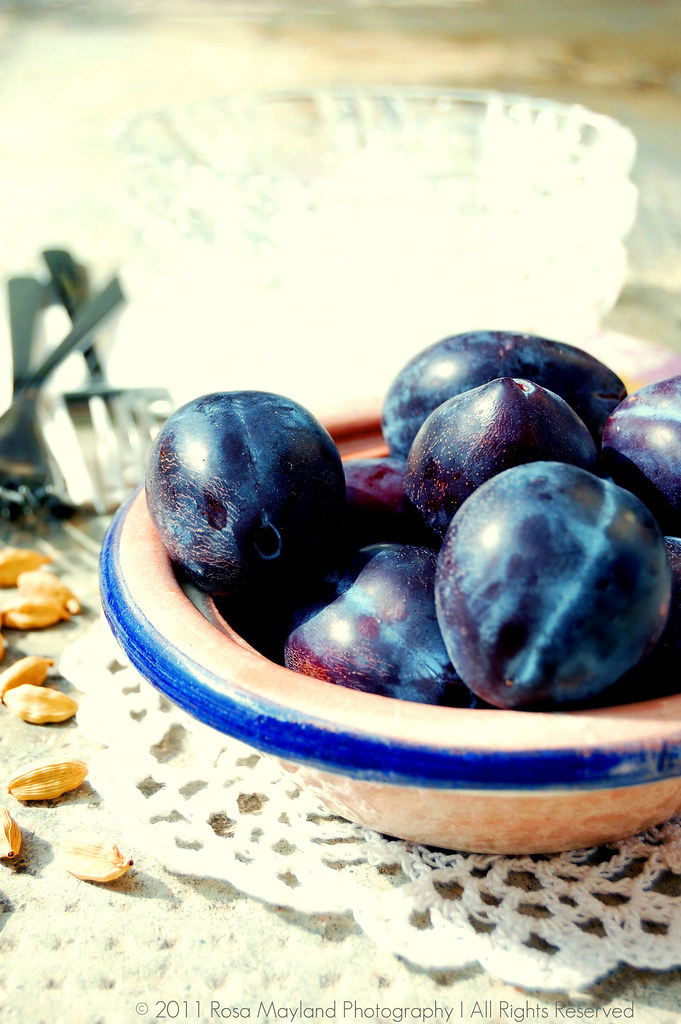
I am very proud to have British blood (Viking too, as England was invaded by the Danes and under the Danelaw for more than a century) running through my veins and therefore I have a strong attraction for the culture of my ancestors, hence if you are no stranger to my writings you must already know that I am an ardent and passionate defender of the cuisine of my country of origin as I believe that English food is highly underrated and still gets an undeserved as well as unfair bad rap (read this article)... "There is no such thing as bad food/cuisine, only lousy cooks using low-grade ingredients and crappy recipes!"
- Rosa Mayland, 2011
"She did not so much cook as assassinate food."
- Storm Jameson (1891-1986)
I am totally certain that people's negative vision and quasi-xenophobic stereotyping of this astounding island's unique specialities comes from the fact that they haven't yet tasted the real deal and have only eaten unfortunate dishes that were very badly prepared by untalented and clueless "cooks". When you come across disgusting chew, remember that you must never blame the cooking customs of a country, but rather the one who has created such abominable grub. Therefore, it is unjust to judge the gastronomy of a place when you haven't fed on the right fares.
Believe it or not, in the past, Great Britain was avant-gardish and its culinary legacy used to have a good reputation, but regretfully certain recent events in history have damaged it considerably. For all those of you who smirk when they hear that and doubt this affirmation, it has to be said that ancient hearty, humble, scrumptious and more recent colonially-tinted British food has, in its time, inspired the rest of the world for many years. Did you know that the Anglo-Saxons developed meat and savoury herb stewing techniques before the practice became common in the rest of Europe, that the Norman conquest introduced exotic spices during the Middle Ages and that the British Empire facilitated a knowledge of India's elaborate kitchen traditions of pungent, penetrating spices and herbs? I'm pretty sure not. Well, that is a detail all haters and foulmouthed criticizers must be conscious of before they start bringing Brit cooking down in flames and spreading false propaganda.
"There is much deliciousness in the British Isles; you just have to find it..."
- Fergus Hendersen
In days of yore, the peninsula was influenced by foreign invaders like the Vikings (from Scandinavia, but especially from Danemark), the Romans (from Italy) and even the Franco-Normans (from France) who all brought with them a melting pot of ingredients and foods to the English table, and imported new cooking methods and ideas.
Thanks to the French asilants, medieval English cookery abunded with recipes containing exotic seasonings such as saffron, mace, nutmeg, pepper, ginger and sugar. Many traditional recipes are still made nowadays and this heritage can be found in many contemporary treats such as "Christmas Pudding", "Christmas Cake", "Hot Cross Buns", "Mince Pies", etc... Then, with the colonization of far-away regions of the globe by the Empire tea was imported from India and British citizens started getting obssessed by curries, condiments and spicy sauces which are now an integral part of the rich and impressive food culture of England. In addition, immigrant workers have massively contributed to expanding this land's culinary horizon. Open-mindedness, assimilation and intergration has always been part of this nation's characteristics and that is why the term "fusion" is not alien to its folks.
Unfortunately, much harm was inflicted on English gastronomy throughout the Industrial Revolution, WWI, WWII and poor economic eras (1970's especially). During the 18th and 19th century, nobody had time to spend time in the kitchen and Britain was in the forefront of canned foods as well as other mechanical preservation methods. From 1914 until early into the 1950’s, little food was left for private consumption (rationing of meat, sugar, butter and eggs). As a result, the decline of quality produces and meals became flagrant. Sadly, it is then that Great Britain acquired its status as gastronomic joke worldwide.

"British food has not traditionally been regarded as one of the world's great cuisines, and yet Stilton cheese, Scottish raspberries, Goosnargh duck and Welsh lamb are internationally renowned and celebrated. And then there are all those dishes and recipes that inspire passionately loyaltly among the initiated: Whitby lemon buns and banoffi pie, for example; pan haggerty and Hendersen's relish. All are as integral of the country's landscape as green fields, rolling hills and rocky costaline."
- Andrew Webb, "Food Britannia"
Although England's period of culinary disgrace lasted long, the joke is finally starting to get forgotten. One can now witness an extraordinary comeback in popularity of British food and the world cannot stop speaking about the archipelago's magnificent regional produces, fine dishes, awesome chefs and renowned restaurants/gastropubs. This change of situation brings me happiness because I wish that more folks out there will be able to get initiated to the proper stuff and discover as well as appreciate what I have been treasuring all my life. Light has definitely to be made on this important part of England's patrimony. My dream is that others learn to enjoy and respect it as much as I do...
You've got to understand that I have been literally brought up on the finest English specialities (made by expert hands too) and everything that ever graced my plate has been a real feast for my taste buds and a total enchantment. My grandparents, their friends and my mother have never deceived me when it comes to being terrific home chefs and introducing me to Britain's best recipes. This is the reason why I cannot accept that certain mean and uneducated individuals continue to spread false rumors about a gastronomy they don't grasp/understand at all and have not experienced correctly (just because it is your opinion and you don't like certain dishes, doesn't mean that they are horrible or make a generality)!
So, today, I wish to share with you my personal recipe for "Trifle" as this old-fashioned delight deserves all your attention, especially if it is put together with a lot of loving care and without speeding up steps or forgetting that quality must always rule in the kitchen.
This sweet course is very popular at the moment and it is not rare to see excellent recipes for it in overseas magazines or on international blogs. Most of the time I find them interesting and mouthwatering, but I must admit that I often feel a little frustrated as most of them are too simplistic, a pale copy and lazy interpretation of the original. Besides, it is still not rare to watch a TV programm ("Come Dine with Me" on Channel 4) and see somebody shamelessly offering their chokingly disgusting and terrifyingly industrial 1970 version of that classic (low-grade store-bought cake, custard from a can or a packet, additive-laden jelly, Spanish greenhouse-grown strawberries and whipped cream from a tube). A true disgrace!
For those who have not the slightest idea regarding what a "Trifle is, then here's a short explaination. The origin of the name can be traced back to 1596 and it refers to a sweet course - very similar to a "Fool" - made with thick cream flavored with sugar, ginger and rosewater. It is only sixty years later that milk was added and the custard was poured over alcohol-soaked leftover bread. From then on, it hasn't stopped evolving in order to become the pudding we are all accustomed to seeing these days. And contrarily to common belief, the inclusion of gelatin is not a recent variation. In reality, the earliest known recipe to include jelly dates from 1747.
Despite being quite a straight-forward interpretation of the original recipe, my "Deluxe Traditional English Trifle" is nonetheless a personal creation and is quirkier and more versatile than the typical layered pud served by your granny. Mine has no trace of that repulsively wobbly mass (I adore homemade jelly, but find it not to be a must in "Trifle" since it adds nothing much to it and generally is not liked by most munchers), abominable factory-made custard or of any fertilizer-boosted fruits, the pound cake has been baked by myself (you could also use "Ladyfingers" or "Sponge Cake"), it is spiked with Port rather than Sherry, can be adapted to all seasons and contains some extra lemon juice as well as zest for more freshness, sharpness and piquantness. And finally, but not lastly, each of its components are homemade from scratch, so it is a top-notch delicacy. It is so refreshing, fruity, smooth, regressive, exquisite and addictive that I have converted my 100% Swiss boyfriend into a trifle-aholic like me...
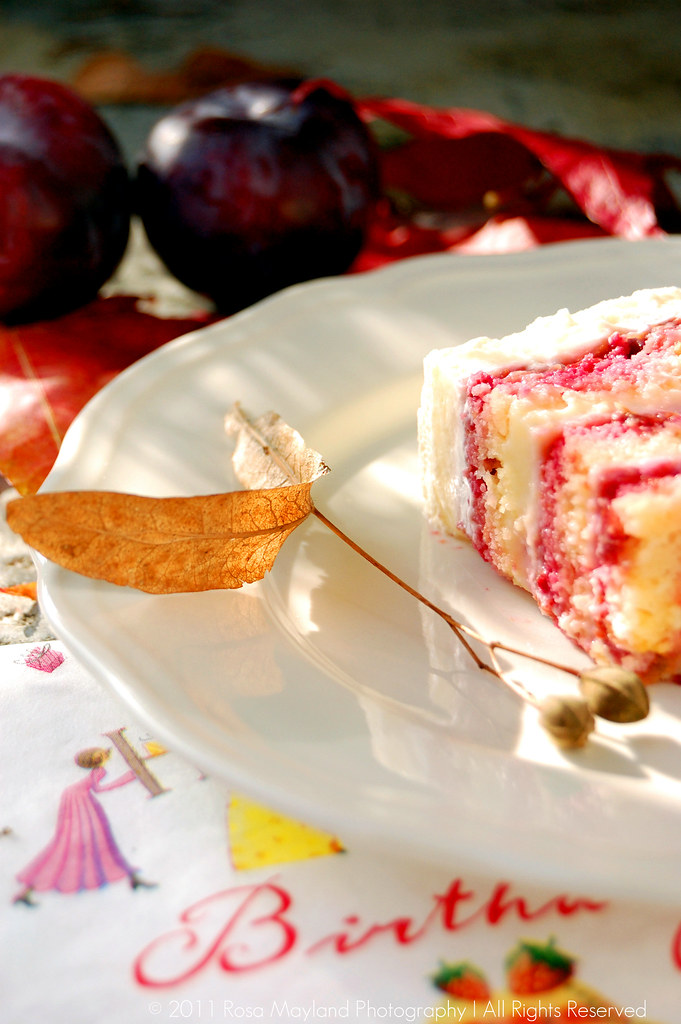
~ Deluxe Traditional English Trifle ~
Recipe by Rosa Mayland, November 2011.
Ingredients For The "Cakes":
85g (3oz) Unsalted butter, at room temperature
85g (3oz) Castor sugar
2 Eggs (~ 63g)
1 Tsp Pure vanilla extract
125g (4.5oz) All-purpose flour
1 Tsp Baking powder
1/4 Fine sea salt
3 Tbs Whole milk
Ingredients For The "Pastry Cream":
2 1/4 Cups (540ml) Whole milk
1/3 Tsp Fine sea salt
4 Tbs Cornstarch
1/2 Cup (110g) Castor sugar
2 Big eggs (~ 70g)
1 1/2 Tsp Pure vanilla extract
4 Tbs Unsalted butter, cut in small cubes
Ingredients For "Assembling The Trifle":
2 1/4 - 1/2 Cups (810 - 900g) Fruit compote (see comments)
2 Lemond (organic)
1 Tbs Light brown sugar
Red Port, to taste
1 Cup (250ml) Double cream (35%), whipped
1/2 Cup (90g) Matchstick almonds, toasted

Method For The "Cakes":
1. Preheat the oven to 180° C (350° F), then grease two 3x6 inches rectangular cake tins and
line the bases with baking paper.
2. Mix together the sifted flour, baking powder and salt. Set aside.
3. Cream the butter and sugar together in a bowl until pale, light and fluffy.
4. Add the eggs, one at a time, beating the mixture well between each addition and a tablespoon of the flour with the last egg to prevent the mixture from curdling and separating. Then, mix in the vanilla extract.
5. Incorporate the flour mixture by gently folding it in the egg mixture and add enough milk to obtain a batter that falls reluctantly from the spoon.
6. Spoon the mixture into the prepared tins, level the top and bake for 30-35 minutes or until golden and a skewer inserted in the centre of each cake comes out clean.
7. Let cool in the pan for ten minutes before turning out on to a wire rack and leaving to cool completely.
Method For The "Pastry Cream":
1. Put the milk and salt in a pan, bring to a light boil.
2. In a large mixing bowl, whisk together the sugar, cornstarch, eggs and vanilla extract until smooth, fluffy and light in color.
3. While constantly whisking, slowly pour the milk into the egg mixture.
4. Return the whole to the saucepan.
5. Over medium heat and while whisking non-stop, cook until you get a thick consistency (just bring to a slight boil).
6. Remove from heat and pour into a bowl. Let cool for 10 minutes and then incorporate the butter, a little at a time, until the pastry cream is smooth and shiny .
7. Cover the surface with clingplastic, directly touching the cream. Let cool completely before placing in the refrigerator.

Method For "Assembling The Trifle":
1. Cut the cake into slices (0.5 - 0.8mm/0.2 - 0.3 inches) and whisk the pastry cream until smooth again. Set aside.
2. Zest both lemons and juice them, then mix the zest as well as juice together with the brown sugar. Set aside.
3. Put 1/3 of the cake in the bottom of the bowl. Pour 1/3 of the lemon juice mixture on to it and do the same with the Port.
4. Spread 1/3 of the compote over the cake, then spread 1/3 of the pastry cream over it.
5. Repeat steps 3 and 4 two more times and then top with the whipped cream.
6. Put into the fridge to chill.
7. Before serving, sprinkle with the toasted almonds.
Comments:
Of course, I am quite aware that the fruit sauce I used is not in season anymore, but be reassured, mine came from the stock I have in my freezer. It can easily be replaced by the puree of your choice (cranberry, apple, pear, orange, chestnut, etc…).
The cake can be made up to two days in advance and kept tightly wrapped in clingfilm or frozen for up to 3 months.
The pastry cream as well as the compote can also be made ahead and kept in the fridge for up to 5 days.
I recommend that you chill the trifle for at least 4 hours (overnight is even better) before serving as then the flavors can fully develop.
Keep the trifle in the refrigerator for up to 2 days.
Serving suggestions:
Serve for dessert with a good cup of strong coffee, a glass of liquor or sweet wine.
~~~~~~~~~~~~~~~~~~~~~~
~ Trifle Anglais Traditionnel Revisité ~
Recette Par Rosa Mayland Novembre 2011.
Ingrédients Pour Le "Gâteau":
85g de Beurre non-salé, à température ambiante
85g de Sucre cristallisé
1 CC d'Extrait de vanille pure
2 Oeufs (~ 63g)
125g de Farine
1 CC de Poudre à pâte/lever
1/4 de Sel de mer fin
3 CS de Lait entier
Ingrédients Pour La "Crème pâtissière":
540ml de Lait entier
1/3 CC de Sel de mer fin
4 CS de Maïzena (fécule de maïs)
110g de Sucre cristallisé
2 Gros oeufs (~ 70g)
1 1/2 CC d'Extrait de vanille pure
60g de Beurre non-salé, coupé en petits cubes
Ingrédients Pour "Assembler le Trifle":
810-900g de Compote de fruits (voir commentaires)
2 Citrons (bio)
1 CS de Sucre brun clair
Porto rouge, selon au goût
250ml de crème double, fouettée
90g d'Amandes allumettes, torréfiées

Méthode Pour le «gâteau»:
1. Préchauffer le four à 180 ° C (350 ° F), puis beurrer 2 moules à cake rectangulaires de 8x15cm et recouvrir les fonds de papier sulfurisé.
2. Mélanger ensemble la farine tamisée, la poudre à pâte et le sel. Réserver.
3. Dans un bol moyen, battre le beurre et le sucre en pommade (le mélange doit être pâle et léger).
4. Ajouter les oeufs, un à un, en les incorporant complétement après chaque ajout. Ajouter une cuillère à soupe de farine avec le dernier œuf afin d'éviter que le mélange se sépare, puis incorporer l'estrait de vanille.
5. Incorporer la farine en pliant délicatement et ajouter assez de lait afin d'obtenir une pâte qui tombe de la cuillère (mais qui n'est pas liquide - telle une pâte à gâteau ordinaire).
6. Répartir la pâte également dans les moules, lisser et cuire cuire pendant 30-35 minutes ou jusqu'à ce que les gâteaux soient dorés et que la lame d'un couteau insérée en leur centre en ressorte propre.
7. Laisser refroidir dans les moules pendant dix minutes avant de démouler. Laisser refroidir sur un grille.
Méthode pour la "Crème pâtissière":
1. Mettre le lait et le sel dans une casserole, porter à ébullition (tout juste).
2. Dans un grand bol, battre ensemble le sucre, la fécule, les oeufs et la vanille jusqu'à ce le mélange soit pâle et mousseux.
3. Tout en fouettant constamment, verser lentement le lait dans le mélange (tempérage).
4. Verser l'ensemble dans la casserole.
5. À feu moyen et en fouettant en continu, faire cuire jusqu'à obtention une consistance épaisse, lisse et crémeuse.
6. Après ébullition, retirer du feu et versez dans un bol. Laisser refroidir pendant 10 minutes puis incorporer le beurre, un peu à la fois, jusqu'à ce que la crème pâtissière soit lisse et brillante.
7. Couvrir la surface avec du film plastique (toucher directement la crème pâtissière). Laisser refroidir complètement avant de placer dans le réfrigérateur.
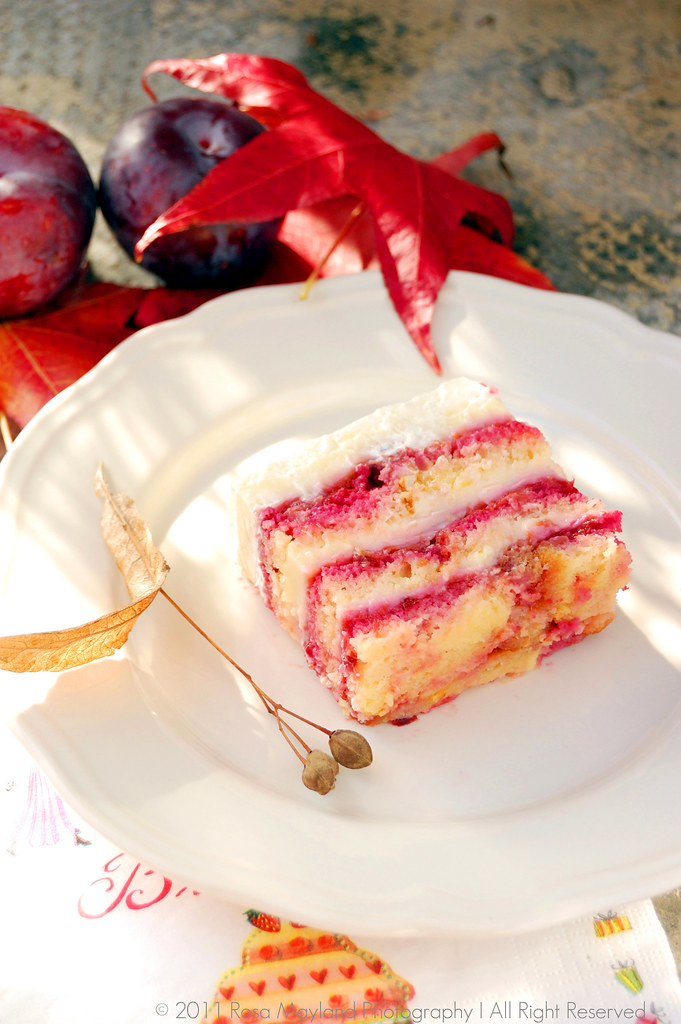
Méthode Pour "Assembler Le Trifle":
1. Couper les gâteaux en tranches de 0.6-0.8mm et fouetter la crème pâtissière jusqu'à obtention d'une consistance lisse. Mettre de côté.
2. Prélever le zeste des deux citrons et les presser, puis mélanger le zeste et le jus avec le sucre brun. Mettre de côté.
3. Mettre 1/3 des tranches dans le fond du bol. Mouiller avec 1/3 du jus de citron et de faire la même chose avec le porto.
4. Étaler 1/3 de la compote sur les tranches de cake, puis étaler 1/3 de la crème pâtissière sur cette dernière.
5. Répétez les étapes 3 et 4 encore deux fois, puis décorer le dessus du trifle avec la crème fouettée.
6. Mettre au réfrigérateur.
7. Avant de servir, saupoudrer avec les amandes.
Commentaires:
Les prunes ne sont plus de saison (j'avais préparé cette recette lorsqu'ils était encore de saison), mais vous pouvez remplacer cette compote par la compote de votre choix (pommes, poires, cranberries, orange, châtaignes, etc...).
Les gâteaux peuvent être faits 2 jours à l'avance et enveloppés dans un film plastique ou congelés (maximum 3 mois).
La crème pâtissière ainsi que la compote peuvent également être préparées à l'avance et conservées au réfrigérateur pendant 5 jours maximum.
Je vous recommande de réfrigérer le trifle pendant au moins 4 heures (c'est encore meilleur après une nuit au réfrigérateur) avant de servir car de cette manière les saveurs peuvent se développer complètement.
Conserver pas plus de 2 jours au frigo.
Idées de présentation:
Servir pour le dessert avec une bonne tasse de café, un verre de liqueur ou de vin liquoureux.