Showing posts with label Spices. Show all posts

Friday, September 12, 2014

SPICY MIDDLE EASTERN-STYLE CHICKPEA, BELL PEPPER, EGGPLANT, TOMATO AND TAHINI STEW (VEGETARIAN) - RAGOÛT MOYEN-ORIENTALISANT AUX LÉGUMES D'ÉTÉ, POIS CHICHES, ÉPICES ET AU TAHINI (VÉGÉTARIEN)


If you follow me via my Facebook page, you might be familiar with my daily " light & healthy supper" posts*. Well to make a long story short, I use this space to share with my fans the detailed desription of the humble, yet delicious, budget-friendly, wholesome and totally improvised meals I cook every evening.

Against all expectations, my quotidian dinner ramblings have become quite popular and a few of the people who enthusiastically read them have told me that I inspire them greatly. Many have even asked me whether I'd consider putting my recipes on the blog.
The worst enemy to creativity is self-doubt.
- Sylvia Plath
Of course I'd love to be one of those hyperactive bloggers who publishes on a day-to-day basis and always feels the urge to put pen to paper or grab his/her camera, but unfortunately that's not me. You see, I'm a self-doubting perfectionist who has anxiety issues and suffers from chronic bouts of depression, so unlike many creative souls, I generally cannot be put under any kind of pressure or else my inspiration and mojo disappear. Stress and mood swings kill me and tame my inner fire. As a matter of fact, I am only capable of producing quality material when that big black cloud has ceased to hover over my head and I start to regain my self-confidence as well as my serenity...

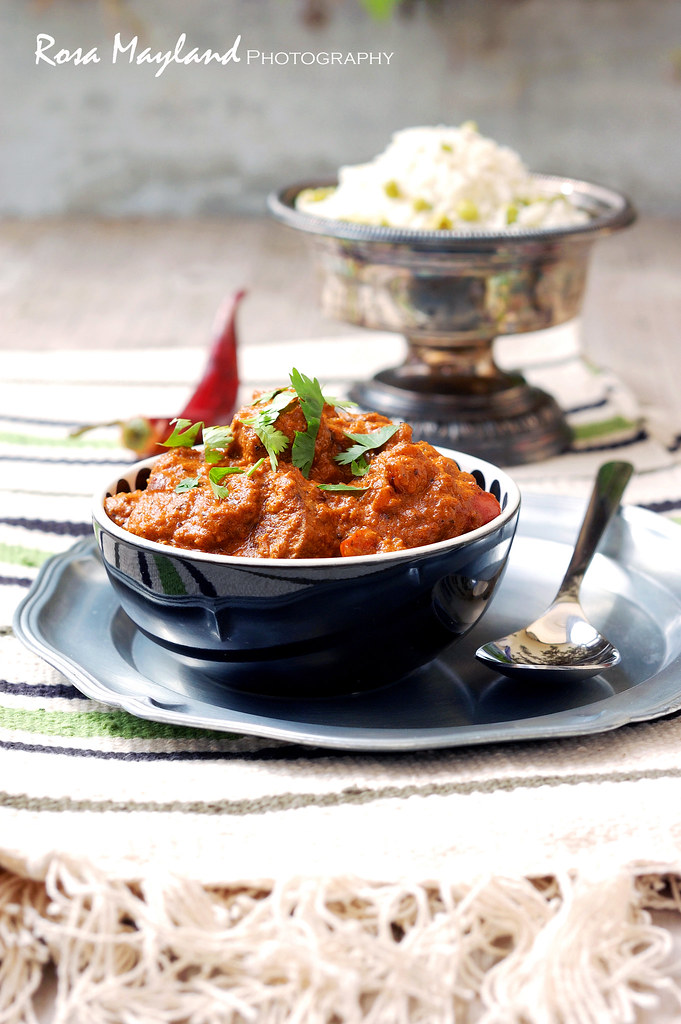
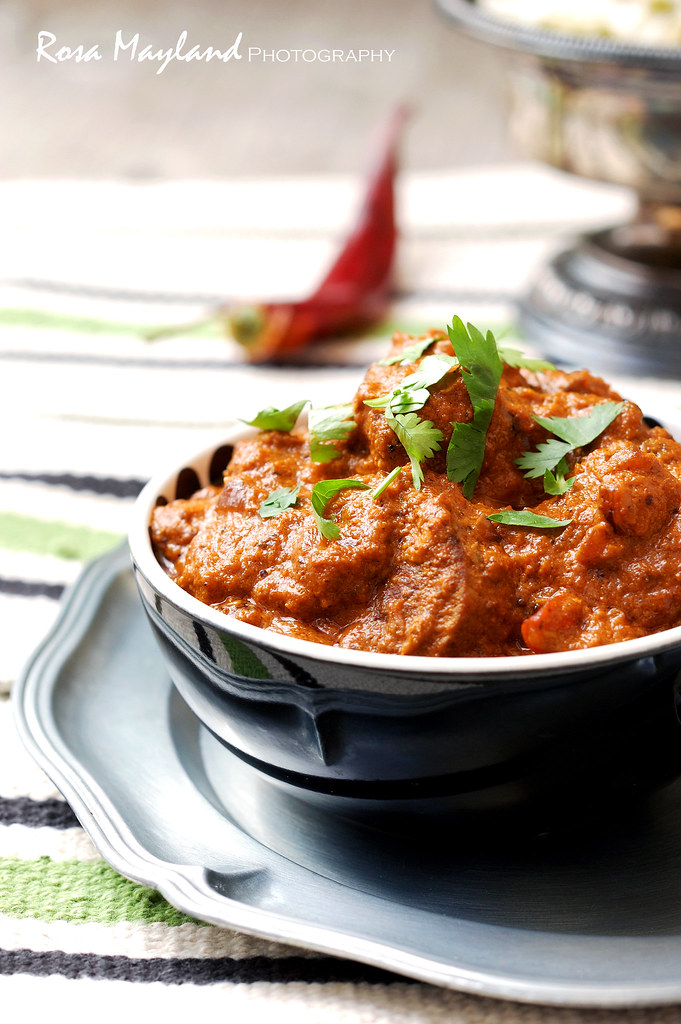
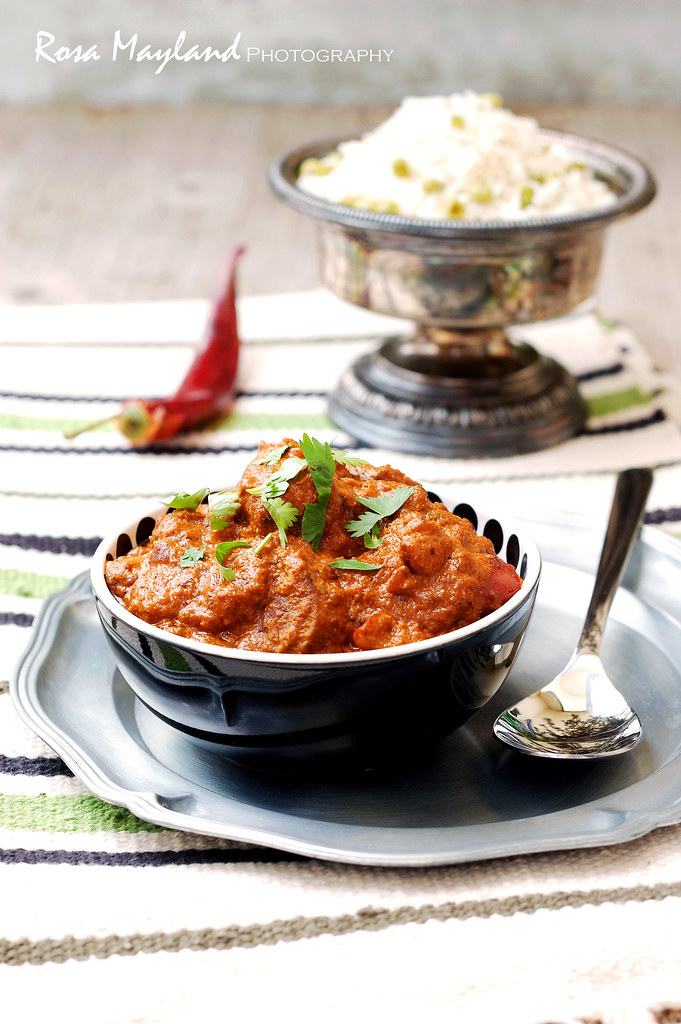
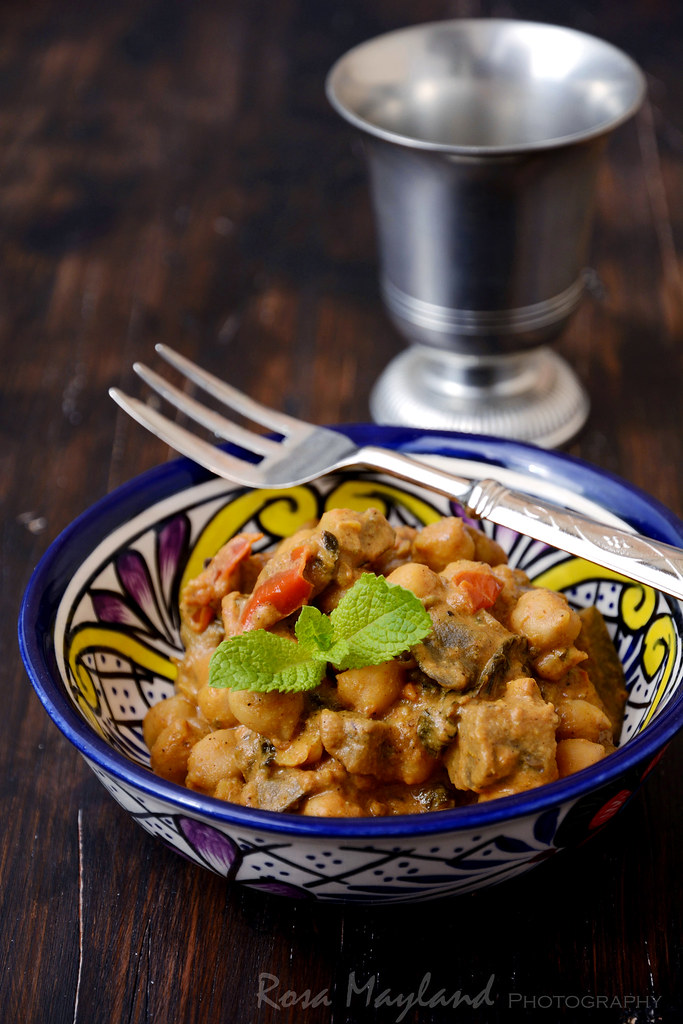
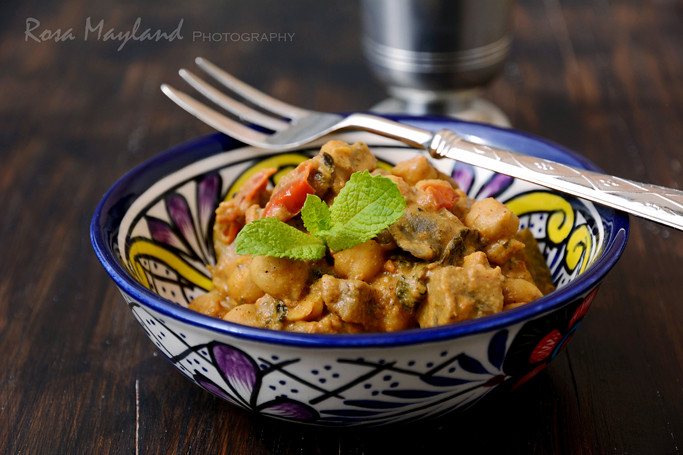
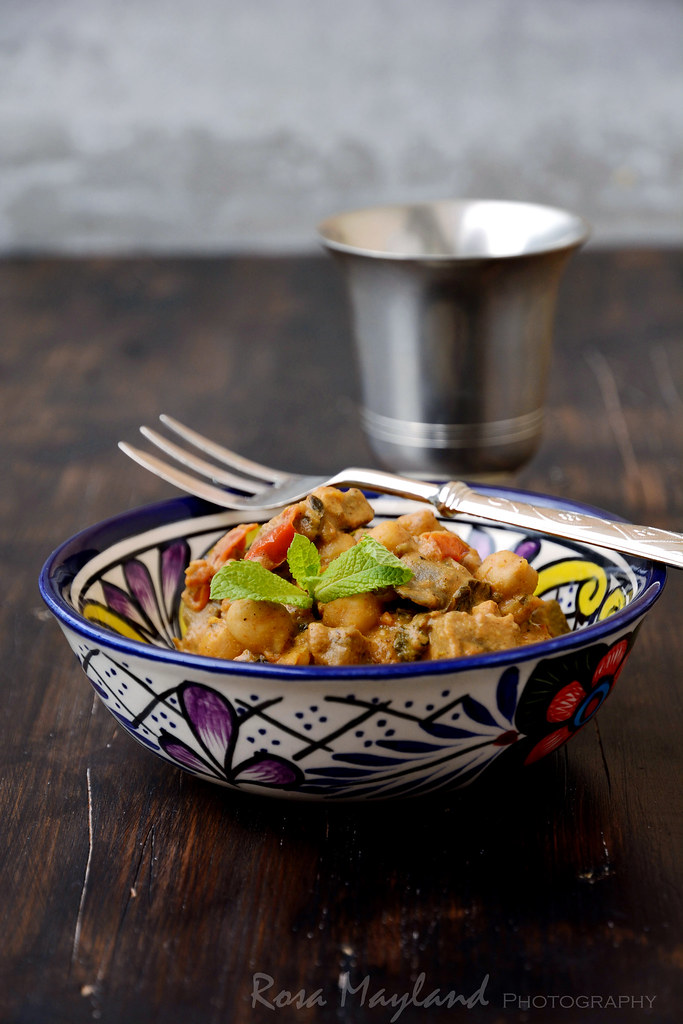
Anyway, I have nonetheless been able to quickly take pictures of one of my modest creations that I'm happy to present to you today. This summery "Spicy Middle Eastern-Style Chickpea, Bell Pepper, Eggplant, Tomato And Tahini Stew" is really flavorful. Not only is it pleasantly fragrant, but it is also hearty, seasonal, inexpensive and easy to put together.

Nothing artsy-fartsy here, just straight-forward vegetarian grub for foodlovers who care about their well-being, the environment and the state of their bank account without compromising on taste and quality.

* In case you absolutely don't know what I'm talking about, I invite you to visit my "fan page" by clicking on this link.

Spicy Middle Eastern-Style Chickpea, Bell Pepper, Eggplant, Tomato And Tahini Stew
Recipe by Rosa Mayland, September 2014.

Ingredients:
1 Tbs Olive oil
1 Onion, chopped
1 Cloves garlic, chopped
1 Red bell pepper, cubed
1 Eggplant, cubed
1/2 Tsp Ground cumin
1/4 Tsp Ground allspice
1/6 Ground black pepper
2 Tomatoes, chopped
1 Tsp Tomato paste
400g Cooked chickpeas
3 Tbs Tahini mixed with 5 Tbs Water
3 Tbs Yogurt
A few drops of red Tabasco
1/2 Tbs Fresh mint, chopped
Fine sea salt, to taste
Method:
1. Heat a frying pan over medium heat, add the olive oil and then the onion. Cook the onion until translucent.
2. Add the garlic and cook for 1/2 a minute.
3. Add the bell pepper and stir-fry for about 4 minutes, then add the eggplant and stir-fry for another 5 minutes.
4. Add the spices, quickly stir and add the tomatoes as well as the tomato paste. Cook for 10 minutes, until the juices of the tomato have evaporated.
5. Incorporate the chickpeas, the tahini sauce, the yogurt, the Tabasco and the mint. Cook for another minute.
6. Season with salt and serve.

Remarks:
The tomatoes should not have dissolved completely - pieces should remain.
If you find that the dish/sauce is too thick add a little water.
The mint can be replaced by fresh coriander (a handful).

Serving Suggestions:

Serve this dish alone, or with couscous or basmati rice.
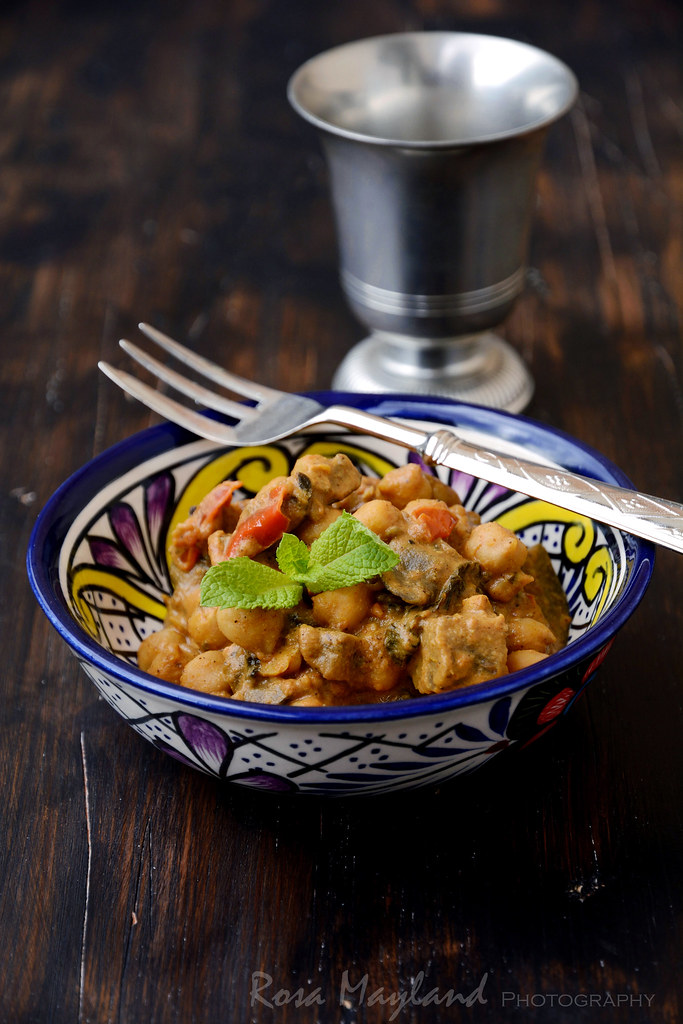
Ragoût Moyen-Orientalisant Aux Légumes d'Été, Pois Chiches, Épices Et Au Tahini
Recette par Rosa Mayland, Septembre 2014.
 

Ingrédients:
1 CS d'Huile d'olive
1 Oignon, haché
1 Gousses d'ail, hachée
1 Poivron rouge, coupé en dés
1 Aubergine, coupée en dés
1/2 CC de Cumin en poudre
1/4 CC de Tout-épice (poivre de la Jamaïque) en poudre
1/6 de CC de Poivre noir fraîchement moulu
2 Tomates, hachées grossièrement
1 CC de Concentré de tomate
400g de Pois chiches cuits
3 CS de Tahini mélangé à 5 CS d'eau
3 CS de Yogourt
Quelques gouttes de Tabasco rouge
1/2 CS de Menthe fraîche, hachée
Sel de mer, selon goût


Méthode:
1. Faire chauffer une poêle à feu moyen, ajouter l'huile d'olive, puis l'oignon et faire cuire ce dernier jusqu'à ce qu'il soit translucide.
2. Ajouter l'ail et cuire pendant 1/2 d'une minute.
3. Ajouter le poivron et le faire sauter pendant environ 4 minutes, puis ajouter l'aubergine et continuer à faire sauter (en remuant régulièrement) pendant 5 minutes.
4. Ajouter les épices, remuer rapidement et ajouter les tomates ainsi que le concentré de tomate et faire cuire pendant 10 minutes, jusqu'à ce que les jus des tomates se soit évaporé.
5. Incorporer les pois chiches, la sauce au tahini, le yogourt, le Tabasco et la menthe. Laisser cuire encore une minute.
6 Assaisonner avec le sel et servir.

Remarques:
Les tomates ne doivent pas s'être dissoutes - des morceaux doivent rester.

Si vous trouvez que le plat est un peu sec, ajouter de l'eau afin d'obtenir la consistance voulue.
La menthe peut être remplacée par de la coriandre fraîche (une poignée).

Idées De Présentation:
Servir ce plat seul, ou avec du couscous ou du riz basmati.

Friday, November 30, 2012

MUJADDARA BURGHUL (LENTIL AND BULGUR PILAF) - PILAF AUX LENTILLES ET AU BOULGOUR & AN EDIBLE MOSAIC BOOK REVIEW

Once you get a spice in your home, you have it forever. Women never throw out spices. The Egyptians were buried with their spices. I know which one I'm taking with me when I go.
- Erma Bombeck

There is something incredibly sumptuous about the food of the Middle East. It is steeped in history and mystery, teasing the palate with exotic and tantalizing flavors. Delicate and spicy, aromatic and fragrant, scented and syrupy-these are some of the words that come to mind. The tastes are rich and pleasing, the images romantic, airy and ancient. Rose petals and orange blossom, tamarind and dates, figs and apricots, mulberries and melons, saffron and orchid root, almonds and pistachios, olives, coriander and cumin-a myriad of flavors and dishes that are intricately entwined in the fascinating history of this vast and exciting region.
- Ghillie Basan, The Middle Eastern Kitchen: a Book of Essential Ingredients with over 150 Authentic Recipes
Spices and herbs are, and have always been an integral part of my cuisine. I intensely treasure them and cannot imagine living without those precious and irreplaceable condiments which not only enhance, complement and balance the flavors of a dish, but also benefit our health (they can be used as natural preventive medecine). A marvelous source of gratification and well-being!

It is one of the main reasons why I am irrevocably attracted to the glorious gastronomy of the countries situated at the crossroads of the Mediterranean basin and the Arabian hinterland. If you want to make my eyes twinkle, my mouth salivate and receive my total attention, then I recommend you to pronounce those three simple words: "Middle Eastern Food" and I'll come running like a worshipful dog on amphetamine.


In my opinion, there is nothing quite as varied, refined, intriguing, dazzling, exhilarating, dreamlike and worthy of "The Thousand and One Nights" than the gourmet fares served at Lebanese (my favorite), Iranian, Palestinian, Syrian, Israeli, Jordanian, Omani, Kuwaiti, Iraqi, Quatari, Saudi Arabian, Yemeni or Emirati tables.

 
8165853872_6e49cbb149_z
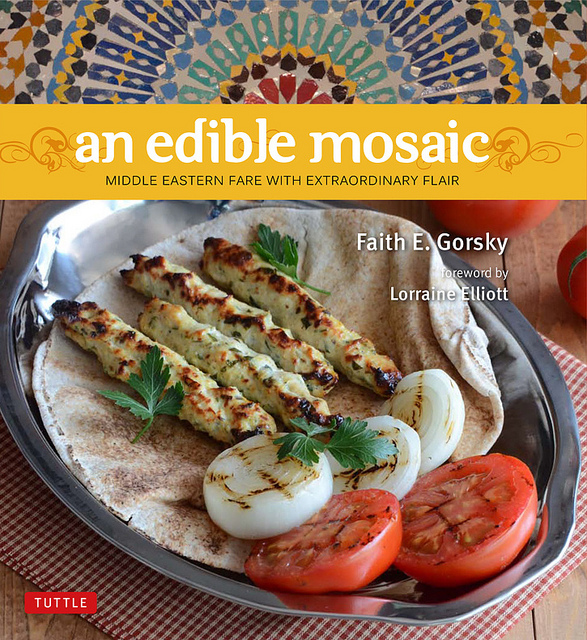
So, you can imagine my excitement when the talented Faith Gorsky of "An Edible Mosaic" (her headquarters are in upstate New York) kindly proposed to send me her cookbook "An Edible Mosaic - Middle Eastern Fare With Extraordinary Flair". There was no way I was going to decline her generous offer and pass the opportunity of reviewing this wonderful publication entirely written and illustrated a web friend and colleague whom I respect and have been following for the last three years (I first came across her site in 2009, if my memory does not fail me...).

Having been born and raised in America, nothing predestined this blogger to become a specialist on the subject of Middle Eastern food. As a matter of fact, before she tied the knot with her Syrian husband in the Middle East and lived there for the first six months of her matrimony, she barely had any knowledge of the specialities prepared by the people populating this part of the Arab world. Everything changed the day Faith married her life companion; she discovered and embraced a whole new culture.

 
During her stay in Damascus (the capital of Syria), she had the opportunity to explore and experience firsthand the magic of the cuisine of this region of the globe and even more so when her mother-in-law, who happens to be a master cook, took her under her wing and gave her a thorough course in Middle Eastern cooking that resulted in the creation of "An Edible Mosaic".

Over the past six years, this passionate young lady has visited the Middle East four different times, each trip contributing to deepening her love as well as expanding her enthusiasm for the culinary traditions and civilization of this fascinating land of contrasts. As a result, Faith's travels helped enrich her increasingly successful blog and build a devoted readership, thus ultimately leading her to writing the book I have the honor of introducing to you this Friday.


The Ultimate Communal Meal "Generally, one could say that Near and Middle Eastern and North African cooking and nutrition are healthy. As in other Mediterranean gastronomies, meat is rare and vegetables often used. The religious purity rules also have consequences for the kitchen, which is important for the health of the people.
- Peter Heine, Food Culture in the Near East, Middle East, and North Africa 
With its ten chapters (Basic Recipes, Breads and Pies, Salads, Vegetables and Rice Side Dishes, Appetizers and Light Meals, Beans and Lentils, Chicken and Seafood, Beef and Lamb, Desserts & Drinks), four useful sections (Cooking Tips and Techniques, Basic Cooking Tools, Buying the Right Middle Eastern Ingredients and Middle Eastern Grocery Stores) and many (over a hundred) easily reproducible, inspiring, meticulously detailed, carnivore as well as vegetarian/vegan-friendly, authentic and elegant recipes, "An Edible Mosaic - Middle Eastern Fare With Extraordinary Flair" will rejoice both beginner and experienced cooks. Each entry, side dish, main or dessert presented within the 144 pages of Faith's manual will make your mouth water and nudge you into the kitchen to prepare scrumptious delicacies that are vibrant, remarkably toothsome and nutritionally harmonious. 

Since I am somewhat knowledgeable about Middle Eastern cuisine and already possess a certain number of bestsellers on the topic, I had my doubts on whether or not this cookbook would help me broaden my gastronomic horizon. Well, I am pleased to inform you that I was not deceived at all by it.

"An Edible Mosaic - Middle Eastern Fare With Extraordinary Flair" is far from being boring or uninteresting. Actually, it is an extremely enjoyable read as it is chock-a-block full with delectable ideas for healthy, irresistible and lip-smackingly good dishes (some of which I have never even tried or concocted and plan on testing soon) ranging from "Thyme Spiced Flat Pies", "Tabbouleh", "Fried Eggplants With Garlic And Parsley Dressing", "Fried Cauliflower With Sesame Parsley Sauce", "Saffron Rice With Golden Raisins And Pine Nuts", "Spiced Cheese Balls", "Creamy Chickpea And Yogurt Casserole", "Fish Pilaf With Caramelized Onion", "Chicken Kebabs", "Roasted Green Wheat With Chicken", "Fried Kibbeh", "Scrambled Eggs With Meat And onions", "Upside Down Rice Casserole", "Sweet Cheese Pastry (Knafeh)", "Coconut Semolina Cake (Harissa)", "Creamy Hot Sahlab Drink" to "White Coffee". Plenty enough meals to keep you busy for several months!


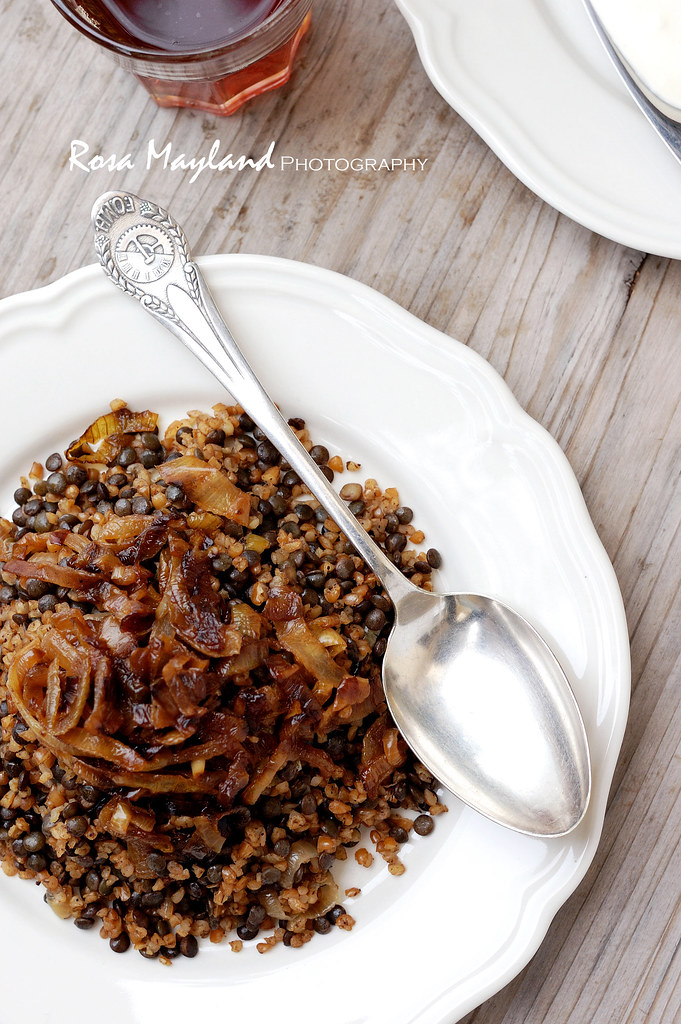
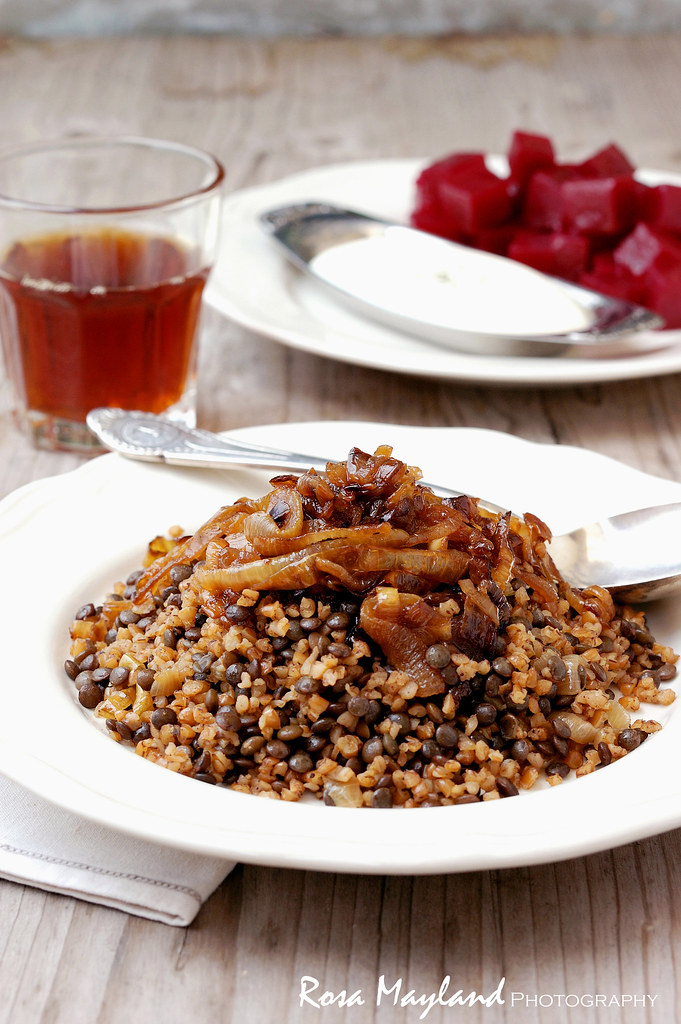
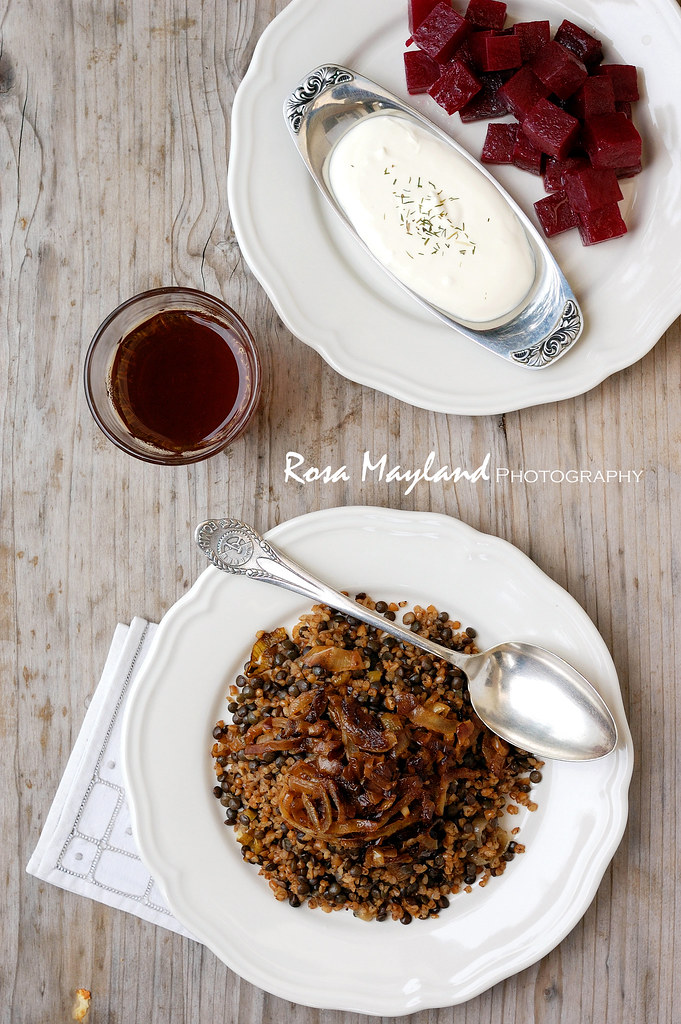
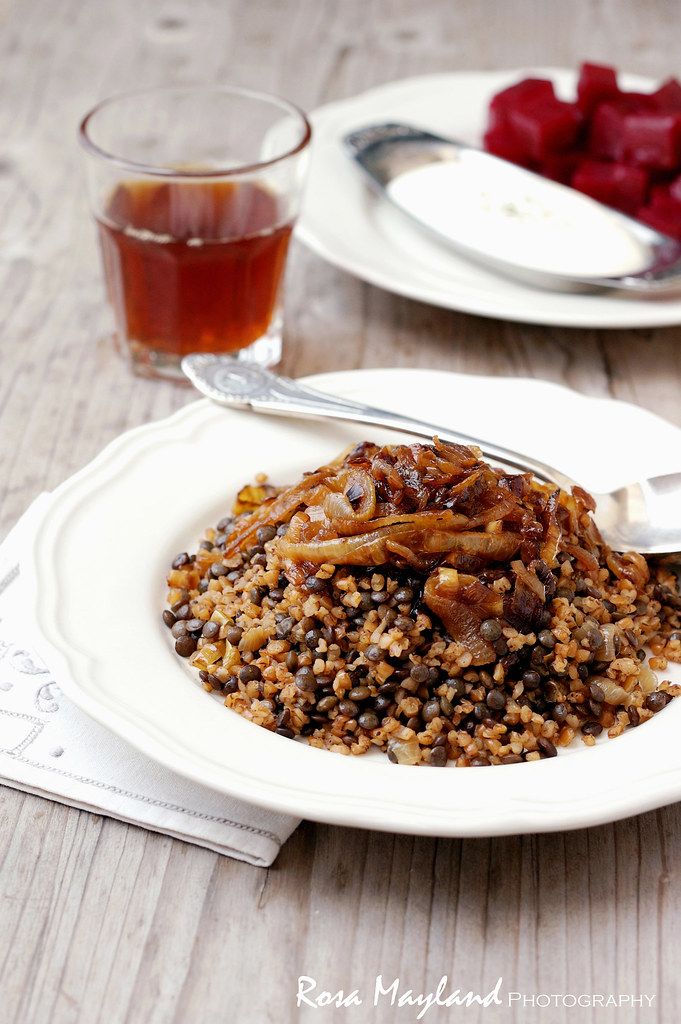
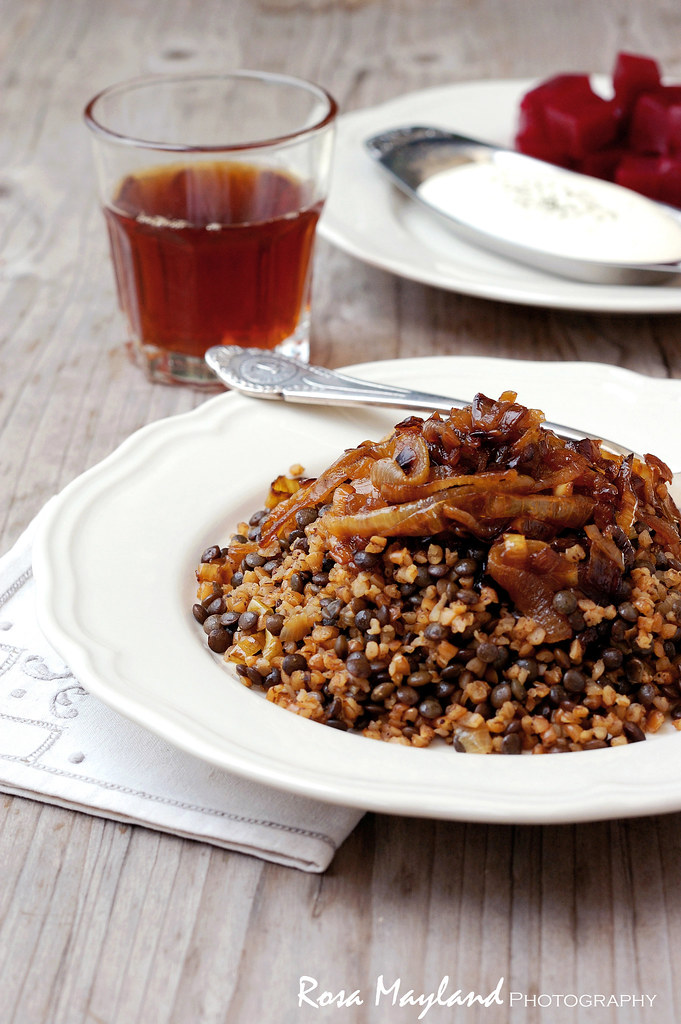
As you can imagine, choosing a recipe to showcase on "Rosa's Yummy Yums" wasn't an easy task (especially if you are a tergiversator named Rosa). It took me a while before I could make up my mind. Anyway, after a week of intense delibaration, I selected a hearty meat-free dish called "Mujaddara Burghul" ("Lentil And Bulgur Pilaf" in English) which is traditionally savored with cramelized onions and accompanied by plain yogurt, tomato, cucumber and/or onions slices (mine was served with some cooked beetroot since it is soon winter here in Switzerland and I disapprove of buying out of season vegetables).

The outcome was highly satisfying and the legume, cereal and spice addicts that we are were totally seduced by this main course's unique combination of bulgur, lentils and seasonings. Each element composing this magnificent one-pot mingled together perfectly, thus causing an exclamation of delight and a sigh of bliss after every forkful.


An economical, filling, fit, comforting and exquisite pilaf. One of life's simple pleasures!

 
Mujaddara Burghul (Bulgur And Lentil Pilaf)
Recipe by Faith Gorsky of
"An Edible Mosaic".


Serves 6.

Ingredients:

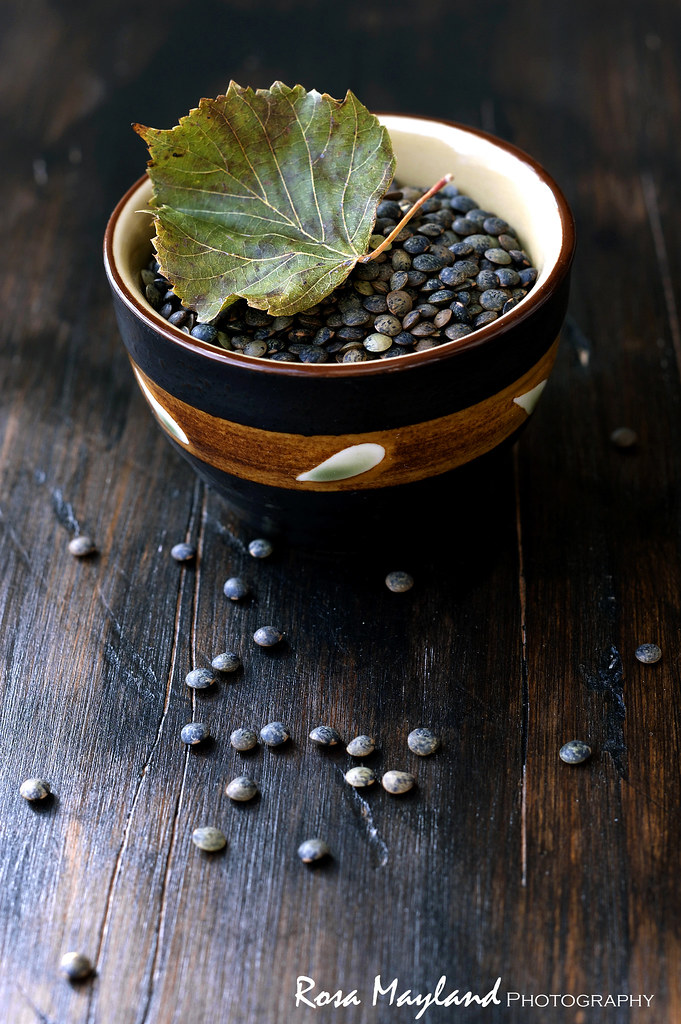
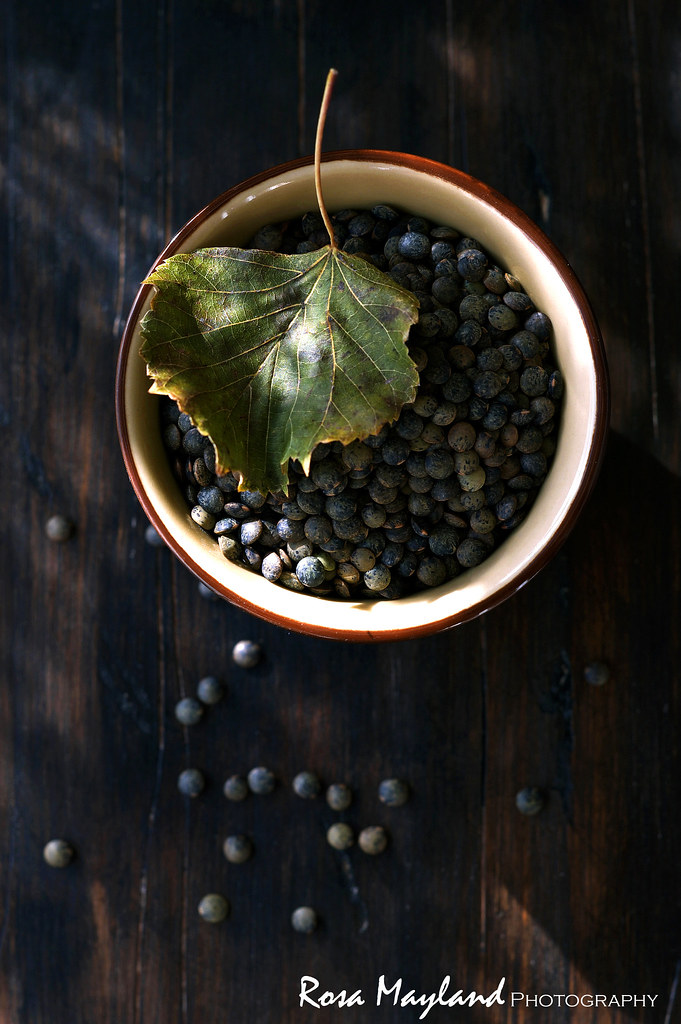
1 1/3 Cups (275g) Dried brown lentils
6 Cups (1.5 liters) Water
2 Tbs Olive oil
2 Tbs Butter
2 Large Onions, quartered and thinly sliced
1 Bay leaf
2 Pods cardamom, cracked open
2 Cloves
2 Tsps Ground cumin

1/2 Tsp Ground cinnamon
1 1/2 Tsp Fine Sea salt

1/4 Tsp Freshly ground black pepper
1 Cup (185g) Coarse-ground bulgur wheat
1 1/2 Cups (300ml) Boiling water

Thick plain yogurt (optional, for serving)

Method:
1. Sort through the lentils to remove any small stones or pieces of dirt, and then rinse with cold water in a colander.

2. Bring the rinsed lentils and the water to a boil in a lidded medium saucepan. Cover the saucepan, turn the heat down to a simmer, and cook until the lentils are tender but not mushy, about 20 to 30 minutes, stirring occasionally and adding more water as necessary so that they’re always immersed; strain and set aside.
3. While the lentils cook, heat the oil and the butter in a large skillet over moderately-high heat; add the onion and sauté until completely softened but not yet browned, about 10 minutes, stirring occasionally.

4. Transfer half the onion to a small bowl and set aside. Continue cooking the remaining onion until deep caramel in color, about 5 to 10 minutes, stirring occasionally and adding a splash of water as necessary if the onion starts to get too dark. Set aside.
5. Put half a kettle of water on to boil. Transfer the sautéed onion (not the caramelized onion) to a medium saucepan. Add the bay leaf, cardamom, clove, cumin, cinnamon, salt, and pepper and cook 1 minute.
6. Add the bulgur and cook 1 minute more, stirring constantly.
7. Give the bulgur a stir, then cover the saucepan, turn the heat down to very low, and cook until tender, about 10 minutes (do not open the lid during this time).
8. Turn the heat off and let the bulgur sit 10 minutes, then fluff with a fork and gently stir in the lentils. Taste and add additional salt, pepper and olive oil if desired.
7. Transfer to a serving dish and top with the caramelized onion.


Remarks:
Instead of making this dish with dried brown lentils, you can prepare it with the same amount of green lentils or 2 cans of brown lentils, rinsed and drained.
For an easy variation of this dish, use white or brown rice instead of bulgur wheat.

Serving suggestions:
Serve with plain yogurt (to spoon on top) and accompany by sliced tomatoes, cucumber and/or onions.

Mujaddara Burghul (Pilaf Au Bulgur Et  Aux Lentilles)
Recette par Faith Gorsky de
"An Edible Mosaic".


Pour 6 personnes.

Ingrédients:
275g de Lentilles brunes séchées
1,5L d'Eau
2 CS d'Huile d'olive
2 CS de Beurre
2 Gros oignons, coupés en quartiers et tranchés finement
1 Feuille de laurier
2 Gousses de Cardamome, écrasée
2 Clous de girofle, entiers
2 CC de Cumin en poudre
1/2 CC de Cannelle en poudre
1 1/2 CC de Sel de mer fin
1/4 CC de Poivre noir fraîchement moulu

185g de Boulgour concassé en gros grains
300ml d'Eau
Yaourt nature épais (en option, pour servir)

Méthode:
1. Trier les lentilles pour enlever les petites pierres ou les impuretés, puis rincer à l'eau froide dans une passoire.
2. Dans une casserole, porter les lentilles rincées et l'eau à ébullition. Couvrir la casserole, et baisser le feu. Laisser mijoter/cuire jusqu'à ce que les lentilles soient tendres mais pas molles (
remuer de temps en temps et ajouter plus d'eau si nécessaire afin qu'elles soient toujours immergées), environ 20 à 30 minutes. Egoutter et mettre de côté.
3. Dans une grande poêle, faire chauffer l'huile et le beurre à feu vif, ajouter l'oignon et faire revenir pendant
environ 10 minutes (remuer de temps en temps), jusqu'à ce qu'il soit mou et translucide mais pas encore doré.

 
Bulgur & Lentil Pilaf 2 4 bis
4. Transférer la moitié de l'oignon dans un petit bol et mettre de côté. Poursuivre la cuisson de l'oignon restant pendant environ 5 à 10 minutes (remuer de temps en temps et ajouter un peu d'eau si l'oignon commence à devenir trop sombre), jusqu'à ce qu'il ait caramélisé. Mettre de côté.
5. Dans une casserole de taille moyenne, faire bouillir les 300ml d'eau. Ajouter, l'oignon cuit (pas l'oignon caramélisé), la feuille de laurier, la gousse e cardamome, les clous de girofle, le cumin, la cannelle, le sel et le poivre. Faire cuire pendant 1 minute.
6. Ajouter le boulgour et faire cuire encore 1 minute suplémentaire, en remuant constamment.
7. Couvrir la casserole, baisser le feu à très doux et laisser cuire pendant envirion 10 minutes, jusqu'à ce qu'il soit tendre (ne pas ouvrir le couvercle).

8. Baisser le feu et laisser le boulgour reposer pendant 10 minutes, puis l'égrainer avec une fourchette et incorporer délicatement les lentilles. Goûter, puis saler et poivrer selon votre goût et ajouter un trait d'huile d'olive si désiré.
7. Transférer dans un plat de service et garnir avec les oignons caramélisés.

Remarques:

Au lieu de faire ce plat avec des lentilles brunes séchées, préparez-le avec des lentilles vertes ou 2 boîtes de conserves de lentilles brunes, rincés et égouttés.
Pour varier un peu, le boulgour peut être remplacé par du riz blanc ou brun.

Suggestions d'accompagnement:

Servir avec le yaourt (versé sur le dessus du plat) et accompagner de tranches de tomates, de concombre et/ou des rondelles d'oignons.


Bulgur & Lentil Pilaf 5 8 bis 

Friday, November 16, 2012

TURKEY TIKKA MASALA - DINDE TIKKA MASALA


It was November - the month of crimson sunsets, parting birds, deep, sad hymns of the sea, passionate wind-songs in the pines. Anne roamed through the pineland alleys in the park and, as she said, let that great sweeping wind blow the fogs out of her soul.
― L.M. Montgomery, Anne of Green Gables
November is an in-between month. Neither is it exactly autumn anymore nor can we say that it is yet winter, hence it could be described, to some extend, as devoid of character and drab.  Nonetheless, despite its apparent insipidity, this epoch of the year is far from being dreadfully uninteresting or desperately morose. As a matter of fact, provided that you open your eyes and set aside your prejudices, you'll soon realize that there's something delightfully beautiful as well as totally romantic and dramatic about the late fall season.

Endings and periods of transition are always moving, tragic and, at the same time, incredibly thrilling. Although nights are getting longer and the temperatures are dropping drastically, one cannot refrain from getting excited about the exhilarating scents of firewood and earthy smells of the ground, divinely envigorating crisp air, mad chirp of starlings filling the bushes and persistent croaking of crows, first snowfalls, threateningly black skies, thick mist rolling up the valleys and licking at the creases of the mountains, piercingly sharp sunlight, gloriously fiery and deep lilac sunsets and rusty hues of trees. Blissfully gorgeous sceneries and powerful atmospheres that make you cry and give you the impression of being alive. Mother Nature is the ultimate artist and her life-size chef-d'oeuvres cannot be equalled or leave you impassive.


With the arrival of the bitter cold and dreary weather as well as the long-lasting obscurity, our desire for cocooning grows bigger every day and our craving for meals that are rich, hearty, warming and homey becomes irrepressible. Spending evenings in the cosiness of our apartment or house and enjoying dishes that uplift our soul is just what we need when layers start to pile up under our coat and the lack of natural luminescence affects us physically (low energy), mentally (depression) and emotionally (mood swings).

Tikka Masala 8 3
Tikka Massala Autumn Leaves Lenk  1 2 bis
Although I try to feed healthily and rarely cook meat or anything hyper-nourishing during the week, it doesn't mean that I don't fancy seeing substantial dinners occasionally land on my table. Like any of you, I also love to indulge on less cholesterol-friendly eats such as "Saucisson And Gratin Dauphinois", "Boudin With Apples And Creamy Mashed Potatoes", "Cheesy Spaetzli Casserole", "Basler Mehlsuppe", "Chicken And Mushrooms In Creamy Saint-Marcellin Sauce", "Greek Pork Stew With Quinces" and "Toad In The Hole" or more exotic and invigoratingly spicy chow such as a good curry.

Speaking of which, I have to point out that the cuisine of Asia offers a vast variety of comforting specialities which not only raise your spirits high and fill up your stomach, but also tickle your taste buds wonderfully. One of those soul-soothing delicacies is "Tikka Masala" which I first got to taste in England - my grandmother prepared it with freshly caught North Sea cod which she bought from the local mobile fishmonger.


Different versions of this dish exist (it can be concocted with various meats, fishes and vegetables or even with paneer cheese), but "Chicken Tikka Masala" is by far the most popular of them all, especially in the UK' where it is undisputedly the nation's favorite "Indian" dish. A true British classic which transcends all generations, races, cultures and classes.

Tikka Masala 8 2 bis
And it isn't just our economy that has been enriched by the arrival of new communities. Our lifestyles and cultural horizons have also been broadened in the process. This point is perhaps more readily understood by young Britons,who are more open to new influences and more likely to have been educated in a multi-ethnic environment. But it reaches into every aspect of our national life.
Chicken Tikka Masala is now a true British national dish, not only because it is the most popular, but because it is a perfect illustration of the way Britain absorbs and adapts external influences. Chicken Tikka is an Indian dish. The Masala sauce was added to satisfy the desire of British people to have their meat served in gravy.
-  Robin Cook, UK former Foreign Secretary
The origin of this creamy and tomatoey stew is highly debated and extremely controversial as nobody seems to know whether it is a street grub which hails from Dehli (Northern India) or if it dates back to the early 1970's and was invented by a Pakistani named chef Ali Ahmed Aslam (check out this article and that one) at his Glaswegian reastaurant. As a result many cuisiniers have tried to hijack its origin and claim credit for it (though without success). Until today its provenance remains a mystery, but that isn't what stops the Brits from eating this scrumptious casserole.

Anyway, why bother and argue about such trivial things? "Chicken Tikka Masala" blends the best of the East and West, and like any great fusion food, it is a true symbol of multiculturalism, tolerance and integration, thus it perfectly represents the precious multifacetedness of Great Britain. Something to be proud of and not to fight over...

Despite having been acquainted with "Tikka Masala" since my early childhood and being an immense fan of curries, the thought of reproducing this delectable fare in my kitchen has never crossed my mind until last year while visiting Prerna's fabulous blog, "Indian Simmer". Her pictures looked so droolworthy that I felt compelled to try her recipe without delay. Needless to say that it was a frank success and it has become a quintessential home meal.

Because I like sharing my coolest discoveries on "Rosa's Yummy Yums", I thought that you'd be happy to find my adaptation of Prerna's fantastic recipe here. Of course, as you know me, I can't abstain from adding my own personal touch to other's creations, so I substituted chicken thighs for turkey breast and for some extra kick and color, I replaced the double cream by sour cream and incorporated ground curcuma plus tomato paste to the sauce. Absolutely exquisite!

Turkey Tikka Masala
Recipe by Prerna at "Indian Simmer" & adapted by Rosa Mayland.

Serves 4.

 
Ingredients For The "Turkey Tikka":
500-600g Turkey breast meat, cut into cubes
1 Tsp Hot paprika
3/4 Tsp Ginger paste

3/4 Tsp Garlic paste
1 1/2 Tsp Coriander powder
1 Tsp Garam masala
1/2 Cup yogurt (any fat % is fine)
1 1/2 Tsp Lemon juice
Salt, to taste

2 Tbs Olive oil
Ingredients For The "Masala (Tomato Sauce)": 

1 1/2 Tbs Olive oil 
1 Onion, chopped
1 Tbs Ginger paste
1 Tbs Garlic paste
1 Tbs Onion powder
1 Tbs Coriander powder
1 1/2 Tsp Powdered black pepper
1 Tsp Garam masala
1 Tsp Powdered fennel seeds

1/2 Tsp Curcuma powder
1 Can (400g) of Diced tomatoes, pureed
2 Tbs Tomato paste 
3/4 Cup (180ml) Sour cream
Salt,to taste
Chopped cilantro, for garnishing

Tikka Massala 4 2 bis
Method For the "Turkey Tikka":
1. To prepare the marinade, mix all the spices together with the yogurt and lemon juice.
2. Add the turkey pieces.
3. Mix everything well. Cover the bowl and let it sit in the refrigerator for at least an hour (or overnight).

4. In a frying pan or wok, add the olive oil and stir-fry the turkey (in small batches) for about 4 minutes or until golden brown on each side (don't cook them through, though). Set aside.
Method For The "Masala/Tomato Sauce":
5. Pour the oil in a hot thick-bottomed pan, frying pan or a wok.

6. Add the chopped onion and stir-fry until translucent, then add the ginger and garlic paste. Turn the heat to medium and let the paste slowly cook for 1/2 a minute.
7. Add the onion powder and spices. Stir-fry for a few second, until fragrant.
8. Add the pureed tomato and tomato paste. Stir well.

9. Let the sauce simmer for about 15-20 minutes (stir occasionally scraping the bottom of the pan), or until the sauce is thick and ressembles a concentrated paste.
10. Add the cooked turkey cubes along with the drippings and the sour cream. Mix well and let the stew simmer for another 10-15 minutes.
11. Turn off the heat, cover with a lid and let the tikka masala sit for at least 10 minutes before serving (this helps the flavors to develop).
12. Garnish with the chopped cilantro and serve.


Remarks:

If you don't like turkey, try making this dish using 4 boneless and skinless chicken thighs or paneer (vegetarian) cut into cubes.
Instead of stir-frying the meat, you can also thread the turkey (or chicken/paneer) pieces onto skewers and then grill the skewered turkey (or chicken/paneer) until done or pop it into the oven for 15-20 minutes at a temperature of 200° C (400° F).

Serving suggestions:

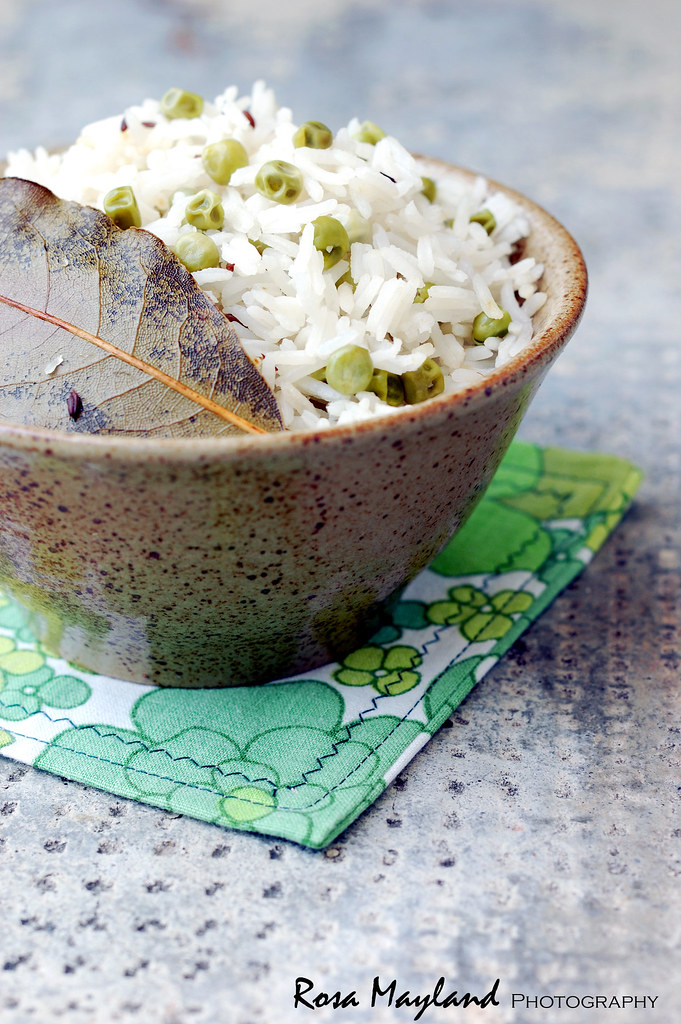
Serve with "Naans" (flatbreads), "Rotis" (tortilla-like pancakes) or "Cumin Scented Green Pea Pulao" (rice pilaf) and accompany with ice cold pale ale (blond beer).

Dinde Tikka Masala
Recette par Prerna de "Indian Simmer" et adaptée par Rosa Mayland.

Pour 4 personnes.

Ingrédients Pour La "Dinde Tikka": 

500-600g de Poitrine de dinde, coupée en cubes
1 CC de Paprika piquant
3/4 de CC de Pâte de gingembre
3/4 de CC de Pâte d'ail
1/2 CC de Coriandre en poudre 
1 CC de Garam masala 
1/2 Tasse de Yogourt (n'importe quel pourcentage de matières grasses)
1 1/2 CC de Jus de citron
Sel, selon au goût 
2 CS d'Huile d'olive
Ingrédients Pour le "Masala (Sauce Tomate)":
1 1/2 CS d'Huile d'olive
1 Oignon, haché 
1 CS de pâte de gingembre 
1 CS de Pâte d'ail
1 CS d'Oignon en poudre
1 CS de Coriandre en poudre
1 1/2 CC de Poivre noir en poudre 
1 CC de Garam masala
1 CC Graines de fenouil en poudre
1/2 CC de Curcuma en poudre
1 Boîte (400 g) de Tomates hachées, réduites en purée
2 CS de Concentré de tomate
180ml de Crème sûre/aigre
Coriandre fraîche, hachée (pour garnir)
Sel, selon goût

Tikka Massala 5 4 bis
Méthode Pour La "Dinde Tikka": 
1. Dans un bol moyen, mélanger ensemble, les épices, le yogourt et le jus de citron.
2. Ajouter les morceaux de dinde.
3. Bien mélanger le tout. Couvrir le bol et laisser reposer au réfrigérateur pendant au moins une heure (ou toute la nuit).
4. Dans une poêle ou un wok bien chaud, ajouter l'huile d'olive et faire sauter la dinde (par petites quantités) pendant environ 4 minutes ou jusqu'à ce que la viande soit dorée de chaque côté (mais pas cuite à point). Mettre de côter.
Méthode Pour le "Massala/La Sauce Tomate":
5. Verser l'huile dans une poêle, une casserole à fond épais ou un wok chaud(e). 
6. Ajouter l'oignon haché et faire revenir jusqu'à ce que celui-ci soit translucide, puis ajouter la pâte de gingembre et d'ail. Baisser le feu à moyen-doux et laisser cuire doucement la pâte pendant 1/2 minute.
7. Ajouter la poudre d'oignon et les épices. Les faire revenir pendant quelques secondes, afin que leur saveurs se développent.
8. Ajouter la tomate en purée et le concentré de tomate. Bien mélanger.
9. Laisser mijoter la sauce pendant environ 15-20 minutes (remuer de temps en temps en raclant le fond de la casserole), ou jusqu'à ce qu'elle soit épaisse et que presque toute l'eau se soit évaporée (un concentré de sauce).
10. Ajouter les cubes de dinde cuits avec le jus de cuisson et la crème sûre. Bien mélanger et laisser mijoter à feu doux pendant encore 10-15 minutes. 
11. Eteindre le feu, couvrir avec un couvercle et laisser le tikka masala reposer pendant au moins 10 minutes avant de servir (cela contribue à développer les saveurs).
12. Garnir avec un peu de coriandre fraîche et servir. 

Remarques:
Si vous n'aimez pas la dinde, vous pouvez faire ce plat avec 4 cuisses de poulet désossées (et sans peau) ou du paneer (végétarien), coupé(e)s en cubes.
Au lieu de dorer la viande à la poêle ou au wok, il vous est aussi possible d'enfiler les morceaux de poulet (ou dinde/paneer) sur des brochettes et les faire dorer au grill jusqu'à ce que la viande soit cuite ou au four à 200° C pendant 15-20 minutes.

Suggestions d'accompagnement:
Servir avec des "Naans" (pains plats), des "Rotis" (galettes ressemblantes à des tortillas) ou du "Pulao Au Cumin Et Petits Pois" (riz pilaf) et accompagner avec de la bière blonde bien froide.

Tikka Massala Autumn Leaves Lenk 2 1 bis

Friday, September 28, 2012

HOW TO COOK JASMINE AND BASMATI RICE & CUMIN SCENTED GREEN PEA PULAO - COMMENT FAIRE CUIRE LE RIZ THAÏ ET BASMATI & PULAO AU CUMIN ET PETITS POIS

Rice Basmati 1 2 bis
Rice is a beautiful food.
It is beautiful when it grows, precision rows of sparkling green stalks shooting up to reach the hot summer sun.
It is beautiful when harvested, autumn gold sheaves piled on diked, patchwork paddies.
It is beautiful when, once threshed, it enters granary bins like a (flood) of tiny seed-pearls.
It is beautiful when cooked by a practiced hand, pure white and sweetly fragrant.
- Shizuo Tsuji

There was a Young Person of Bantry,
Who frequently slept in the pantry;
When disturbed by the mice,
she appeased them with rice
That judicious Young Person of Bantry.
- Edward Lear, English artist and writer (1812-1888)
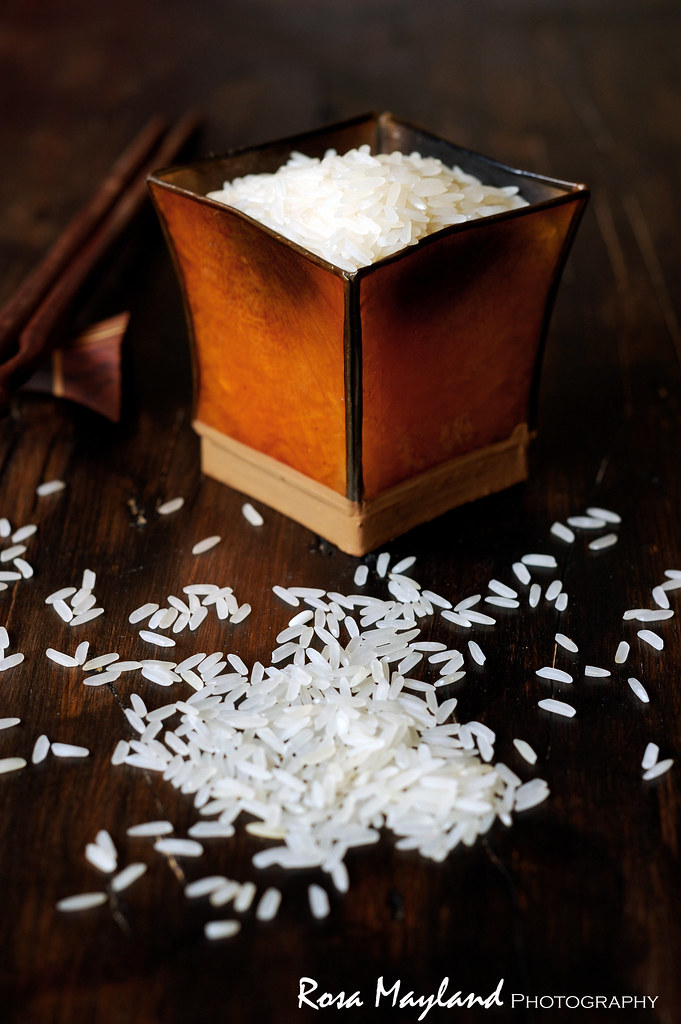
Rice is such a marvelous staple. What makes it so indispensable and irresistible is its incredible versability, great nutritional value (contains fibers, vitamins and minerals - an important component of a balanced diet),  refined savor and the many varieties in which it comes. One cannot get tired of eating this God-given cereal as not only is it healthy, but it is also a really scrumptious comodity.

Being a big fan of Middle Eastern and Asian cuisines, I am literally addicted to Basmati (
grown in the Himalayas and Pakistan) and Thai jasmine rice (cultivated in Thailand, but farmed in other similarly warm and moist environments too), hence I never fail to include one or the other in my weekly menu plan. Their
uniqueness and wonderfully soft texture as well as an exhalirating fragrance (aromas that are reminiscent of toasted nuts and/or popcorn) are remarkably compelling and irresistible. A real delight for the senses!

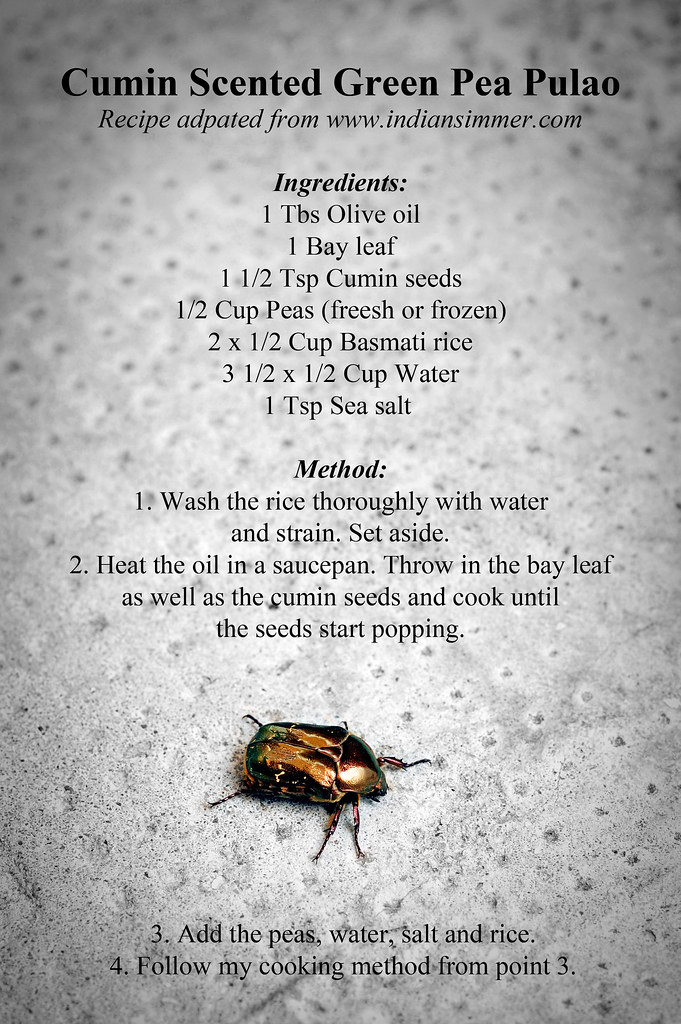
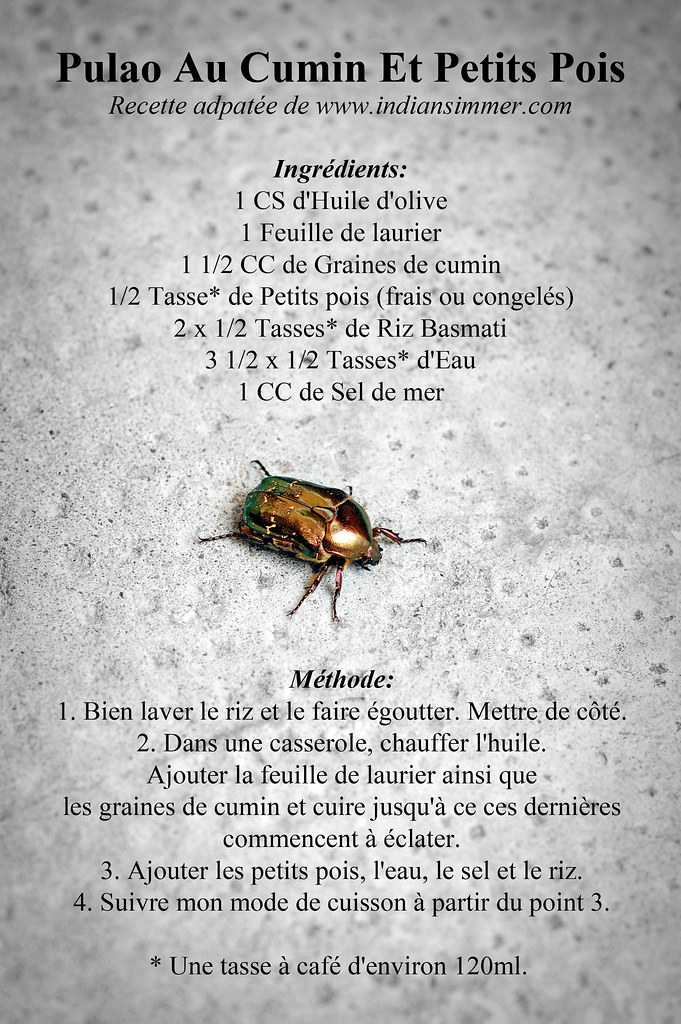
Over the course of the years, a handful of friends have asked me asked me to enlighten them on the art of preparing those exotic grains without failing and I've realised that few people know how to obtain light and tender rice which isn't mushy nor cloggy. It seems that a majority of food lovers are still clueless when it comes to cooking Basmati and Thai jasmine rice. So, because I am a generous blogger who enjoys helping others, I thought that it would be a good idea to reveal my no-fail method for steaming and creatively flavoring both rices here today. In addition, I have decided to share a fabulous recipe for Indian pulao (or pilaf) with you in this post
. Hopefully, my tips will prove helpful!


Directions For The Steamed Rice
Recipe by Rosa Mayland, September 2012.


You'll need 2 quantities rice (basmati or jasmine rice) for 3 1/2 quantities water - for ex. 2 scant cups rice & 3 1/2 scant cups water (serves 4). No matter the size of the recipient, always keep a 2 : 31/2 ratio!


1. In a strainer, rince your rice well, until the water runs clear - if you don't, the rice will end up being stodgy and not fluffy at all.
2. Put together the rinced rice and water in a pan (add a little salt when cooking basmati rice).

3. Bring to the boil over high heat while stirring intermittently, then lower the heat to a very low simmer and immediately cover with a tight-fitting lid. Cook for 12 minutes without opening the lid or stiring the rice - this would delay the entire procedure, and affect the actual time required to cook the rice as well as the rice's texture.
4. Remove the pan from the heat and let stand for another 12 minutes without opening the lid or stiring the rice.

5. Once the time's up, you can lift the lid and fluff the rice with a fork. Although the rice is ready, I recommend you to let it stand for another 15 minutes in the pan (lid on & fluffed) as it'll just be perfect if you give it a few more minutes to "breathe".
Voilà it's ready!


Rice Basmati 3 1 bis
Tips for adding life to your rice:
Now that you have learnt the basic rule for steaming your rice, you can try experimenting with spices (cumin, curcuma, cardamom, black pepper, chilli, zest, rose petals, etc... - add to the cooking water, at step 2 or fry in a bit of oil before adding the rice and water just like in the pulao recipe below) and herbs (bay leaves, tea leaves, curry leaves or kaffir lime leaves - add at the very beginning of the cooking process, at step 2 or fry in a bit of oil before adding the rice and water just like in the pulao recipe below - or fresh herbs such as cilantro - add once the rice has been cooked, at the end of step 5). They'll give this side dish a little oomph and make it even more appealing.

Another way of flavoring your rice is by substituting some of the cooking water with another liquid (coconut milk, stock, pineapple juice, tea, tamari, rose water, etc...) or by incorporating dried fruits (raisins, apricots, dates, cranberries, barberries, etc...), nuts (almonds, cashews, chestnuts, etc...) or even vegetables (peas, diced peppers, macedoine of carrots, chopped onions, pureed garlic, etc...) to the rice and water at step 2.


Be inspired and let your imagination run wild!


Rice Bug 1 4 bis
Méthode Pour La Cuisson Du Riz
Recette par Rosa Mayland, septembre 2012.

Il vous faut 2 quantités de riz pour 3 1/2 quantités d'eau - par ex. 2 tasses de riz et 3 1/2 tasses d'eau (pour 4 personnes). Les proportions restent les mêmes peu importe la taille du récipient!
1. Dans une passoire, rincer le riz jusqu'à ce que l'eau du lavage soit claire, puis le faire égoutter - si cette étape est négligée, alors votre riz sera collant, lourd et pâteux au lieu d'être léger et moelleux..

2. Réunir le riz avec l'eau dans une casserole (ajouter un peu de sel lors de la cuisson du riz basmati).
3. Porter à ébullition, tout en remuant de temps en temps. Dès que le riz commence à bouillir, immédiatement baisser le feu (très petit bouillons) et couvrir avec un couvercle hérmétique. Faire cuire pendant 12 minutes - sans ouvrir le couvercle ni remuer le riz autrement cela ralentirait la cuisson du riz et aurait une incidence sur le temps réel nécessaire afin qu'il soit prêt ainsi que sur sa texture.
4. Retirer la casserole du feu et laisser reposer pendant 12 minutes sans jamais ouvrir le couvercle ni remuer le riz

5. Une fois que les 12 minutes se sont écoulées, vous pouvez soulever le couvercle et égréner le riz avec une fourchette. Bien que le riz soit prêt, je vous recommande de la laisser encore reposer, dans la casserole fermée, pendant 15 minutes supplémentaires car de cette manière il aura quelques minutes de plus pour "respirer" et sera juste parfait. 
Voilà c'est prêt!


Astuces afin de donner plus de peps à votre riz:

Maintenant que vous avez appris la méthode de base pour cuire votre riz, vous pouvez dès lors essayer d'expérimenter avec des épices (cumin, curcuma, cardamome, poivre noir, piment, le zeste, pétales de rose, etc .. - à ajouter à l'eau de cuisson, au point 2 ou faire revenir dans un peu d'huile avant d'ajouter le riz et l'eau, comme pour le pilaf ci-dessous) et des herbes (feuilles de laurier, de thé, de curry ou de lime kaffir - à ajouter à l'eau de cuisson, au point 2 ou faire revenir dans un peu d'huile avant d'ajouter le riz et l'eau, comme pour le pilaf ci-dessous - ou des herbes fraîches telles que la coriandre laquelle sera ajoutée une fois que le riz aura été cuit,  au point 5) qui arômatiseront merveilleusement votre riz et le rendront plus attrayant.

Une autre façon de parfumer son riz est de remplacer un peu de l'eau de cuisson par un autre liquide (du lait de coco, du bouillon, du jus d'ananas, du thé, du tamari, de l'eau de rose, etc ..) ou d'incorporer des fruits secs (raisins, abricots, dattes, canneberges, épine-vinette/barberries, etc ..), des noix (amandes, noix de cajou, châtaignes, etc ..) ou même des légumes (petits pois, poivrons en dés, carotte coupés en macédoine, oignons hachés, ail en purée, etc ..) à l'eau de cuisson, au point 2.

Soyez inspirés et laissez courir votre imagination!


Rice Bug 2 4