Showing posts with label Onions. Show all posts

Friday, November 30, 2012

MUJADDARA BURGHUL (LENTIL AND BULGUR PILAF) - PILAF AUX LENTILLES ET AU BOULGOUR & AN EDIBLE MOSAIC BOOK REVIEW

Once you get a spice in your home, you have it forever. Women never throw out spices. The Egyptians were buried with their spices. I know which one I'm taking with me when I go.
- Erma Bombeck

There is something incredibly sumptuous about the food of the Middle East. It is steeped in history and mystery, teasing the palate with exotic and tantalizing flavors. Delicate and spicy, aromatic and fragrant, scented and syrupy-these are some of the words that come to mind. The tastes are rich and pleasing, the images romantic, airy and ancient. Rose petals and orange blossom, tamarind and dates, figs and apricots, mulberries and melons, saffron and orchid root, almonds and pistachios, olives, coriander and cumin-a myriad of flavors and dishes that are intricately entwined in the fascinating history of this vast and exciting region.
- Ghillie Basan, The Middle Eastern Kitchen: a Book of Essential Ingredients with over 150 Authentic Recipes
Spices and herbs are, and have always been an integral part of my cuisine. I intensely treasure them and cannot imagine living without those precious and irreplaceable condiments which not only enhance, complement and balance the flavors of a dish, but also benefit our health (they can be used as natural preventive medecine). A marvelous source of gratification and well-being!

It is one of the main reasons why I am irrevocably attracted to the glorious gastronomy of the countries situated at the crossroads of the Mediterranean basin and the Arabian hinterland. If you want to make my eyes twinkle, my mouth salivate and receive my total attention, then I recommend you to pronounce those three simple words: "Middle Eastern Food" and I'll come running like a worshipful dog on amphetamine.


In my opinion, there is nothing quite as varied, refined, intriguing, dazzling, exhilarating, dreamlike and worthy of "The Thousand and One Nights" than the gourmet fares served at Lebanese (my favorite), Iranian, Palestinian, Syrian, Israeli, Jordanian, Omani, Kuwaiti, Iraqi, Quatari, Saudi Arabian, Yemeni or Emirati tables.
 
8165853872_6e49cbb149_z
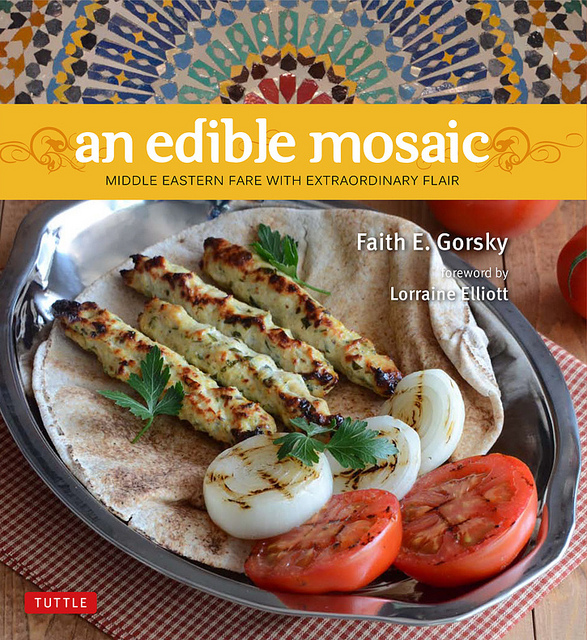
So, you can imagine my excitement when the talented Faith Gorsky of "An Edible Mosaic" (her headquarters are in upstate New York) kindly proposed to send me her cookbook "An Edible Mosaic - Middle Eastern Fare With Extraordinary Flair". There was no way I was going to decline her generous offer and pass the opportunity of reviewing this wonderful publication entirely written and illustrated a web friend and colleague whom I respect and have been following for the last three years (I first came across her site in 2009, if my memory does not fail me...).

Having been born and raised in America, nothing predestined this blogger to become a specialist on the subject of Middle Eastern food. As a matter of fact, before she tied the knot with her Syrian husband in the Middle East and lived there for the first six months of her matrimony, she barely had any knowledge of the specialities prepared by the people populating this part of the Arab world. Everything changed the day Faith married her life companion; she discovered and embraced a whole new culture.

 
During her stay in Damascus (the capital of Syria), she had the opportunity to explore and experience firsthand the magic of the cuisine of this region of the globe and even more so when her mother-in-law, who happens to be a master cook, took her under her wing and gave her a thorough course in Middle Eastern cooking that resulted in the creation of "An Edible Mosaic".

Over the past six years, this passionate young lady has visited the Middle East four different times, each trip contributing to deepening her love as well as expanding her enthusiasm for the culinary traditions and civilization of this fascinating land of contrasts. As a result, Faith's travels helped enrich her increasingly successful blog and build a devoted readership, thus ultimately leading her to writing the book I have the honor of introducing to you this Friday.

The Ultimate Communal Meal "Generally, one could say that Near and Middle Eastern and North African cooking and nutrition are healthy. As in other Mediterranean gastronomies, meat is rare and vegetables often used. The religious purity rules also have consequences for the kitchen, which is important for the health of the people.
- Peter Heine, Food Culture in the Near East, Middle East, and North Africa 
With its ten chapters (Basic Recipes, Breads and Pies, Salads, Vegetables and Rice Side Dishes, Appetizers and Light Meals, Beans and Lentils, Chicken and Seafood, Beef and Lamb, Desserts & Drinks), four useful sections (Cooking Tips and Techniques, Basic Cooking Tools, Buying the Right Middle Eastern Ingredients and Middle Eastern Grocery Stores) and many (over a hundred) easily reproducible, inspiring, meticulously detailed, carnivore as well as vegetarian/vegan-friendly, authentic and elegant recipes, "An Edible Mosaic - Middle Eastern Fare With Extraordinary Flair" will rejoice both beginner and experienced cooks. Each entry, side dish, main or dessert presented within the 144 pages of Faith's manual will make your mouth water and nudge you into the kitchen to prepare scrumptious delicacies that are vibrant, remarkably toothsome and nutritionally harmonious. 

Since I am somewhat knowledgeable about Middle Eastern cuisine and already possess a certain number of bestsellers on the topic, I had my doubts on whether or not this cookbook would help me broaden my gastronomic horizon. Well, I am pleased to inform you that I was not deceived at all by it.

"An Edible Mosaic - Middle Eastern Fare With Extraordinary Flair" is far from being boring or uninteresting. Actually, it is an extremely enjoyable read as it is chock-a-block full with delectable ideas for healthy, irresistible and lip-smackingly good dishes (some of which I have never even tried or concocted and plan on testing soon) ranging from "Thyme Spiced Flat Pies", "Tabbouleh", "Fried Eggplants With Garlic And Parsley Dressing", "Fried Cauliflower With Sesame Parsley Sauce", "Saffron Rice With Golden Raisins And Pine Nuts", "Spiced Cheese Balls", "Creamy Chickpea And Yogurt Casserole", "Fish Pilaf With Caramelized Onion", "Chicken Kebabs", "Roasted Green Wheat With Chicken", "Fried Kibbeh", "Scrambled Eggs With Meat And onions", "Upside Down Rice Casserole", "Sweet Cheese Pastry (Knafeh)", "Coconut Semolina Cake (Harissa)", "Creamy Hot Sahlab Drink" to "White Coffee". Plenty enough meals to keep you busy for several months!


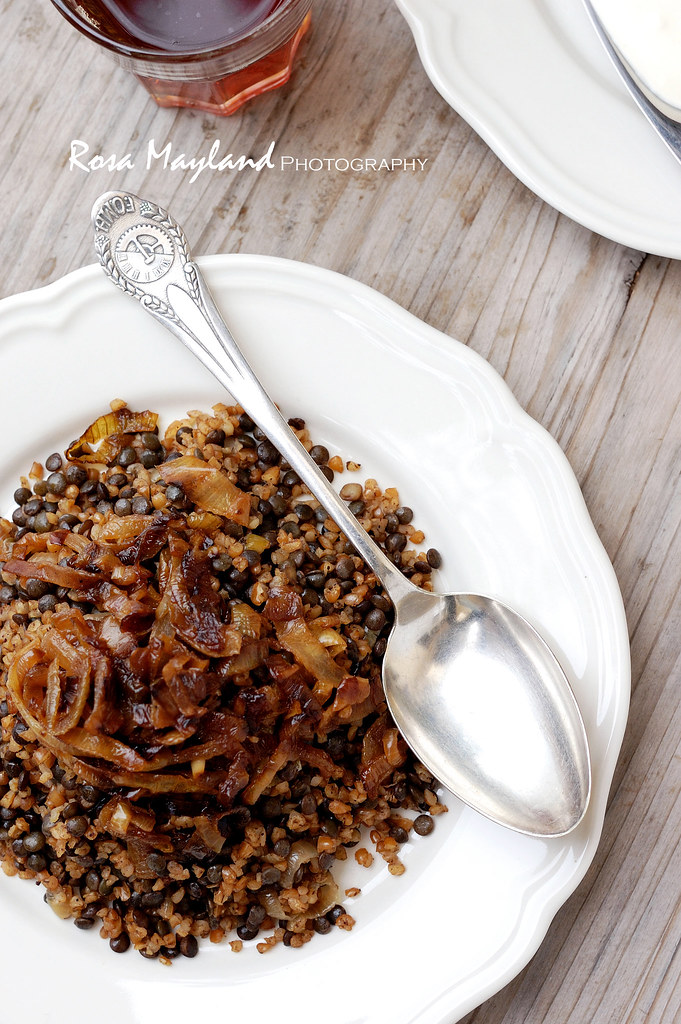
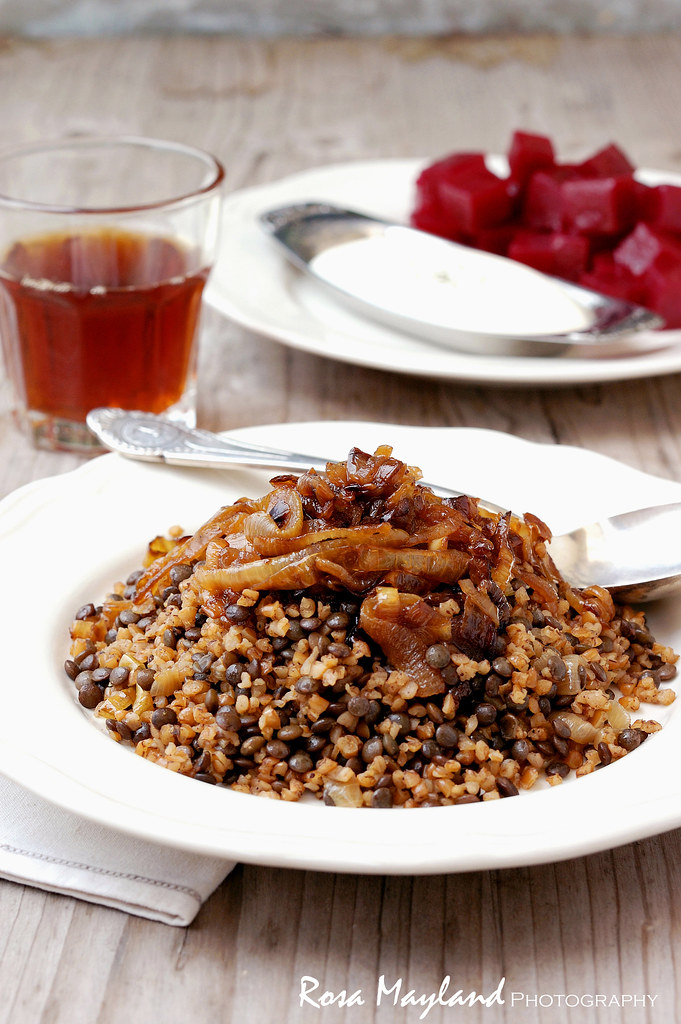
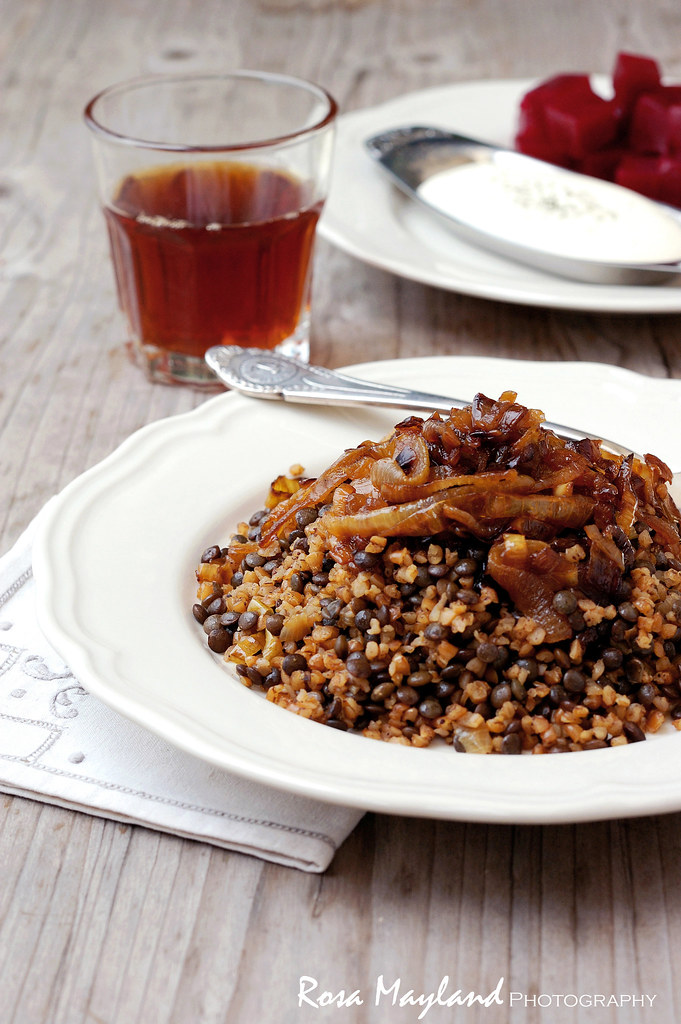
As you can imagine, choosing a recipe to showcase on "Rosa's Yummy Yums" wasn't an easy task (especially if you are a tergiversator named Rosa). It took me a while before I could make up my mind. Anyway, after a week of intense delibaration, I selected a hearty meat-free dish called "Mujaddara Burghul" ("Lentil And Bulgur Pilaf" in English) which is traditionally savored with cramelized onions and accompanied by plain yogurt, tomato, cucumber and/or onions slices (mine was served with some cooked beetroot since it is soon winter here in Switzerland and I disapprove of buying out of season vegetables).

The outcome was highly satisfying and the legume, cereal and spice addicts that we are were totally seduced by this main course's unique combination of bulgur, lentils and seasonings. Each element composing this magnificent one-pot mingled together perfectly, thus causing an exclamation of delight and a sigh of bliss after every forkful.


An economical, filling, fit, comforting and exquisite pilaf. One of life's simple pleasures!
 
Mujaddara Burghul (Bulgur And Lentil Pilaf)
Recipe by Faith Gorsky of
"An Edible Mosaic".


Serves 6.

Ingredients:

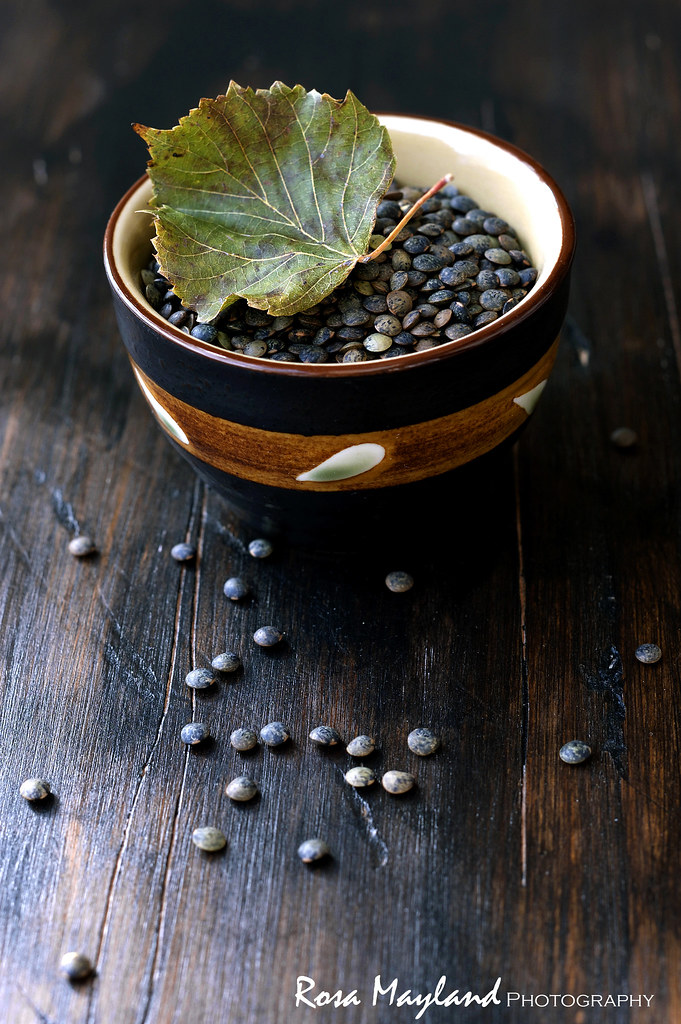
1 1/3 Cups (275g) Dried brown lentils
6 Cups (1.5 liters) Water
2 Tbs Olive oil
2 Tbs Butter
2 Large Onions, quartered and thinly sliced
1 Bay leaf
2 Pods cardamom, cracked open
2 Cloves
2 Tsps Ground cumin

1/2 Tsp Ground cinnamon
1 1/2 Tsp Fine Sea salt

1/4 Tsp Freshly ground black pepper
1 Cup (185g) Coarse-ground bulgur wheat
1 1/2 Cups (300ml) Boiling water

Thick plain yogurt (optional, for serving)

Method:
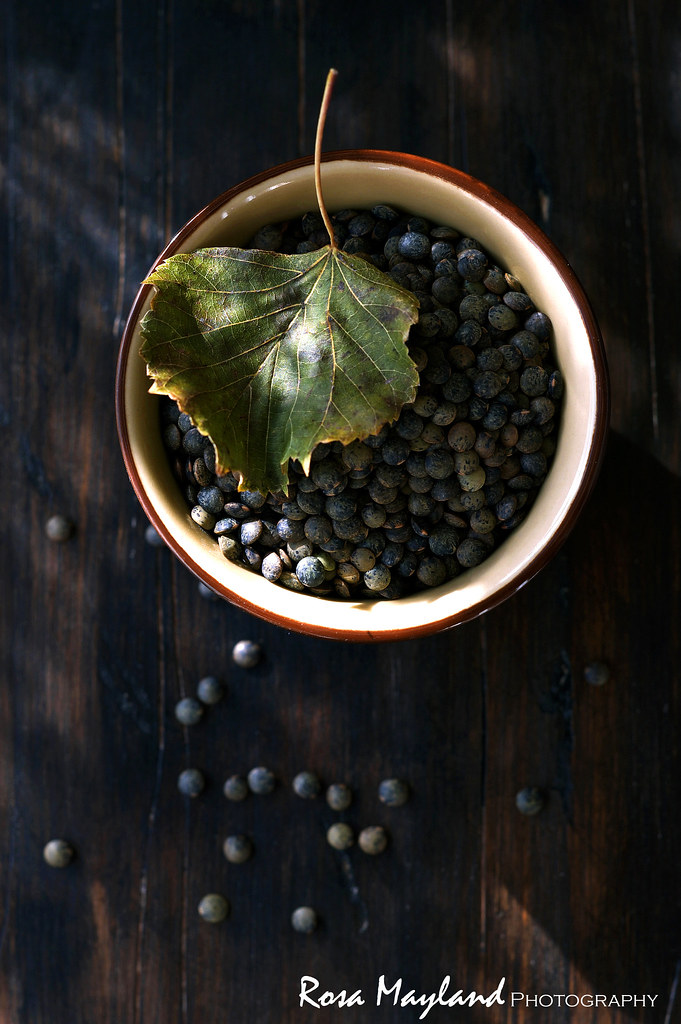
1. Sort through the lentils to remove any small stones or pieces of dirt, and then rinse with cold water in a colander.

2. Bring the rinsed lentils and the water to a boil in a lidded medium saucepan. Cover the saucepan, turn the heat down to a simmer, and cook until the lentils are tender but not mushy, about 20 to 30 minutes, stirring occasionally and adding more water as necessary so that they’re always immersed; strain and set aside.
3. While the lentils cook, heat the oil and the butter in a large skillet over moderately-high heat; add the onion and sauté until completely softened but not yet browned, about 10 minutes, stirring occasionally.
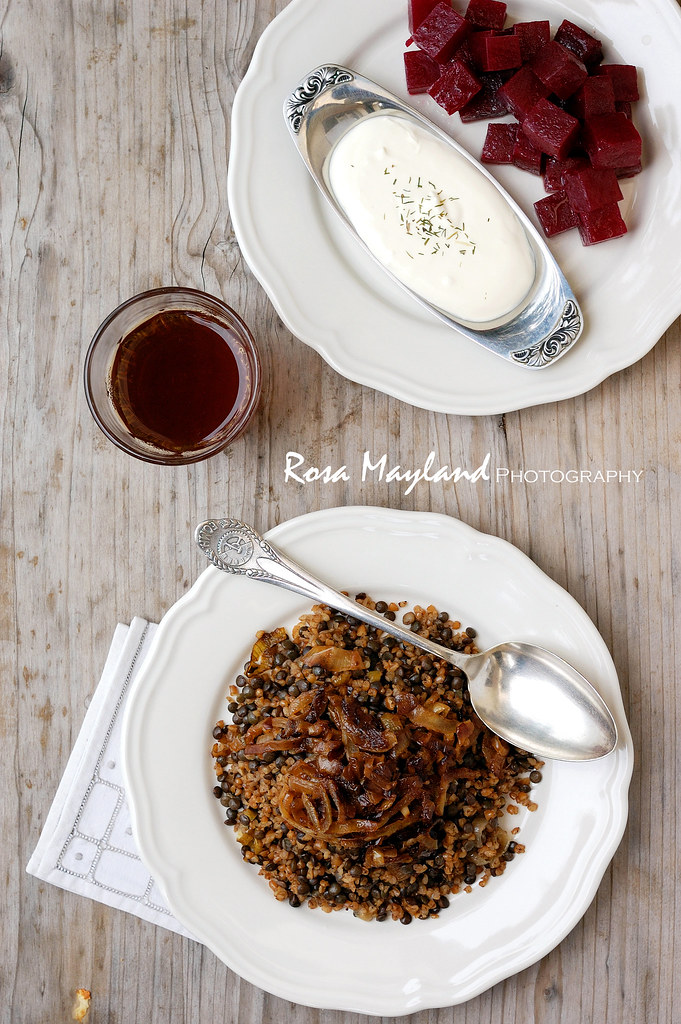
4. Transfer half the onion to a small bowl and set aside. Continue cooking the remaining onion until deep caramel in color, about 5 to 10 minutes, stirring occasionally and adding a splash of water as necessary if the onion starts to get too dark. Set aside.
5. Put half a kettle of water on to boil. Transfer the sautéed onion (not the caramelized onion) to a medium saucepan. Add the bay leaf, cardamom, clove, cumin, cinnamon, salt, and pepper and cook 1 minute.
6. Add the bulgur and cook 1 minute more, stirring constantly.
7. Give the bulgur a stir, then cover the saucepan, turn the heat down to very low, and cook until tender, about 10 minutes (do not open the lid during this time).
8. Turn the heat off and let the bulgur sit 10 minutes, then fluff with a fork and gently stir in the lentils. Taste and add additional salt, pepper and olive oil if desired.
7. Transfer to a serving dish and top with the caramelized onion.


Remarks:
Instead of making this dish with dried brown lentils, you can prepare it with the same amount of green lentils or 2 cans of brown lentils, rinsed and drained.
For an easy variation of this dish, use white or brown rice instead of bulgur wheat.

Serving suggestions:
Serve with plain yogurt (to spoon on top) and accompany by sliced tomatoes, cucumber and/or onions.
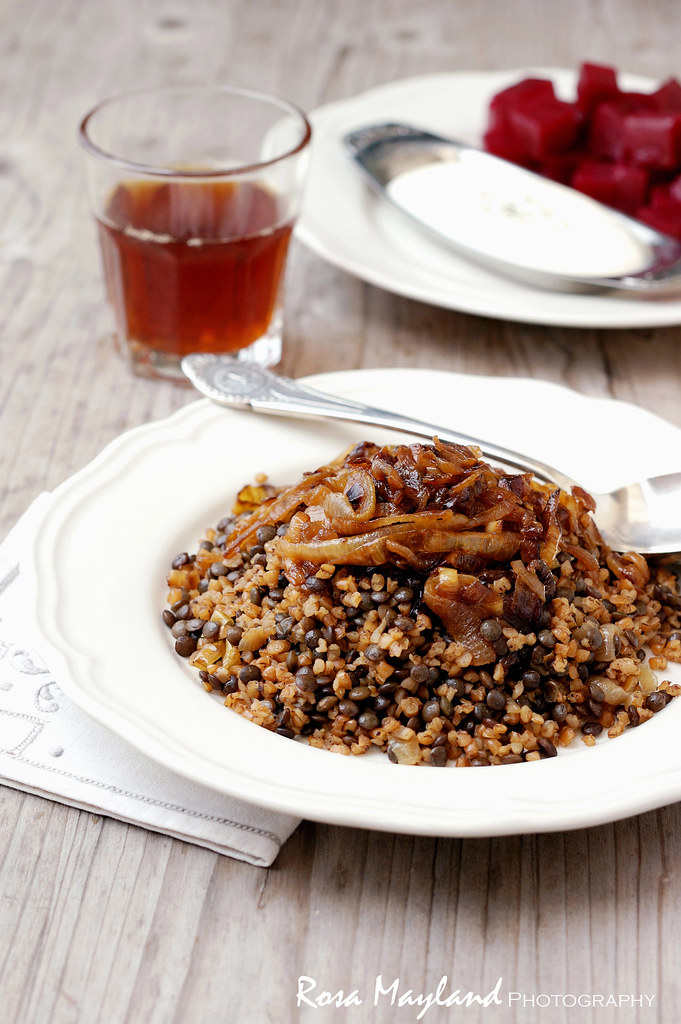
Mujaddara Burghul (Pilaf Au Bulgur Et  Aux Lentilles)
Recette par Faith Gorsky de
"An Edible Mosaic".


Pour 6 personnes.

Ingrédients:
275g de Lentilles brunes séchées
1,5L d'Eau
2 CS d'Huile d'olive
2 CS de Beurre
2 Gros oignons, coupés en quartiers et tranchés finement
1 Feuille de laurier
2 Gousses de Cardamome, écrasée
2 Clous de girofle, entiers
2 CC de Cumin en poudre
1/2 CC de Cannelle en poudre
1 1/2 CC de Sel de mer fin
1/4 CC de Poivre noir fraîchement moulu

185g de Boulgour concassé en gros grains
300ml d'Eau
Yaourt nature épais (en option, pour servir)

Méthode:
1. Trier les lentilles pour enlever les petites pierres ou les impuretés, puis rincer à l'eau froide dans une passoire.
2. Dans une casserole, porter les lentilles rincées et l'eau à ébullition. Couvrir la casserole, et baisser le feu. Laisser mijoter/cuire jusqu'à ce que les lentilles soient tendres mais pas molles (
remuer de temps en temps et ajouter plus d'eau si nécessaire afin qu'elles soient toujours immergées), environ 20 à 30 minutes. Egoutter et mettre de côté.
3. Dans une grande poêle, faire chauffer l'huile et le beurre à feu vif, ajouter l'oignon et faire revenir pendant
environ 10 minutes (remuer de temps en temps), jusqu'à ce qu'il soit mou et translucide mais pas encore doré.
 
Bulgur & Lentil Pilaf 2 4 bis
4. Transférer la moitié de l'oignon dans un petit bol et mettre de côté. Poursuivre la cuisson de l'oignon restant pendant environ 5 à 10 minutes (remuer de temps en temps et ajouter un peu d'eau si l'oignon commence à devenir trop sombre), jusqu'à ce qu'il ait caramélisé. Mettre de côté.
5. Dans une casserole de taille moyenne, faire bouillir les 300ml d'eau. Ajouter, l'oignon cuit (pas l'oignon caramélisé), la feuille de laurier, la gousse e cardamome, les clous de girofle, le cumin, la cannelle, le sel et le poivre. Faire cuire pendant 1 minute.
6. Ajouter le boulgour et faire cuire encore 1 minute suplémentaire, en remuant constamment.
7. Couvrir la casserole, baisser le feu à très doux et laisser cuire pendant envirion 10 minutes, jusqu'à ce qu'il soit tendre (ne pas ouvrir le couvercle).

8. Baisser le feu et laisser le boulgour reposer pendant 10 minutes, puis l'égrainer avec une fourchette et incorporer délicatement les lentilles. Goûter, puis saler et poivrer selon votre goût et ajouter un trait d'huile d'olive si désiré.
7. Transférer dans un plat de service et garnir avec les oignons caramélisés.

Remarques:

Au lieu de faire ce plat avec des lentilles brunes séchées, préparez-le avec des lentilles vertes ou 2 boîtes de conserves de lentilles brunes, rincés et égouttés.
Pour varier un peu, le boulgour peut être remplacé par du riz blanc ou brun.

Suggestions d'accompagnement:

Servir avec le yaourt (versé sur le dessus du plat) et accompagner de tranches de tomates, de concombre et/ou des rondelles d'oignons.

Bulgur & Lentil Pilaf 5 8 bis 

Friday, March 23, 2012

SAUERKRAUT, POTATO & CHEDDAR PASTIES - PASTIES A LA CHOUCROUTE, POMME DE TERRE ET AU CHEDDAR ♥ A GUEST POST FOR SIMONE AT "JUNGLEFROG"

Sauerkraut Pasties Path 1 2 bis
In life, there are some beings who enlighten your days, inspire you greatly and are refreshing. The same can be said about certain blogs or bloggers, and both Simone and her excellent site definitely belong to that category. Everytime I visit Junglefrog, you can be sure that I'll be delighted by her magazine-like pictures, marvelous sense of humor and lovely recipes. It is indubitably far from being mundane or soulless!

This zesty Dutch lady is a skilled professional photographer whose work never to fails to wow me. I really appreciate her very European way of immortalizing dishes and I wish I could have half of her talent with my Nikon. Yet not only is she an ace behind the camera, but she is also a masterful cook and baker who wizzes up amazing cakes, colorful salads, comforting casseroles, delectable appetizers, balanced main courses, luscious desserts, etc...

I discovered Junglefrog through The Daring Bakers and have been following her online journal regularly since at least three years, thus I have been lucky to witness its evolution and see how the pretty caterpillar turned into a beautiful butterfly over the years. So, the day Simone asked me if I would be interested in writing a guest post for her, I felt overwhelmed with joy and excitement and immediately said "yes" without needing to meditate over her generous proposition. It is an honor for me to have been given that opportunity and I am truly thankful that she thought of me!
When you die, if you get a choice between going to regular heaven or pie heaven, choose pie heaven. It might be a trick, but if it's not, mmmmmmmm, boy.
- Jack Handy
As Simone is currently trying to focuse on healthy eating and as I love speaking about British grub, I thought that it would be wonderful if I shared my take on "Cornish Pasties" with her readers and spoke a bit about its origins.
 
Sauerkraut Pasties 3 bis
I got the idea and urge to bake my own pasties while watching Saturday Kitchen on BBC1. On this program animated by celebrity chef James Martin I heard Rick Stein relate a sad event that happened in 1999 (read what the BBC has written on that subject) when a eminent New York Times journalist shamelessly declared that "Cornish Pasties" were bland, like doorstops and "generally God awful". [...]

So, if that short introduction made your mouth water and your tastebuds tingle, tickled your curiosity, captivated your attention and gave you the urge to read my article, then please hop on over to Junglefrog in order to read the whole article, get a glimpse of my pictures, discover my recipe and pay a visit to Simone. 

♥ ♥ ♥ ♥ ♥ ♥ ♥ ♥ ♥ ♥ ♥ ♥

Etant donné que beaucoup de mes lecteurs francophones ne comprennent pas forcément l'anglais et que malheureusement peu d'entre-eux auront la chance de lire mon billet invité et dernier article en date sur le merveilleux blog Junglefrog qui appartient à ma talentueuse collègue néerlandaise Simone, je me suis permise de traduire la recette qui y figure afin que vous puissiez aussi en profiter car je pense qu'elle pourra vous intéresser (vous pouvez tout de même y jeter un coup d'oeil car ses recettes sont vraiment passionnantes et mon article contient d'autres images que celles exposées ici).

J'espère que mes "
Pasties A La Choucroute, Pomme De Terre Et Au Cheddar" vous plairont car ils sont inspirés d'une spécilaité très British qui nous vient de Cornouaille et qui est vraiment succulente. Cette création personnelle est une ode à la cuisine Anglaise qui est unique, versatile, si réconfortante, fabuleusement savoureuse, humble et qui est loin d'être insipide,fade, peu délicate et inintéressante comme le prétendent certaines personnes mal-attentionnées et à l'esprit étroit. Ce cliché est vieillissant, dépassé de mode et plus d'actualité...

~ Pasties A La Choucroute, Pomme De Terre Et Au Cheddar ~
Recette par Rosa Mayland, Mars 2012.

Ingrédients pour la "Pâte Brisée": 
200g de Farine blanche
100g de Farine complète
1 1/4 CC de Sel de mer fin 
80g de Beurre non-salé
70g de Saindoux
~80ml d'Eau très froide ou assez afin que la pâte forme une boule
Ingrédients Pour La "Garniture":
200g de Choucroute crue, éssorrée et hachée grossièrement
100g de Cheddar vieux, coupé en petits cubes
1 Pomme de terre (moyenne), pelée et coupée en petits morceaux
1 Oignon, haché finement
3/4 CC de Thym séché
Une pincée de noix de muscade
Poivre noir fraîchement moulu, selon goût
Le sel de mer, selon goût
Ingrédient Pour Le "Glaçage":
1 Oeuf, battu

Méthode pour la "Pâte Brisée":
1. Tamiser la farine et le sel dans un bol moyen.
2. Ajouter le beurre, le saidoux et frotter
la farine et le beurre/saindoux entre les doigts afin d'obtenir un mélange qui ait une texture sabloneuse.
3. Verser l'eau, graduellement, tout en mélangeant bien (ne plus ajouter d'eau quand la pâte a atteint la bonne consistance/ni trop mouillée, ni trop collante). Former une boule puis la mettre au frigo pendant que vous préparez la garniture.
Méthode Pour La "Garniture":
4. Dans un bol, mélanger ensemble tous les ingrédients pour la garniture. Mettre de côté.
Méthode Pour "Assemblage Et Cuisson Des Feulletés":
5. Préchauffer le four à 200 ° C.
6. Diviser la pâte en 5 portions égales.
7. Sur une surface farinée, abaisser l'un des morceaux en un cercle d'environ 18-19cm de diamètre.
8. Placer un cinquième du remplissage au centre de chaque cercle, en faisant un sorte de laisser un bord d'environ 1cm.
9. Avec l'oeuf battu, badigeonner les bords de la pâte.
10. Soigneusement rabattre les bords ensemble afin de former une crête, puis les pincer pour bien sceller et créer des bords ondulés (voir remarques).
11. Placer les feuilletés sur une plaque à pâtisserie recouverte de papier sulfurisé et badigeonner avec le restant d'oeuf battu
.
12. Cuire au centre du four pendant 35-40 minutes ou jusqu'à ce que les pasties soient dorés et croustillants.
13. Servir.


Remarques:
Les pasties doivent toujours être fermes, bien plains et jamais humides ou juteux (la pâte en souffrirait).
Si vous vous ne savez pas très bien comment former vos pasties, alors la première video 1 et la deuxième video vous seront d'une grande utilité (malheureusement elles sont en anglais).

Idées de présentation:
Servir pour le déjeuner ou le repas du soir et accompagner d'une salade de saison ainsi que d'une bière.
Les pasties sont aussi parfaits pour le pique-nique ou pour un repas canadien.

Friday, February 24, 2012

BEET SALAD WITH COTTAGE CHEESE & A RUNNY EGG - SALADE DE BETTRAVE AU COTTAGE CHEESE ET SON OEUF MOLLET


Some people are not afraid of the cold and others regard it with utter contempt. Even if I'm the kind of person who enjoys every single period of the year, I nonetheless definitely prefer the fresher season as I hate to sweat excessively or get sunburnt like a shrimp on a barbie.

Sometimes I wonder if those predispositions are linked to my DNA or is it just a personal preference. What if our genes influenced our manner of conducting ourselves and our traits of character? Hmmm, that is quite a difficult question to answer, however I believe that if our health can be defined by our bloodline, then there are chances that our emotions, temperament and identity is also outlined by it.

You see, my father's ancestors were Swiss mountainers who might have had Danish or English origins (my family name is NOT Swiss at all). Then, on my my mother's side they came from the rugged areas of Northern England where Viking settlers made themselves at home and also from European Russia, a place which is famous for its dreadful freezingness.


Because of this heritage, as a child my hair was so straw-straight and pale blond that I had the appearence of a Swedish little girl (my eyes are blue and my skin is fair too, hence the similarities). It is the reason why I was so popular amongst Japanese tourists who invariably asked my parents if they could shoot my portrait every time they caught a sight of me. Those features attracted them like crazy...
The care with which these nations cherished their hair was remarkable. A striking instance of their solicitude respecting it, is afforded by a young warrior who was condemned to be beheaded. His last and most earnest request was, that it might not be stained with his blood, or exposed, after his death, to the rude touch of a slave. In some instances, ringlets of auburn hair have been found in the tombs of the early Britons.
- Excerpt form "The Scottish Gael" by J. Logan
The light thou beholdest
Stream through the heavens,
In flashes of crimson,
Is but my red beard
Blown by the night-wind,
Affrighting the nations!
Jove is my brother;
Mine eyes are the lightning;
The wheels of my chariot
Roll in the thunder,
The blows of my hammer
Ring in the earthquake!
- "The Challenge of Thor" by Henry Wadsworth Longfellow
Sadly, the older I grew, the darker and frizzier my mane became. Nowadays, my locks are light auburn colored with golden highlights and they are still quite wavy. Once again, this is another sign of the legacy of my forefathers as both my complexion and reddish-brown tint occurs most frequently in the phenotypes originating in Northern Europe*, so it is no surprise if my spirit is that of a "true daughter of Thor".

*Scandinavia, Ireland, England, Scotland, Germany, the Benelux countries, France, Poland and Russia - Leading the pack, Scotland, Ireland, Wales and England have the most redheads. Scotland has the highest proportion with 13% having red hair and ~ 40% possessing the recessive redhead gene. Ireland is second highest with ~ 10% having it and 40% carrying the gene.

Beet Salad BibI Pic 1 3 bis
~ Picture taken by my late English grandfather ~

I carry the love for harsh and dramatic weather within my blood. It is encoded in my genetic material and deeply rooted in me. There is no doubt about that. Yet, I must admit that although I find crisp air rather envigorating, the last two weeks' Polar conditions took a toll on me and brought my mood down since I didn't set a foot out of the door from fear of being transformed into a giant human icicle!

Well, in my defense, until not long ago, Europe had been experiencing the worst Winter in decades. On the 27th of January we were hit be a coldwave that brushed across the continent, brought blizzards and caused the thermometer to dip to bitter levels. Temperatures of - 35.1° C were recorded during the night in the Swiss Alps (though nothing quite like the -41.8° C recorded in 1987 in La Brévine, Neuchâtel) and in Geneva they sank to - 13° C. Besides, massive snowfalls transformed our landscapes into Siberian wastelands, intense frost swept through the country and the Bise (mean and dry North-Eastern wind) was so violent it went right through you. Brrrrrrr!

The town of Geneva resembled a deserted Illinois ghost town and the rural areas looked like the icy Finnish tundra. Needless to say that there weren't many crowds defying the benumbing elements. The only courageous individuals who braved the harsh conditions were disciplined blue-collars who wore impressive layers of clothes and rushed through the streets as if it was a matter of life and death.
O Winter ruler of the inverted year. . . I crown thee king of intimate delights, Fireside enjoyments, home-born happiness, And all the comforts that the lowly roof Of undisturb'd Retirement, and the hours Of long uninterrupted evening, know.
- William Cowper
On the positive side, this kind of climate is perfect for hibernating, cocooning, taking care of yourself, cuddling with that special someone, finding excuses to stay home, lying longer in your snug bed, eating more comforting foods than usual (I nourish myself in a balanced way, but when the days are dark and glacial it is difficult not want to uplift your mood with cheering grub such as chocolate or cakes) and for being as lazy as a ferret.
But, as we all know, even if this kind of behavior is good for our soul, it is impossible to close our eyes on the negative impact all this hedonistically "shameless" binging and sluggish lifetsyle has on our body. I have to admit that while my trousers still fit me, I wish they'd be a little less tight around the hips, hence I've decided to take things in hand and start cutting down on hyper-calorific treats as well as exercizing again.

Spring is around the corner and I really want to be in shape when the warm rays of the sun caress my skin and nature is blooming. I would be terribly angry with myself if I felt unwell and out of breath while riding my bike through the fields or while walking up the Salève mountain. So, in order to attain my goal, my plan is to re-tone my muscles, have a better control of what I devour and limitate my ingestion of flour, sugary goods as well as nuts.


Having said that, I have to point out that I refuse to go on any diet as I don't find it is a good and lasting solution to weight gain. In my opinion, instead of fasting like an anorexic model, following the latest nutrionists' doolally fads or transforming into a fitness fascist, one should lead a harmonious life by giving priority to mindful nutrition and physical activity without ever forgetting to find pleasure in food and joy in existence.

Consequently, at the moment, big quantities of vegetables are on the menu, but that is no problem for me as I adore greens and I'm used to cooking with them. It is rare that I come across one veggie I hate or simply cannot stomach. In fact, I am quite a legume enthusiast.

One of my favorite veggies is beet. This gorgeous root is available in a range of pretty colors that illuminate the plate, has an interesting sweet and earthy flavor which is really refined and is extremely versatile. Beetroot is so awesome and totally indispensable. It's a real must-have in my kitchen. I can't imagine not using it on a regular basis as I appreciate inventing exotic or regional recipes with it.

My most recent creation is a classy, easy, fresh, nourishing, flavorful and nutrient-ladden salad which consists of thin slices of blanched beetroots that have been marinaded in a balsamic vinegar vinaigrette and which are topped with onions rings, cottage cheese, walnuts and a soft-boiled egg. This meatless course makes a great main dish if accompanied by a few slices of dark rye bread/crackers or a few buttered potatoes. Wonderful!


~Beet Salad With Cottage Cheese & A Runny Egg ~
Recipe by Rosa Mayland, February 2012.

Serves 4.

Ingredients For The "Vinaigrette":
5 Tbs Balsamic vinegar
2 Tbs Malt vinegar
2 Tbs Olive oil
1 Tsp Kikkoman (sweet)
A few drops of Chipotle Tabasco
Balck pepper, to taste
Fine sea salt, to taste
Ingredients For The "Salad":
900g Cooked beetroot, peeled & cut into thinnish slices
1 Onion, thinly sliced into rounds
200g Cottage cheese
4 Big Eggs, soft-boiled (see method)
A handful walnuts, toasted and roughly chopped
Pimentón or Espelette pepper, for sprinkling

Beet Salad 1 1 bis
Method For The "Vinaigrette":
1. In a big bowl, mix all the ingredients for the vinaigrette together.
Method For The "Salad":
2. Add the beetroot slices to the vinaigrette, mix delicately and let marinade for about 1 hour.
3. Prepare 4 plates and arrange the slices on them.
4. Add the onion slices and the cottage cheese.
5. Place a soft-boiled egg on top of each salad and cut it open.
6. Sprinkle with the walnuts and the pimentón or Espelette pepper.
7. Serve.

Comments:
When I need cooked beets, I generally buy them already boiled (it saves time and in that way I always have them on hand in my fridge), but you can also cook yours at home (see method).
Instead of using walnuts, you can sprinkle your salad with toasted pumpkin seeds or any other nut/seed of your choice.
The soft-boiled eggs can easily be replaced by a poached or fried eggs.

Serving suggestions:
Serve as main course with some wholesome bread (ex. Norwegian Mountain Bread) or some boiled/jacket potatoes with butter.

Beet Salad 7 2 bis
~ Salade De Betteraves, Cottage Cheese Et Oeuf Mollet ~
Recette par Rosa Mayland, Février 2012.

Pour 4 personnes.


Ingrédients Pour La "Vinaigrette":

5 CS de Vinaigre balsamique
2 CS de Vinaigre de malte
2 CS d'Huile d'olive
1 CS de Kikkoman (doux)
Quelques gouttes de Chipotle Tabasco
Poivre noir, selon goût
Sel de mer fin, selon goût
Ingrédients Pour La "Salade":
900g de Betteraves cuites, pelées et coupées en fines tranches
1 Oignon, finement coupé en rondelles
200g  Cottage cheese
4 Gros Oeufs mollets (voir méthode)
Une poignée de noix de Grenoble, grillées et hachées grossièrement
Pimentón ou piment d'Espelette, pour saupoudrer


Beet Salad Tree 1 1 bis

Méthode Pour La "Vinaigrette":
1. Dans un grand bol, mélanger ensemble tous les ingrédients pour la vinaigrette.
Méthode Pour La "Salade":
2. Ajouter les tranches de betterave à la vinaigrette, mélanger délicatement et laisser mariner pendant environ 1 heure.
3. Préparez 4 assiettes et y disposer les tranches.
4. Ajouter les rondelles d'oignon et le cottage cheese.
5. Placer un œuf mollet sur le dessus de chaque salade et l'ouvrir en deux avec la pointe d'un couteau.
6. Saupoudrer avec les noix et le poivre d'Espelette ou le pimentón.

7. Servir.

Commentaires:

En général, lorsque j'ai besoin de bettraves cuites, je les achète déjà cuites (cela économise du temps et de cette manière je les ai toujours sous la main), mais vous pouvez aussi cuire les votres à la maison (voir la méthode).

Au lieu d'utiliser des noix de Grenoble, pourquoi ne pas saupoudrer vos salades avec des graines de citrouille ou les noix/graines de votre choix.
Les œufs mollets peuvent être remplacés par des oeufs pochés ou à la poêle.

Idée de présentation:

Servir comme plat principal avec du pain complet (ex. pain de montagne norvégien) ou quelques pommes de terre cuites à l'eau/au four et servies avec du beurre.


Beet Salad Glass 2 1 bis

Tuesday, May 17, 2011

EGGS WITH ASIAN-STYLE GALANGAL & RHUBARB VINAIGRETTE

Egg Salad Picnik collage 2 bis
After having gobbled many chocolate rabbits, Easter pralines and sugar eggs for the last 6 weeks (This year, my boyfriend's Grischun parents literally spoilt us rotten, although we are far from being children anymore!), I am now getting slightly over-saturated with all things sugary. At the moment, my interest is rather focused on eating in a more balanced way and testing new savory recipes with all the marvelous spring vegetables that are inundating the market stalls...

The truth is that even if I can go totally beserker over cookies, cakes, chocolates and any creamy, sticky, gooey, rich and luscious dessert, I have a really soft spot for salty foods too.
Despite the fact that my blog tends to showcase more baked goodies than savory starters, main courses or snacks, it is not meant to be exclusively in that way. A good homemade pizza can drive me as crazy as an ambrosial cheesecake. I refuse to support one camp to the detriment of the other as I am a fervent partisan of both sides. I need to entertain a yin-yang relationship between both worlds, because a lack of contrast and change in my menu plan would bore the socks off me.

Generally, I cook dishes worthy of blogging about during the weekend as my budget is very tight and I cannot permit myself to prepare Sunday dinners every single day of the week. Of course, it doesn't mean that my weekly culinary concoctions are insipid, austere or monotonous and would not deserve to be put under the spotlight
(all the contrary). They are just a lot simpler, humbler and less luxurious/glamorous (no meat, fish and a lot of veggies) than my Friday or Saturday evening meals.

Not forgetting that, during the weekend, the conditions are never optimal to take pictures of my creations, since we usually eat late in the evening when it's dark and there's no natural light. Besides, I rarely have the power to interrupt our romantic repast in order to take pictures for hours while everything is getting cold on the plate, and my exasperated boyfriend is yammering and getting extremely impatient. I am a way too finicky person to do things in a haste, with somebody breathing down my neck and
not such a talented photographer to obtain the desired cliché by only taking a few quick shots.

Anyway, lately, I have been dying to show you the spicy side of my personality. It is for that reason I am trying to remedy to this situation by posting recipes that don't contain sucrose - or at least in very small quantities only...

I would be a liar if I told you that I don't enjoy stuffing myself with hyper-calorific goodies, yet I am a food lover who nonetheless tries to control her diet and always make sure that it is well-balanced. My Monday through Thursday meals are mostly vegetarian and light, thus this gives me the opportunity to devour "dirty" treats in the evening while watching a movie or one of my favorite series. In any case, those aren't even that bad for me as I never buy anything that is industrial or full of additives and make everything myself with quality ingredients.

So,
in order to show you how I eat on a daily basis, and since the weather has been very summery lately and I have been craving sunny as well as healthy dishes, I thought that it would be a great idea to invent an unconvential, unpresumptuous and easy everyday egg "salad" with the ingredients stocked in my well-garnished fridge and Ali Baba's cave-like pantry. There, I found all the ingredients I needed to create something funky and out of the ordinary: some eggs bought at the farmers' market, a leftover rhubarb stalk, galangal, red onions, a bunch of fresh coriander, fruity olive oil and all kinds of useful seasonings (balsamic vinegar, sambal oelek, soy sauce, mustard, grey sea salt and whole black pepper - perfect for putting an original vinaigrette together).

This Far East-inspired main course turned out just as I had imagined it to be. The happy combination of round, musky, sweet, sour, salty, bitter, exotic and heady flavors was amazing and my tastebuds saw fireworks. My "Eggs With Asian-Style Rhubarb Vinaigrette" tasted very fresh, refined and was delightfully aromatic. A fantastic gustative experience!

For those of you who are not familiar with galangal, it is a big pleasure for me to introduce you to this wonderfully versatile and characterful produce.
It would be awesome if thanks to me, this ingredient would enter your kitchen and become a precious cooking ally. That would prove that I do my blogger "job" correctly and that my site is informative/has a purpose...

"Galangal" (aka "Greater Galangal", "Thai Ginger" or "Blue Ginger") is a rhizome of a plant in the ginger family which is native to the grasslands areas of Indonesia. It has many culinary as well as medicinal uses and is cultivated in China and the whole of Southeast Asia as well in
hotter regions of California and Florida. Two different varieties exist: one is known as "greater galanga" and the other, "lesser galangal". The first is larger in size, lighter in color and subtler in aroma than the second which is hotter than ginger and has an underlying "earthy" flavor.

According to research, galangal it is an antibacterial and helps fight against fungal infections (for ex. candidiasis in the intestinal tract). It has been employed for centuries as medicine as it has always been known for reducing cramping and numbness, being a digestive stimulant (laxative), healing bruises and swelling, treating respiratory ailments (tuberculosis) and skin diseases (eczema), removing toxins from the body (blood purifier), having warming properties, settling an upset stomach (indigestion, stomachache and diarrhea), easing nausea, curbing flatulence and combating tuberculosis, eczema, hiccups, canker sores, oral ulcers and gum pains. Apparently, it is also believed to be a stimulant, a tonic, an aprhodisiac and a mild hallucinogenic...

Over a thousand years ago, it was introduced into Europe by Arabian physicians and became very popular in our latitudes during the Middle Ages.
For some unknown reason, it disappeared from European culinary and medical scenes as it seems it fell out of vogue, along with other spices, when milder foods became the order of the day in the 18th century.

Cooks also love to prepare fragrant dishes (curries, dipping sauces, salads, soups, etc...) with this citrusy, sharp, sweet, peppery, piney, earthy, cedary, "soapy" and delicate tasting herb. Galangal masks the fishiness of seafoods and the heaviness of red meats, thereby making them taste cleaner, more delicate and succulent. Before being incorporated into a dish, this seasoning ingredient is either crushed, finely chopped or cut into matchstick-like strips. As galangal is very dense and hard, you'd better make sure to have a sharp knife at hand, otherwise you'll have difficulties cutting through its tough flesh. In Asian supermarkets, you can either buy it fresh or dry (in the form of powder having a pronounced musky and rooty flavor unlike the sharp bite of the fresh root).

An incredibly interesting rhizome which, I hope, will seduce and enchant you!

For more recipes containing galangal, please check the following posts: "Thai Yellow Curry", "Thai Massaman Curry" and "Indonesian/Malaysian Fish Rendang".

This post was submitted to Ivy at "Kopiaste...To Greek Hospitality" who is hosting Creative Concoctions #4 – Cooking with Olive Oil.

Egg Salad Picnik collage 1 bis
~ Eggs With Asian-Style Galangal & RhubarbVinaigrette ~
Recipe by Rosa Mayland @Rosa's Yummy Yums, May 2011.

Serves 4.

Ingredients :
8 Hard boiled eggs, shelled
90g Rhubarb
1 Tsp Mild mustard
2 Tbs Sweet soy sauce (ex. Kikkoman)
2 Tbs Dark balsamic oil
6 Tbs Virgin olive oil
1/3 Tsp Sambal oelek
3 Tsps Fresh galangal root, finely chopped
1 Small Red onion, finely chopped
1/2 Bunch Fresh coriander (+ more for decorating), chopped

Fine Sea salt, to taste
Freshly ground black pepper, to taste

Method:
1. Cut the hard boiled eggs into thin slices and place them on 2 plates (in an overlapping manner) or coarsely chop the eggs (if you serve this salad in verrines).
2. Cut the rhubarb into very small dice.
3. Mix together the mustard, soy sauce, balsamic vinegar, oil, rhubarb, sambal oelek, galangal, onion, coriander, salt and pepper.
4. Sprinkle the salsa over the eggs or mix the vinaigrette together with the chopped eggs and serve in verrines.
5. Let rest for about 20 minutes, then decorate with coriander and serve.

Egg Salad Picnik collage 4 bis
Remarks:
You can replace the galangal by chopped lemongrass or finely diced ginger.
Finely chopped garlic can be added to the vinaigrette.

Serving suggestions:
Serve that dish as a starter or serve as a main course, accompanied with cold soba noodles, glass/mung bean noodles (both seasoned with sweet soy sauce and sesame oil), boiled potatoes or sourdough bread.

Pair with a good Pinot Gris, Riesling, Gewürtzraminer, Chasselas or Petite Arvine.

~~~~~~~~~~~~~~~~~~~~~~

Egg Salad Picnik collage 3 bis
~ Oeufs Et Sa Vinaigrette Asiatisante Au Galangal & A La Rhubarbe ~
Recette par Rosa Mayland @Rosa's Yummy Yums, mai 2011.

Pour 4 personnes.

Ingrédients :
8 Oeufs durs, pelés
90g de rhubarbe crue
1 CC de Moutarde douce
2 CS de Sauce soya douce (par ex. Kikkoman)

2 CS de Vinaigre balsamique foncé
6 CS d'Huile d'olive vierge
1/3 CC de Sambal Oelek
3 CS de Galangal frais, finement haché
1 Petit Onion rouge, finement haché

1/2 Bouquet de Coriandre fraîche (+ un brin de plus pour décorer), hachée
Sel de mer fin, à volonté
Poivre noir, à volonté

Egg Salad Picnik collage 5 bis
Méthode:
1. Couper les oeufs durs en tranches, puis dresser en écailles sur 2 assiettes
ou les hacher grossièrement et les mettre dans un saladier (pour les verrines).
2. Couper la rhubarbe en très petits dés.
3. Mélanger la moutarde, la sauce soya, le vinaigre, l'huile, le sambal oelek, la rhubarb, le galangal, l'oignon, la coriandre, le sel et le poivre.
4. Verser cette préparation sur les oeufs et laisser reposer 20 minutes (mettre dans les verrines si vous ne les présentez pas coupés en tranches, sur une assiette).
5. Servir en parsemant de coriandre.

Remarques:
Vous pouvez remplacer le galangal par du lemongrass ou du gingembre hachés finement.
Un peu d'ail haché peut être ajouter à la vinaigrette.

Idées de présentation:
Servir cette salade comme entrée ou comme plat principal avec des nouilles soba ou des vermicelles transparentes froides (assaisonner les deux avec de la sauce soya et de l'huile de sésame), des pommes de terres à l'eau ou du pain au levain.

Accompagner d'un bon Pinot Gris, Riesling, Gewürtzraminer, Chasselas ou d'une Petite Arvine.

Egg Salad Picnik collage 6 bis

Friday, May 6, 2011

CHICKPEA & FENNEL SALAD - WHEN ITALY MEETS MOROCCO

Chickpea Salad Picnik collage 5 bis
The unique, tantilizing, heady and sunny flavors of Italy and Morocco have been rocking my world since a long time now. Already, when I still lived at home, I ate quite a few classic Italian dishes such as "Lasagne", "Pasta Alla Bolognese", "Ravioli Ai Funghi", "Ravioli Alla Ricotta E Spinaci", "Ravioli Alla Carne" (we bought the Ravioli from a caterer whom you can find selling his homemade goodies at the Geneva markets) and "Pizza". My parents being quite open food-wise, I was also blessed have the possibility to taste certain Moroccan specialities such as "Tajine" and "Couscous". Yet, although I am not new to those sunny Mediterranean cuisines, I still have a lot to discover as both are very multifaceted, offer an enormous variety of recipes and their repertoire is practically bottomless.

The food of both countries has always attracted me as it is authentic, convivial, rich in traditions, extremely palatable, wonderfully refined in it's apparent simplicity, rich in herbs and spices, so colorful, very seasonal and really healthy (lots of vegetables, olive oil as well as good protein and not many fatty sauces). With not much it is possible to create fantastic dishes with colossal visual appeal and intense gusto...

As summer is appraoching fastly and we are lucky to be able to find all kinds of amazing spring vegetables and fruits (strawberries, rhubarb, asparagus, fennel, mushrooms, fresh garlic, etc...) on the stalls of our local farmers' markets, I am once again dreaming of making fabulous Italian and Moroccan dishes that remind me of the warmth of the hot days and the relaxed atmosphere surrounding that season.

Well, last Saturday, while watching Jamie Oliver's "Jamie Does Venice" and "Jamie Does Marakkech" series (from the "Jamie Does..." TV show), I started craving the fares of Italy and Morocco. The young, cheeky, bubbly, playful and energetic British chef's enthousiasm for the incomparable food of those regions of the globe caught me and his boundless love for laidback meals gave me countless ideas. Cooks who know how to communicate emotions as well as joyfulness through their cookbooks or television programs and whose passion for all things edible is contagious always stimulate my creativity and cooking mojo. They have the art of inspiring me and making my brain spin.

My fertile imagination ran wild and within a few seconds, my blank piece of paper got filled with all sorts of disorganized scribblings and an embryo of recipe took shape. Since the temperatures are rising and picnics are trendy again, I absolutely wanted to put together a salad that imperatively had to contain Swiss as well as seasonal veggies (you know my nature-friendly philosophy) and ingredients I particularly enjoy at the moment.

So, I decided to use chickpeas and lightly pan-fried fennel as a base for my salad. Then, I found that it would be interesting if I incorporated a lemony, "Ras El Hanout" and safron infused tomato sauce to wet the whole (I know whjat you are going to say about out of season produces, yet I am partially to blame here! I could not restrain from buying Geneva tomatoes from the supermarket. Not too seasonal maybe, but at least they are grown regionally), and I added a little chopped basil for an additional Italian twist. Then, once the salad had been plated, I shaved some pungent Parmigiano Reggiano and drizzled quality Jordan virgin olive oil over the top of my creation.

I would definitely lie if I told you that I was not proud of this "chef-d'oeuvre". My complexly fragrant "Italo-Mauresque Chickpea And Fennel Salad" was extremely delectable. Even my boyfriend who is not the biggest fan of legumes gobbled it and asked for seconds. The aromas of Italy and Morocco (some ingredients employed are common to both lands) blended together harmoniously to constitute a well-balanced, exquisite, summery and fulfilling dish. Never was a wedding between two different nations more perfect and sublime!

My description might have enlightened you on the nature of this gorgeous salad, but I'm sure that some of you are wondering what "Ras El Hanout" is. Rest assured, dear friends. As usual, you will not leave this blog without learning something new (I hope) from Professor Foodfreak...

"Ras El Hanout", is the king of spices in North Africa. Not surprisingly, its Arabic name translates to "head/top of the shop" and refers to a mixture of the best spices that a seller has to offer. This blend is composed of numerous different spices. Depending on the variety, certain mixes can hold up to hundred spices. Some of them are bright yellow like madras curry, certain are vibrant red and others are murky brown. Each cook, person, company and spice dealer has their own recipe of which they are proud and a combination that they carefully keep secret. Not only are all mixes unique, but they also vary from region to region, country to country and household to household.

In most "Ras El Hanout" you recognize spices such as cardamom, cloves, cinnamon, ground chilli peppers, coriander, cumin, nutmeg, peppercorn and turmeric, but with some more elaborate versions you'll have problems knowing what they are made of for they also include rare spices such as ash berries, chufa, grains of paradise, orris root, monk's pepper, cubeb and dried rosebuds. Usually all ingredients are toasted before they are ground up together.

In Morocco it is commonly referred to as the "lazy cook's spice". The reason for this nickname is that no matter what you add it to, it will always give that extra oomph or umami flavor to your dishes and will drastically uplift the taste of your food. Generously sprinkled into balmy tajines, incorporated into broths and couscous, added to liquid for poaching fruits, rubbed into meat or stirred into rice, it'll be impossible for you not to fall under the charm of that intoxicating and addictive seasoning. Maghrebans even believe it is an aphrodisiac, so you have been warned!

Chickpea Salad Picnik collage 4 bis
~ Italo-Mauresque Chickpea & Fennel Salad ~
Recipe by Rosa Mayland @Rosa's Yummy Yums, May 2011.

Serves 2.

Ingredients for the "Spicy Tomato Sauce":
6 Tbs Olive oil
1 Medium Onion, chopped
4 Cloves fresh garlic, thinly sliced
1 1/2 Tsp Ras el hanout
1 Pinch (0.125g) Ground safron
2 Medium Tomatoes, chopped coarsely
8 Cherry tomatoes, cut in half
The zest of half a lemon
3 Tbs Fish sauce
2 Tbs Dark balsamic vinegar
1 Tsp Red Tabasco
Sea salt, to taste
Ingredients for the "Salad":
1 Medium fennel, cut into thin slices
2 Tbs Olive oil
260g Cooked chickpeas
1 Handful Basil leaves, coarsely chopped
Sea salt, to taste
Ground black pepper, to taste
Shaven parmesan cheese, to taste
A few basil leaves, to decorate
Olive oil, to drizzle over the salad

Chickpea Salad Tomatoes 1 5 bis
Method for the "Spicy Tomato Sauce":
1. Place a sauté pan over medium heat for about 3 minutes. Add the olive oil (6 Tbs) and the chopped onion. Stir-fry 1 minute, then add the sliced garlic and continue stir-frying for another minute.
2. Add the ras el
hanout, safron and stir once, then immediately add the tomatoes, zest, fish sauce, balsamic vinegar, Tabasco and salt.
3. Let cook
over low heat, about 12 minutes (stir regularly and crush the tomatoes), until it resembles a thickish and homogenous sauce. Remove from the heat and let cool (it has to reach room temperature).
Method for the "Salad":
4. Place a sauté pan over medium heat. When it is hot, add the olive oil (2 Tbs) and the sliced fennel. Stir-fry for 6-8 minutes (the fennel should be cooked, but still snappy). Remove from the heat and let cool at room temperature.
5. In a medium salad bowl, mix together the chickpeas, fennel and basil.
6. Add the tomato sauce. Pepper and salt to taste. Mix well.
7. Serve on 4 ind
ividual plates. Top with shaved Parmesan, basil leaves and drizzle with a generous amount of olive oil (to taste).

Remarks:

You can replace the chickpeas by any other legume of your choice (Borlotti beans,
fava beans, white beans, etc...).
Serve that salad at room temperature, so that all the flavors are fully developped.

Serving suggestions:
Serve some with pan-fried fish and sourdough bread.
Accompany with dry white wine (Pinot Grigio) or with a spicy rosé from Prove
nce (Bandol)

~~~~~~~~~~~~~~~~~~~~~~

Chickpea Salad Picnik collage 3 bis
~ Salade Italo-Mauresque Aux Pois Chiches Et Fenouil ~
Recette par Rosa Mayland @Rosa's Yummy Yums, mai 2011.

Pour 2 personnes.

Ingrédients pour la "Sauce Epicée A La Tomate":
6 CS d'Huile d'olive
1 Oignon moyen, haché
4 Gousses d'ail frais, coupées en fines tranches
1 1/2 CC de Ras el hanout
1 Pincée (0.125g) de Safran en poudre
2 Tomates moyennes, hachées grossièrement
8 Tomates cerises, coupées en deux
Le zeste d'un demi citron
3 CS de Sauce de poisson
2 CS de Vinaigre balsamique foncé
1 CC de Tabasco rouge
Sel de mer, à volonté
Ingrédients pour la "Salade":
1 Fenouil moyen, coupé en fines tranches
2 CS d'Huile d'olive
260g de Pois chiches cuits
1 Poignée de Feuilles de basilic, grossièrement haché
Sel de mer, à volonté
Poivre noir fraîchement moulu, à volonté
Parmesan, en copeaux (à volonté)
Quelques feuilles de basilic, pour décorer
Huile d'olive, pour verser en petite quantité sur la salade

Méthode pour la "Sauce Epicée A La Tomate":
1. Faire chauffer une poêle à feu moyen pendant environ 3 minutes. Ajouter l'huile d'olive (6 CS) et l'oignon haché. Faire revenir pendant 1 minute, puis ajouter l'ail et continuer de faire suer.
2. Ajouter le ras el hanout, le safran et mélanger rapidement, puis immédiatement aj
outer les tomates, le zeste, la sauce de poisson, le vinaigre balsamique, le Tabasco et le sel.
3. Cuire à température basse pendant environ 12 minutes, jusqu'à obtention d'une sauce assez épaisse et homogène. Retirer du feu et laisser refroidir (il faut que la sauce soit à
température ambiante).

Chickpea Salad Picnik collage 2 bis
Méthode pour la "Salade":
4. Faire chauffer une poêle à feu moyen. Une fois qu'elle est chaude, ajoute
r l'huile d'olive (2 CS) et le fenouil. Faire revenir en remuant constamment pendant environ 6-8 minutes (le fenouil doit être cuit mais pas encore croquant). Retirer du feu et faire refroidir à température ambiante.
5. Dans un bol moyen, mélanger ensemble les pois chiches, le fenouil et le basilic haché.

6. Ajouter la sauce tomate. Poivrer et saler. Bien mélanger.
7. Disposer dans les assiettes, ajouter le parmesan et les feuilles de basilique dessus, puis verser un filet d'huile d'olive (à volonté).


Remarques:
Vous pouvez remplacer les pois chiches avec les légumineuses de votre choix (bolotti, fèves, haricots blancs, etc...).
Servir cette salade à température ambiante. De cette manière, les saveurs auront pû se développer.

Idées de présentation:
Servir avec du poisson grillé et accompagner avec du pain au levain ainsi qu'un vin blanc sec (Pinot Grigio) ou un rosé de Provence épicé (Bandol).


Chickpea Salad Picnik collage 1 bis