Switzerland (also known as "Confoederatio Helvetica" or "die Schweiz", "la Suisse", "Svizzera", "Svizra") is a federal republic composed of 26 distinct cantons as well as 4 linguistic and cultural areas (German, French, Italian and Rumantsch). Consequently, it is not suprising if its cuisine is a reflection of the rich heritage and impressive inherant multiculturality that can be found in our island-like tiny kingdom. Each region and district has its very own traditional gastronomy and produces which they fiercely protect (at least in the countryside and amongs cooks or farmers).
Even if this tiny piece of land stuck between Germany, Austria, France, Italy has a very rich culinary identity, one cannot refute that each part of the Swiss Confederation has to a certain extent been influenced by its neighbors, and vice versa. For example, a Geneva delicatessen such as "Longeole" can also be found in Chablais (Haute-Savoie), a similar cheese to Valais "Raclette" is made in Savoie too, the Swiss German "Spätzli" seem to be of Swabian (Germany) origin, then "Polenta" or "Risotto" which evoke the Apennine Penninsula are far from being dishes rare to find in Ticino, and the list goes on. As it is the case with every place that is not in total isolation, the borders are quite permeable, so it is pretty understandable that ideas, information, arts and science transit across them.
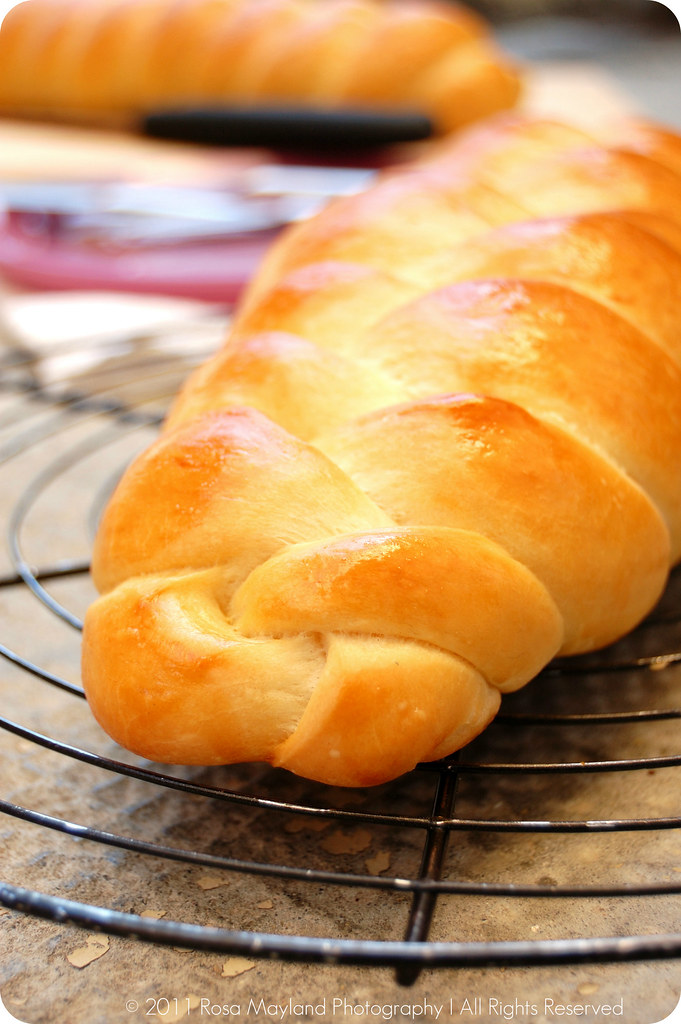
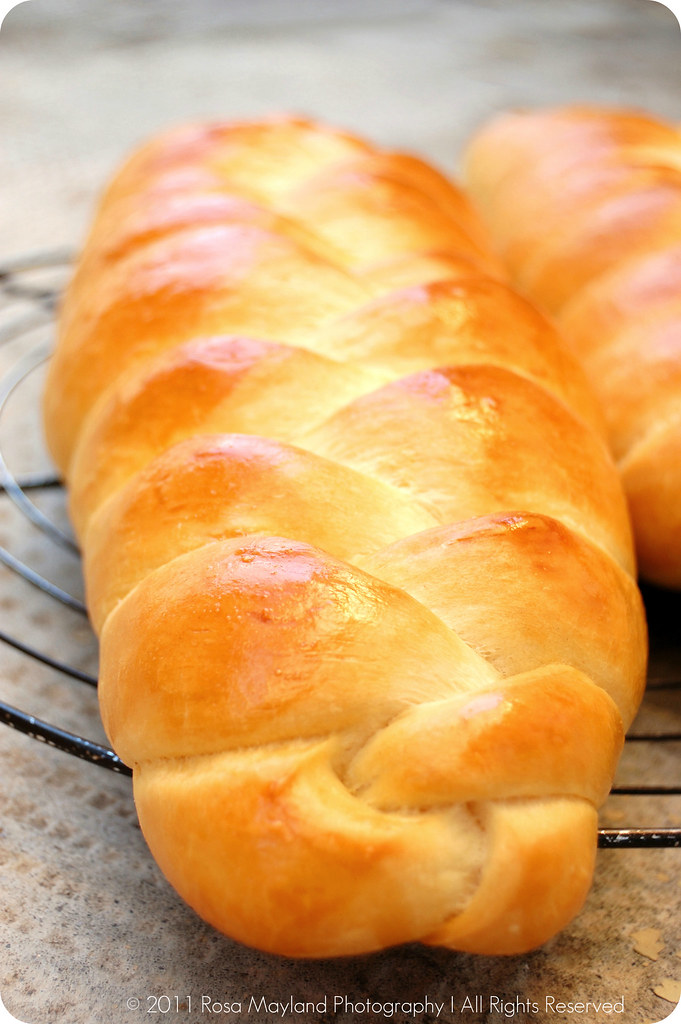
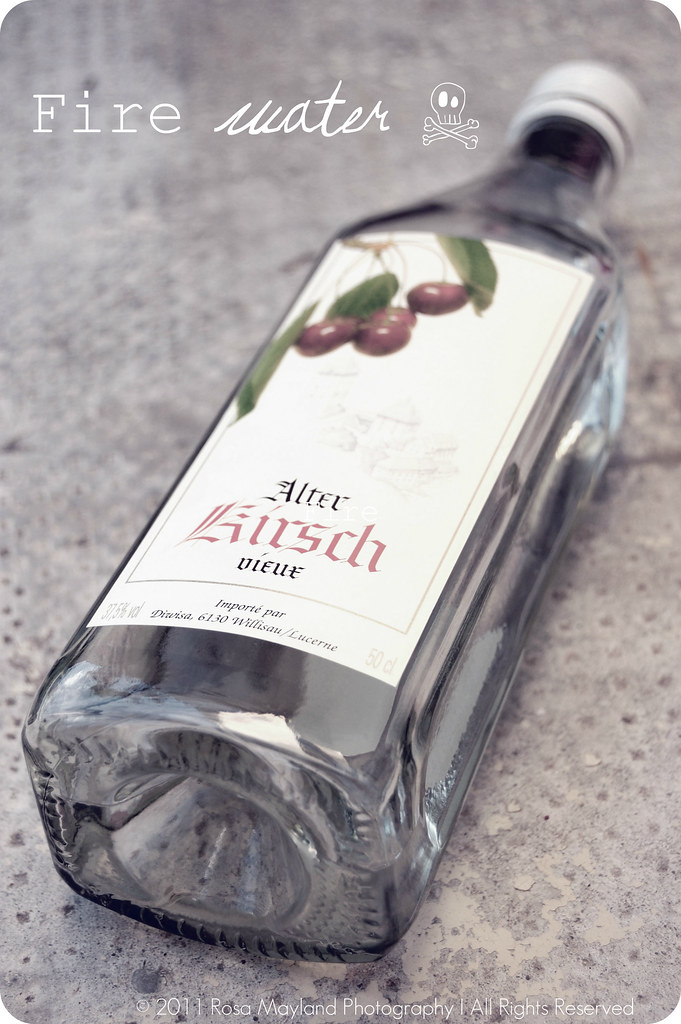
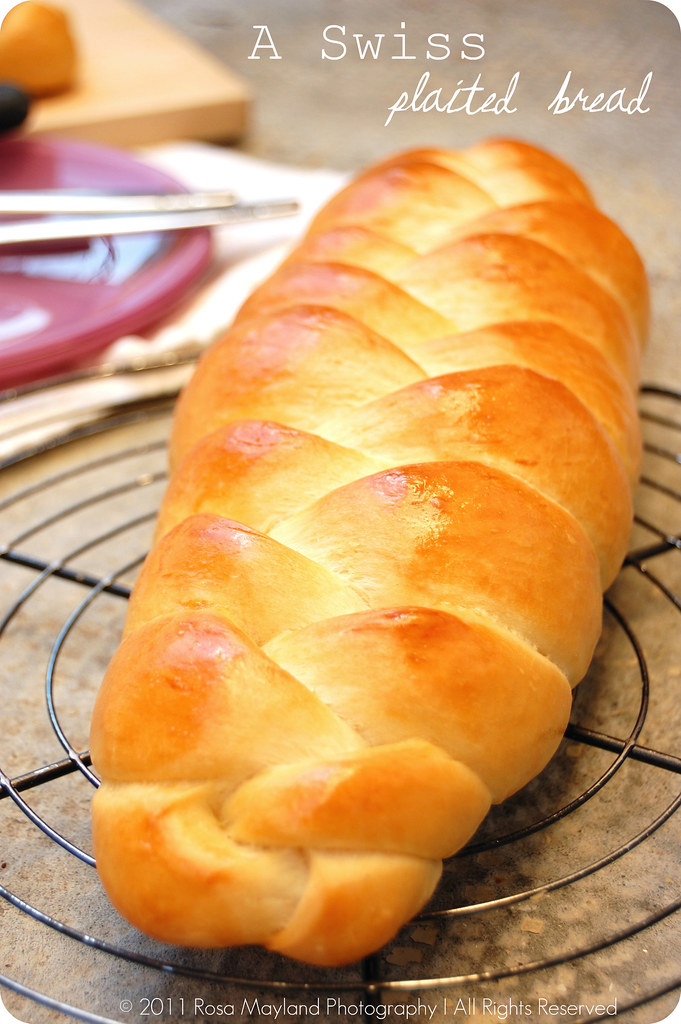
This Friday, I am presenting a butter, milk and kirsch enriched braided bread that we generally eat on Sunday mornings (not only, though). "Butterzopf" is very similar to the Jewish "Challah" or to its German and Austrian cousin "Hefekranz/Hefezopf", minus the eggs and sugar. It is halfway between a Vienese pastry and a brioche. The name "Zopf" or "Züpfe" is derived from its shape and literally means "braid" or "plait" (hence "Butterzopf" meaning "butterbraid"). This treat is enjoyed throughout our land, but as we like to make things complicated, its appearance can vary slightly depending on the localities. In Eastern Switzerland it'll be long and pointed, in canton Bern bakers will make it look very large and round ended and in Central Switzerland it will be given a large and flat form.
The origins of it are fairly unclear and surrounded by many legends, some gloomy others cheerful. Apparently, in ancient times, women used to accompany their deceased husbands into the tomb and the spirit world in order for the married couple to be reunited in death. Thankfully that dark tradition was abanded and replaced by a new, less barbarian one. Instead of being forced to perish with her man, the widow only had to cut off her hair (usually a plait) and lay it in the grave, alongside the body of her late companion. Then, the practice of offering one's hair as sacrifice was abolished and a braided loaf was used in place of the tresses. But as there is no real evidence of that custom, it is more likely that "Butterzopf" saw the light of day in a less morbid way. In 1256, the first baker's corporation was created in Basel and not long after, a few more were formed around the Helvetic territory. During the 15th century this delicacy became very popular as people used to gift it on special occasions such as Christmas and New Year. It was even offered as a token of love or to seal a promise of marriage. Since its existence is attested since 1430, it is most probable that it is a Swiss invention. Nowadays, Swiss people still have the habit of bringing a "Zopf" to their hosts to mark special events (public holidays and feast days).
Unfortunately, I possess no family recipe for making this brioche, so the one I use faithfully and always with much success hails from the very first bread book I bought 13 years ago (wow, I'm feeling "old" suddenly LOL), "Ultimate Bread" by Eric Treuille & Ursula Ferrigno (see review here). The formula for it is quite straightforward and accessible, nothing tricky here. There is no need to stress or plan your baking session too much ahead as it'll take you only a few little hours to prepare (1/4 of an afternoon).
Their "Butterzopf" is perfect. It tastes and looks exactly as it should. Texture-wise, the crust is marvelously glossy, golden-colored as well as delicately crisp and its inside is exquistely tender, spongy, full of finesse in addition to being beautifully areated. Furthermore, its subtle flavor is just out of this world and incredibly gratifying. It is elegantly buttery and has fabulous heady hints of Kirsch that pleasantly mingle with the round, enthralling and ambrosial aromas of yeast. You should be there when my "Butterzopf" is in the oven. The smell that spreads through the apartment is dreamlike and instantly puts you in a good mood
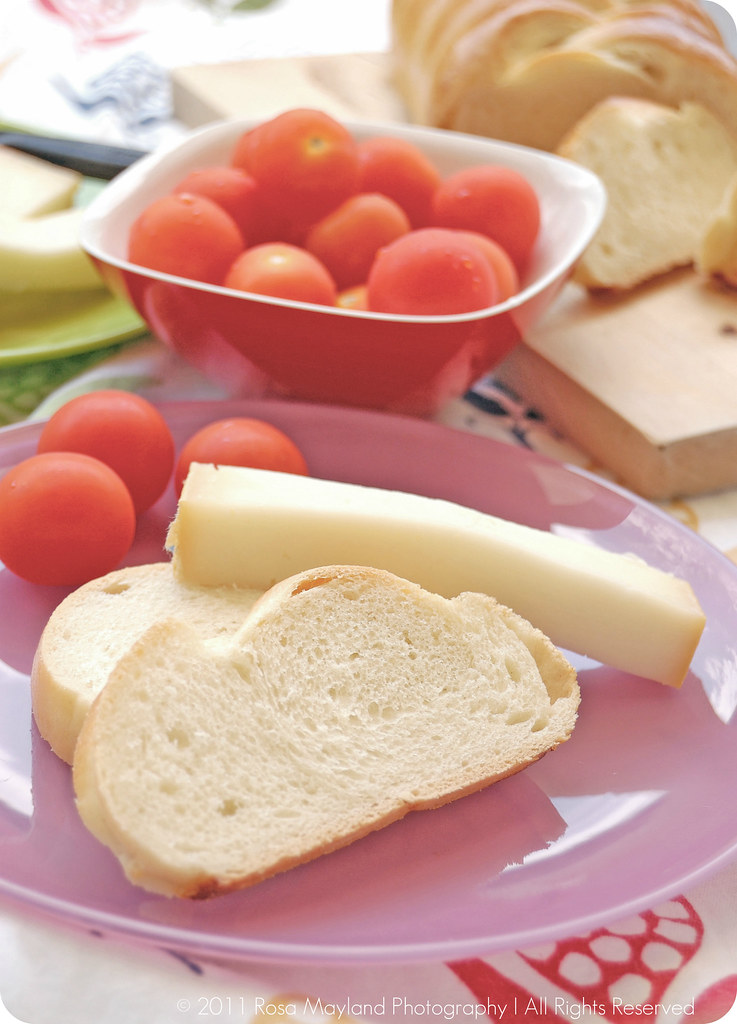
This bread is utterly delicious that you don't need to dress up your slice with any fancy spread or accompany it with anything. Its taste alone is self-sufficient. Nonetheless, it pairs really well with butter, cheese, jams, curds, Nutella, Cenovis (the Swiss equivalent of Marmite and Vegemite), honey, dried meat, smoked fish or pate.
Come, try it. I promise you that you'll not be deceived!
Submitted to Yeastspotting!
Recipe adapted from Eric Treuille & Ursula Ferrigno's cookbook "Ultimate Bread".
Makes 1 big loaf (or two medium loaves).
Ingredients
2 Tsp (7g) Dried yeast
1 Tsp Castor sugar
1 1/4 Cups (300ml) Full-fat milk, lukewarm (not over 50° C /122° F)
3 3/4 Cups (500g) Flour (high in gluten)
1 1/2 Tsp Fine sea salt
4 Tbs (60g) Unsalted butter, softened and creamed
2 Tbs Kirsch
1 Egg yolk + 1 Tbs Milk, mixed together (for glazing the bread)
Method:
1. Sprinkle the yeast and the sugar into 1/2 cup (120ml) of the milk. Let stand for 5 minutes and then stir to dissolve.
2. Put the flour in the bowl of your standmixer. Make a well in the center and pour in the yeasted mixture.
3. Using a wooden spoon, draw enough of the flour into the liquid in order to form a soft paste which's texture is similar to pancake batter.
4. Cover the bowl with a dish towel or plastic film and let “sponge” until frothy and risen, about 20 minutes.
5. Pour the remaining milk into the well, add the salt, butter and kirsch. Mix until you obtain a moist, but not tacky dough (if the dough is too wet addd a little flour our if it's too dry, add some milk).
6. Knead until the dough is smooth, shiny, elastic and passes the window pane test, about 4-6 minutes (10 minutes when kneaded by hand).
7. Oil a bowl and place the dough in it, turning to coat evenly with butter. Cover with some plastic film and then a dish towel. Let rise at room temperature, until doubled in size, about 1 1 ⁄2 to 2 hours.
8. Punch down, then let rest for 10 minutes.
10. Place on a baking sheet covered with baking paper and cover with a dish towel.
11. Let prove until doubled in size, about 35–45 minutes.
12. Twenty minutes before the end of the proofing time, preheat the oven to 180° C (350° F).
13. Once the bread is ready to get baked, brush the top of the loaf with the egg glaze.
14. Bake in the preheated oven for 40 minutes, until golden brown and hollow sounding when tapped underneath.
15. Let cool on a wire rack.
Remarks:
If you don't have any Kirsch, then use brandy or plum spirit/brandy.
You can freeze your bread without problem. In that case, you just have to bake it as instructed above and then to remove it from the oven 10 minutes before the end of its baking time, wrap it in a dish towel and let it cool completely before freezing. On the day you choose to eat your zopf, defreeze it for 15 to 30 minutes (in its freezer bag), then bake it for 10 minutes at 200° C (400° F) and let it cool on a wire rack.
Serving suggestions:
Serve for breakfast or brunch with cheese, jam or the spreads of your choice (perfect with cream cheese, lemon curd and Nutella).
You can also make wonderful French Toasts with the leftover bread.
~~~~~~~~~~~~~~~~~~~~~~
Recette adaptée du livre "Le Pain" par Eric Treuille et Ursula Ferrigno .
Pour 1 grosse tresse (ou 2 moyennes tresses).
Ingrédients:
2 CC (7g) de Levure sèche
1 CC de Sucre cristallisé
300ml de Lait entier, tiède (en dessous de 50° C)
500g de Farine blanche pour pain
1 1/2 CC de Sel de mer fin
60g de Beurre non-salé, battu en pommade
2 CS de Kirsch
1 Jaune d'oeuf + 1 CS de Lait, mélangés ensemble (pour la dorure)
Méthode:
1. Verser 120ml de lait dans un petit bol, puis saupoudrer avec la levure et le sucre. Bien mélanger et laisser reposer pendant 10 minutes, jusqu'à ce que le mélange soit mousseux.
2. Dans un grand bol (ou dans le bol d'un robot électrique avec le crochet à pain), ajouter la farine et faire un puits. Y verser le mélange lait/sucre/levure.
3. A l'aide d'une cuillère en bois, incorporer assez de farine afin d'obtenir un mélange visqueux ressemblant à de la pâte à pancake.
4. Couvrir avec un linge ou du film plastique/alimentaire et laisser "lever/mousser" pendant environ 20 minutes.
5. Ajouter le lait restant, le sel, le beurre et le kirsch. Bien mélanger afin d'obtenir une pâte humide, mais pas collante (si elle colle, ajouter un peu de farine et si elle est trop sèche, ajouter un peu de lait).
6. La pétrir pendant 4-6 minutes (ou 10minutes à la main), jusqu'à ce qu'elle soit lisse, brillante, élastique et passe le test du vitrail.
7. Mettre la pâte dans un grand bol légèrement huilé/beurré et faites tourner la pâte dans le bol afin de bien l'enduire d'huile/de beurre. Couvrir avec du film plastique/alimentaire, puis avec un linge de cuisine. Faire lever à température ambiante jusqu'à ce que la pâte ait doublé de volume, pendant environ 1 1 ⁄2 à 2 heures.
8. Dégonfler la pâte et la laisser reposer pendant 10 minutes.

10. Mettre la tresse (ou les tresses) sur une plaque de cuisson recouverte de papier sulfurisé et recouvrir avec un linge de cuisine.
11. Laisser lever pendant environ 35–45 minutes, ou jusqu'à ce que le pain ait doublé de volume.
12. Vingt minutes avant la fin de la période de levage, préchauffer le four à 180° C.
13. Une fois que le(s) pain(s) est(sont) prêt(s) à être enfourné(s), le(s) badigeonner avec le glaçage à l'oeuf.
14. Cuire pendant 40 minutes, jusqu'à ce qu'il(s) soi(en)t dorés et sonne(nt) creux.
15. Sortir le(s) pain(s) du four et le(s) faire reffroidir sur une grille avant de le(s) déguster.
Remarques:
Si vous n'avez pas de kirsch, vous pouvez aussi utiliser du brandy ou de l'eau-de-vie de prunes.
Vous pouvez très bien congeler votre tresse. Il vous suffit de la préparer comme indiqué dans la recette, puis de sortir votre pain 10 minutes avant la fin de la cuisson, de l'envelopper encore chaude dans un linge, puis de le laisser refroidir complètement avant de le mettre au congélateur. Après, vous n'aurez qu'à laisser votre tresse dégeler partiellement pendant 15 à 30 minutes dans son sachet de congélation et enfin de l'enfourner pour 10 minutes dans le four préchauffé à 200° C et de le laisser refroidir sur une grille.
Idées de présentation:
Servir à l'heure du déjeuner ou pour le brunch, avec du fromage, de la confiture, du cream cheese, du lemon curd ou du Nutella.
Avec le reste de pain, faites du pain perdu. Vous verrez, c'est merveilleux.